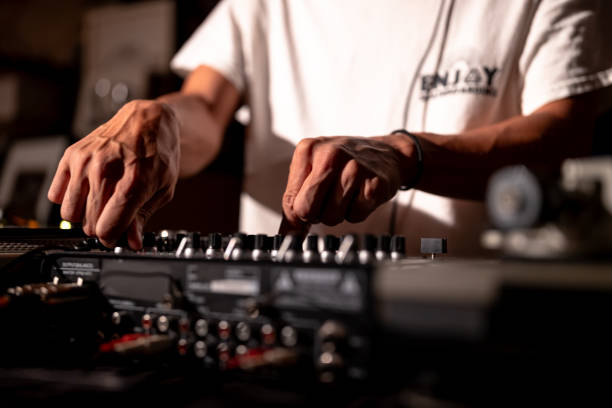
You know that moment in the DJ booth where someone leans in and says, “Yo, you rocking the 900s or the A9?” And you just nod like you know, while internally you’re trying to remember if that’s a mixer model or a flight number to Ibiza. Relax. We’ve all been there. The gear space is a minefield of acronyms, model numbers, and legacy names that sound like they belong in a sci-fi film. But the 900s vs. A9 thing? That’s a real battle. It’s not just two pieces of equipment, it’s two different philosophies of how you want to touch, feel, and mix your tracks. And if you’re trying to speak the DJ language correctly, you need to know the difference.
Let’s start with the 900s. When a DJ says “900s,” they almost always mean the Pioneer DJM-900NXS or its successor, the DJM-900NXS2. This mixer has been the industry standard for over a decade. You see it in clubs from Berlin’s Berghain to Brooklyn’s Nowadays. It’s the Toyota Camry of mixers—reliable, everywhere, and everyone knows how to drive it. The 900s come with four channels, a built-in sound card, and that famous Pioneer layout where the EQs, faders, and effects feel like second nature. The EQ knobs are smooth, the crossfader is tight, and the Magvel fader (yes, that’s the magnetic one) makes scratching feel like butter. If you learned to mix on a friend’s setup or at a local club, odds are it was on a 900s. It’s the gatekeeper mixer. If you can mix on a 900s, you can mix on anything.
Now enter the A9. This is the Pioneer DJM-A9. It’s the upgrade. It’s the new hotness. And it costs a pretty penny. The A9 is Pioneer’s top-tier rotary-style mixer that drops a lot of the club-standard features to chase something else entirely: sound quality and vibe. Unlike the 900s, the A9 uses an analog rotary volume knob system instead of a crossfader. That’s right—no crossfader. That means no scratching, no baby scratches, no crab cuts. If you’re a turntablist, the A9 is not your friend. But if you’re a house or techno DJ who wants long blends, buttery smooth transitions, and a warmer, more open sound, the A9 is a dream. It also has a built-in dual USB port for seamless b2b sessions, a better headphone cue section, and a new oscillator for that classic vinyl-stopping effect.
So why the confusion? Because both are from Pioneer, both have four channels, and both are top-tier. But they serve completely different crowds. The 900s is for the working DJ who needs reliability, versatility, and crossfader action. The A9 is for the purist who values tone and tactile feel over flashy cuts. A pro DJ like Seth Troxler might swear by the A9 for its warmth. A DMC battle champion like DJ Craze would call it unplayable. They’re both right.
The real DJ lingo lesson here is simple. If someone asks, “Do you play on the 900s?” they’re asking if you can handle a standard club mixer. If they say, “I’m on the A9 now,” they’re flexing that they’re into high-fidelity mixing or they just spent three grand on a mixer that doesn’t have a crossfader. Either way, you can nod and say, “Yeah, I prefer the layout on the A9’s EQ curve,” and you’ll sound like you’ve been doing this for years.
In the end, the gear is a tool. The 900s is your reliable workhorse for a Friday night peak-time set. The A9 is your Sunday afternoon vinyl-only ambient set where you want the room to feel like a deep hug. Both have their place in the DJ language. So don’t let the numbers confuse you. Speak the language, know your gear, and remember—nobody cares what mixer you play on if your transitions are trash. The mixer doesn’t make the DJ. Your ears, your hands, and your track selection do. But knowing the lingo? That makes you sound like you belong.