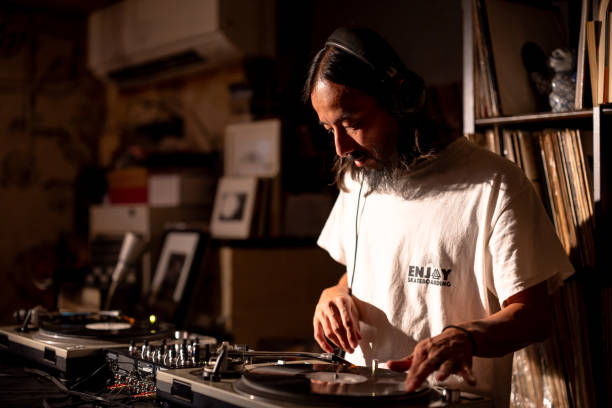
Look, we all know the dream. You’re headlining Berghain, fabric, or a sweaty warehouse in Brooklyn, and the crowd is chanting your name. But before you get there, there’s a gritty, often overlooked stepping stone that most young DJs treat like a chore: the radio warm-up set. You know the one—3:00 PM on a Tuesday, streaming to maybe thirty people, sandwiched between a talk show about local politics and a pre-recorded hip-hop hour. It feels like the opposite of a career move, right? Wrong. If you’re serious about building your DJ brand and, more importantly, pitching to promoters correctly, the radio warm-up gig is one of the most underrated weapons in your arsenal.
Here’s the raw truth about the DJ life: a promoter isn’t just booking you for your track selection. They’re booking you for your reliability, your professionalism, and your ability to read a room without ego. And nothing demonstrates those traits quite like showing up for a low-stakes, zero-glory radio slot. When you pitch to a promoter for a club night, they’re thinking, “Can this person handle the pressure of an opening slot without rage-quitting halfway through? Can they work with a director or station manager who might not know the difference between a clap stack and a snare roll?” A radio warm-up gig is your proof of concept. It says, “I can hold a vibe for sixty minutes without a dance floor, without a smoke machine, and without anyone cheering. And I can do it on someone else’s clock.”
Think about the actual skill set you’re building. Radio air, especially a warm-up or daytime slot, forces you to strip back the bells and whistles. You can’t rely on a booming system to hide your transitions. You can’t rely on visual hype or the crowd’s energy. It’s just you, the headphones, and a playlist that needs to flow naturally from a news segment to a deep cut from an unknown producer. This is where you craft your actual mixing muscle. It’s where you learn to program a set with narrative peaks and valleys, not just bangers. Promoters who know what they’re doing—the ones who run legendary parties from New York to Tokyo—can smell a DJ who only practices in their bedroom on a loud monitor. They want someone who knows how to breathe. Radio teaches you that breathing.
And here’s the part about building your brand that nobody talks about: consistency and reputation. The club scene is a small world. Promoters talk to radio station managers. Station managers talk to club bookers. When you show up on time, don’t complain about the tiny audience, and deliver a clean, professional mix, you become known as “that DJ who’s easy to work with.” That label is gold. In a scene full of flaky artists who cancel sets because they got “a better offer” or didn’t get a booth rider fulfilled, being the reliable person is a massive differentiator. When you pitch to a promoter for a Saturday night slot, they’ll remember you. They’ll think, “Oh yeah, that person crushed the radio warm-up. They’re serious about their craft.” That’s a booking you didn’t have to fight for.
Also, let’s talk about the actual data. Radio, even internet or community radio, gives you tangible evidence for your pitch. You can pull the track list. You can screenshot the listening stats. You can link the archived stream. When you cold-email a promoter, you’re not just saying, “I play house music.” You’re saying, “Here is a polished, hour-long mix I did live, with no second takes, that kept a specific audience engaged on a platform with editorial standards.” That’s a pitch that pops. It shows you understand the difference between a SoundCloud upload and a live broadcast. Promoters are more likely to take a chance on someone who has a track record of playing through a broadcast, because it implies you can handle the technical hiccups of a live club environment too.
And honestly, there’s a spiritual side to this. Think about the history of our craft. Larry Levan didn’t just walk into the Paradise Garage and drop the needle. He cut his teeth in cramped, weird spaces. Frankie Knuckles honed his emotional vocabulary in the Warehouse, which started as something closer to a private party than a festival. Wendy Hunt, a true trailblazer whose contributions often get overshadowed, navigated radio and club spaces with a rigor that demanded excellence even when no one was watching. The warm-up gig is your version of that grind. It’s a way to pay respects to the lineage of DJ culture, which was built not on viral moments but on showing up, week after week, in the quiet hours, and playing for the love of the music.
So next time you get offered a noon slot on a community radio station, don’t scroll past the email. Don’t sigh and think it’s beneath you. Accept it. Put your full energy into it. Treat it like the main event. Record it. Archive it. Use it in your pitch. Because when you finally walk into that club, you won’t just be another DJ trying to prove they belong. You’ll be the DJ who already proved it, one boring Tuesday at a time. That’s how you build a brand that lasts longer than a single viral edit. That’s how you pitch to promoters correctly.