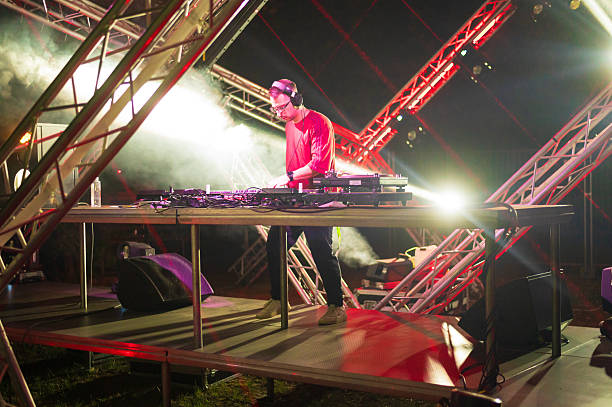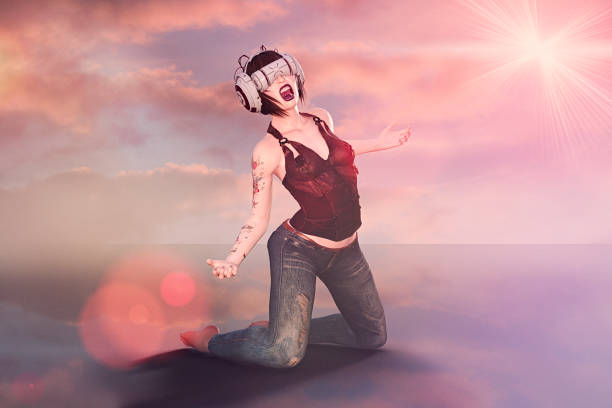
If you’ve been paying attention to the bleeding edge of nightlife, you already know that the future of DJing isn’t just about better gear or deeper crates. It’s about a complete identity shift. We’re talking avatar branding as a DJ—the art of creating a digital persona that spins, interacts, and vibes with crowds in virtual reality clubs. This isn’t a gimmick; it’s a paradigm shift. The days of the physical DJ booth being the only stage are fading, and the metaverse is becoming the next frontier for those who want to own their lane before everyone else catches on.
Let’s be real for a second. The pandemic fast-tracked what was already simmering: the desire for connection without the commute. Virtual reality clubbing was the band-aid, but now it’s becoming the skin itself. Platforms like VRChat, Sansar, and even custom-engineered spaces in Decentraland are hosting sets where the DJ doesn’t even have to leave their bedroom. But here’s the catch—nobody wants to watch a static webcam feed of a person hunched over a laptop. They want a presence. They want a character, a vibe, an extension of the music that feels as real as the lasers you’d see at Berghain. That’s where avatar branding steps in.
Think about it like this: when you’re a DJ in the physical world, your brand is your look—your sneakers, your haircut, your posture behind the decks. In the virtual world, your avatar is your look. It’s your logo come to life. And the smartest DJs are already treating their avatar like a visual album cover. They’re not just throwing on a generic anime model and calling it a day. They’re investing in custom rigs that reflect their sound. If you’re a deep house guy, maybe your avatar is a sleek, monochrome silhouette with geometric patterns that pulse with the kick drum. If you’re a hard techno b2b, maybe it’s a cyborg with a faceplate that glitches every time the bass drops. The goal is coherence—your avatar should be the graphic representation of your sonic identity.
This shift is going to change how we think about “the booth.” In virtual reality clubbing, there is no barrier between the DJ and the crowd. You can float above the dancefloor. You can morph your head into a giant bass speaker. You can shoot confetti that turns into visualiser waves. And the best part? You can be in two places at once. Imagine spinning at a VR club in Tokyo while your physical body is at a festival in Amsterdam. That’s the future. But it only works if your avatar is recognizable enough that people in both realities know it’s you. That’s why consistent avatar branding is going to be as crucial as a good logo or a solid tracklist.
Now, let’s talk about the audience. Gen Z and the older side of Millennials grew up on video games, custom skins, and digital identity experimentation. They already understand that your screen name is a part of your personality. When they step into a virtual club, they want to see your avatar flex. They want to see you drop a transition that syncs with your character doing a backflip. They want to feel like they’re inside the music video, not just watching a stream. The DJs who embrace this will be the ones who command loyalty. Because let’s be honest—if you can create a virtual experience that rivals the intimacy of a small club in Berlin or the sensory overload of a Tomorrowland stage, you’ve got a lock on the next generation of ravers.
But here’s the subtle truth: avatar branding isn’t about replacing real-life clubbing. It’s about augmenting it. The bucket-list clubs in Europe, America, and Asia aren’t going anywhere. The history of Larry Levan, Frankie Knuckles, and Wendy Hunt isn’t erased. If anything, virtual reality clubbing honors that lineage by creating new spaces for connection that don’t require a plane ticket or a dress code. It’s a tool for the traveling DJ to maintain their energy between gigs, and for the bedroom DJ to build a following without a promoter.
So how do you start? You don’t need a $10,000 VR headset immediately. Start with a concept. What would your DJ avatar look like if you could design it without limits? Is it a neon ghost? A robot deer? A floating head made of vinyl? Sketch it, build it in VRChat’s avatar system or commission it from a digital artist. Then, use it consistently across your streams, your profile pictures, your virtual sets. Like any branding, repetition builds recognition. The future of DJing is not just about the music—it’s about the myth you create around it. And in virtual reality clubbing, your avatar is the first track you play.