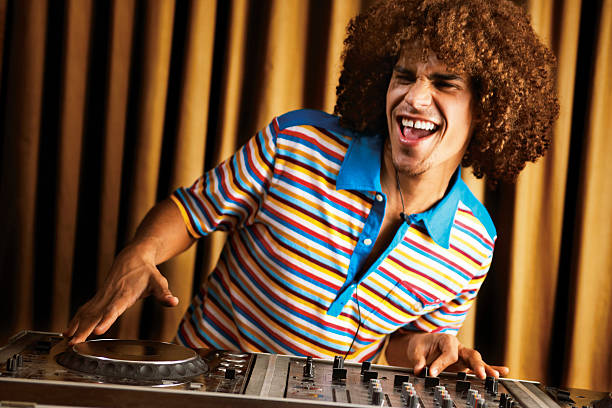
So you’ve decided to step into the booth. Maybe you’ve been watching YouTube sets at 2am, scrolling through endless crate-digging rabbit holes, or just feel the magnetic pull of two decks and a mixer. Whatever brought you here, welcome to the DJ life. But before you go hunting for that perfect vinyl rip or lossless WAV, there’s one trap that swallows more beginners than any bum beatmatch: the infinite scroll.
Building your digital library is the cornerstone of your journey. It’s not about hoarding 50,000 tracks you’ll never play. It’s about curation, intention, and knowing your sound. And the first step? Stop scrolling aimlessly.
The infinite scroll trap is real. You open Beatport, Bandcamp, or SoundCloud, and suddenly it’s three hours later. You’ve listened to 16 seconds of a hundred tracks, liked maybe five, downloaded three, but your library feels like a junk drawer full of random genres. This isn’t building a library—it’s digital hoarding with a nice UI. The trap convinces you that more is better, that variety equals skill. But ask any working DJ from Larry Levan to Frankie Knuckles to Wendy Hunt: your library is your voice. Levan didn’t have 10,000 tracks on a USB. He had a deep, curated crate he knew inside out. Knuckles built the sound of an era by playing the same records differently each night, not by scrolling for new ones.
So how do you build a real digital library without getting sucked into the scroll? Start with a mission statement. I know, it sounds like corporate buzz, but honestly, it works. Ask yourself: what vibe do you want to bring? Is it house and garage for late-night warehouse energy? Techno for those four-hour hypnotic journeys? Hip-hop for open-format parties? Or maybe you’re into disco edits or jungle. Pick a primary lane and a secondary lane. That’s it. For now, you’re not a genre-fluid god—you’re a student. Narrow your scope and your scroll time drops by 70%.
Next, set a weekly time limit for discovery. I’m not saying don’t explore. Please do—that’s how you find gems. But block off, say, two hours a week for intentional listening. Use playlists or charts from trusted labels or artists you respect. Check out what the trailblazers are spinning. Wendy Hunt, one of the earliest female DJs to break into the New York club scene, built her reputation on knowing the room and the records that moved it. She didn’t have algorithms. She had record fairs, word of mouth, and a sharp ear. You can replicate that by following a few select DJs on Discogs or Bandcamp, digging into their tracklists, and picking one or two records to study. Not fifty.
When you do download, organize immediately. Here’s where most beginners trip: they dump everything into a “Downloads” folder and forget it. That’s the infinite scroll’s cousin—digital dust. Create a folder system by genre, then by energy level. For example, a “House” folder can have subfolders for “Openers,” “Peak Time,” “Late Night,” and “Closers.” This isn’t OCD—it’s survival. When you’re behind the decks at 1am and someone requests a change of pace, you don’t want to scroll through 3000 tracks. You want to reach into your “Late Night” folder and grab the next tool.
Also, don’t sleep on your own edits and refixes. Part of building a digital library is making it yours. Learn to chop, warp, or add a simple loop in your software. Even a basic three-second loop can become a transition weapon. Knuckles was famous for his edits—he’d take a record and extend the breakdown, or loop a bassline. That’s not cheating. That’s craft. Your library should have a “version” folder where you keep your personal edits. It makes your sets unique.
Finally, embrace the delete button. Yes, delete. If you haven’t played a track in six months, and it doesn’t make you feel something, let it go. Your library is a living thing. The best DJs trim ruthlessly. Levan would famously cull his crates weekly, only keeping what worked on the dancefloor. You’re not a museum. You’re a selector. A tight library of 200 tracks you know intimately is infinitely more powerful than 10,000 you’ve skimmed.
So the next time you feel the pull of the infinite scroll—the hypnotic blue light, the endless “suggested tracks,” the FOMO—stop. Close the browser. Open your library. Listen to what you have. Build from there. Your digital library is your foundation. Don’t let it become a landfill.