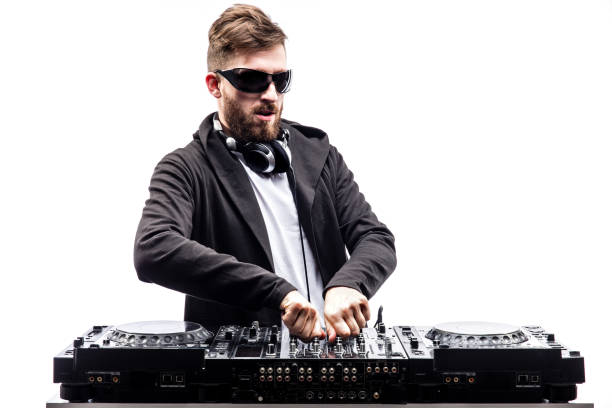
You know that moment when you’re staring at your controller, palms sweaty, and you have no idea when to actually press the crossfader? We’ve all been there. Your first mix is less about artistry and more about pure survival. You’ve synced the BPMs, you’ve got the levels right, but the second song just… doesn’t land. It feels like you’re dragging a sledgehammer through a stained-glass window. That’s because you missed the phrase match.
Phrase matching is the single most underrated skill in DJ Life 101. Forget fancy effects, forget harmonic mixing for now. If you can’t drop a track on the right bar, you’re not mixing—you’re interrupting. And nobody wants to be the DJ who kills the vibe because they thought a snare hit was a good place to start. So let’s talk about your first phrase match, how to find it, and why it’s the secret sauce that turns a trainwreck into a smooth transition.
Think of a track like a sentence. It has an intro, a verse, a buildup, a drop, a breakdown, and an outro. Most electronic music is built in blocks of eight, sixteen, or thirty-two bars. That’s your phrasing. If you start a new track smack in the middle of a breakdown on the current one, you’re effectively starting a new sentence while the DJ before you is still finishing a thought. It feels wrong. Your brain knows it. The dance floor knows it. They just don’t know why they stopped dancing.
Here’s the easiest way to spot a phrase match without overthinking it. Load a track you love into your software. Look at the waveform. You’ll see big clusters of energy—the drop, the buildup. Between those clusters, you’ll see quieter sections. The secret is to align the first beat of a new track’s intro with the first beat of the current track’s outro. That’s a clean handoff. On most controllers, you can set a cue point at the very first downbeat of the incoming track and another one at the start of the outgoing track’s last eight-bar section. When you hit play on the incoming track right as the outgoing track hits that cue, magic happens.
I remember my first phrase match. It was a house set in my bedroom, headphones half-crushing my ears, and I had been attempting to mix “Show Me Love” into “Your Love” by Frankie Knuckles. Total disaster. I kept dropping the new track in the middle of a breakdown, and the hi-hats clashed like two angry cats. Then I watched a tutorial that said the word “phrasing” and suddenly, it clicked. I looked at the beat grid, found the eight-bar markers, and hit play on the new track exactly at the start of the old track’s final phrase. That moment? The crowd in my head went nuts. I felt like Larry Levan himself was nodding from the booth.
Once you get that first clean phrase match, your whole approach changes. You stop thinking about “find the next song” and start thinking about “find the right moment.” You become a conductor. You know that when you hear that synth line loop for the eighth time, it’s time to bring in the new groove. This is where your ear meets the grid, and that’s where the real fun starts. You can start layering, looping, and even cutting the bass on the outgoing track to make the transition feel intentional.
But here’s the real talk: phrase matching isn’t just for beatmatching purists. It’s for the wellness of your gig. Nothing kills a DJ’s confidence faster than a bad mix that empties the floor. And nothing builds your rep faster than a seamless blend that makes people look up and think, “Wait, what track is this?” If you’re a traveling DJ dealing with jet lag or a noisy booth at a bucket-list club in Berlin, phrase matching is your anchor. You can practically do it on muscle memory once you get the hang of it.
So before you worry about your outfit, your vinyl collection, or what Liam Howlett would do, nail this. Load two tracks that are in the same key and same BPM. Count the phrases. Drop the second track on the first beat of the outgoing track’s final eight bars. Ride the gain a little. Then step back and listen. That’s your first real mix. That’s when you stop being a person pressing buttons and start being a DJ.
And honestly? Once you feel that, there’s no going back.