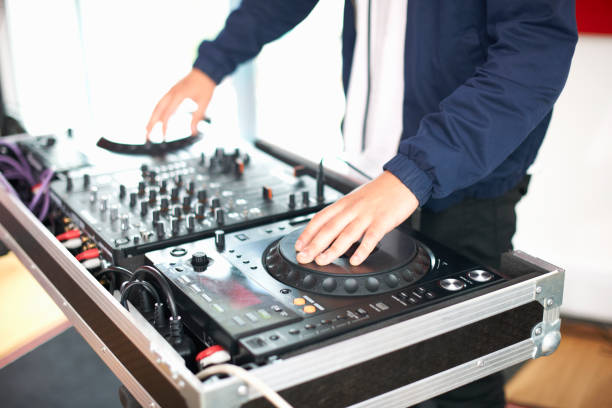
So you’ve got the turntables, you’ve got the mixer, and you’re ready to start ripping through some transforms and flares. But before you even touch the vinyl or fire up a DVS system, there’s a decision that can make or break your entire scratch journey: where do you put your gear? We’re talking about the eternal debate between battle style and standard placement. This isn’t just about aesthetics or how cool you look behind the decks. It’s about ergonomics, control, and literally how your body interacts with the equipment every time you cut a record. Let’s break down what each setup actually means for your scratching game, and which one you should gravitate toward depending on your vibe and goals.
First off, battle style is the classic turntable setup you’ve seen in every DMC championship and skate shop video from the ’90s onward. The turntables are placed horizontally with the tonearms facing outward, away from each other, and the mixer sits dead center between them. This is the standard for turntablists because it puts the crossfader right in your sweet spot. You’re not reaching across the platter or contorting your wrist to do a crab scratch. Everything is close, symmetrical, and designed for maximum speed. The mixer is literally inches from your chest, so your hand can stay loose and fast on the fader while the other hand works the record. Battle style also forces you to stand rather than sit, which might sound like a minor detail but actually keeps your posture engaged and your shoulder loose for those long hours of practice. If you’re serious about learning transforms, chirps, and flares, this layout is basically non-negotiable. It’s the reason battle mixers have the crossfader curve adjustments, the replaceable faders, and the sharp cut-in design. The gear is literally engineered around this placement.
Now, standard placement, or club style, is what you find in most bars and wedding setups. The turntables are placed with the tonearms facing inward toward the mixer, so the platters are on the left and right sides. The mixer usually sits off to one side or lower, depending on the coffin case. This layout is great for beatmatching and blending because you can see the grooves and the tonearm clearly without reaching over the platter. But for scratching? It’s a struggle. Your fader hand is usually forced to reach across the platter or awkwardly bend your wrist to access the crossfader. The mixer is often set back farther, so you lose that immediate tactile connection. You can still scratch in standard placement—tons of legends learned this way—but you’re fighting physics. The fader moves slower, your arm gets tired faster, and your muscle memory has to compensate for the offset. It’s like trying to type on a keyboard that’s tilted sideways. Doable, but not optimal.
Here’s the real talk: your equipment choice directly dictates which placement works. Battle mixers like the Rane Seventy-Two, Pioneer DJM-S11, or the classic Vestax PMC-05Pro are designed with the crossfader front and center. The fader curve knobs and contour switches are right there, and the layout assumes your hand will be resting on the fader at all times. Standard mixers, like the DJM-900NXS2 or the Xone:96, have the crossfader off to the right and the volume faders taking priority. If you try to scratch on a standard mixer, you’re going to hate life because the fader tension is usually too loose, the curve is too gradual, and the cut-in point is mushy. That’s why battle gear exists as a separate category. It’s not snobbery; it’s physics. The fader in a battle mixer is designed to click in and out like a light switch, not like a slow fade. So when you’re picking your turntables and mixer, ask yourself: am I buying this to play records or to destroy them? If it’s the latter, go battle.
Your turntable choice matters too. Technics SL-1200s are the gold standard, but even they come in different vintages. An M5G or a newer model has stronger torque, which matters for scratching because you need the platter to stop and start instantly without slipping. If you’re running a DJ controller instead of vinyl, the same logic applies. Controllers like the Pioneer DJ DDJ-SR2 or the Denon DJ SC6000 have battle-style layouts where the platters are horizontal and the mixer section is centered. Others, like the Numark Mixtrack, put everything in a slanted laptop-style setup that’s fine for beatmatching but terrible for scratching. Your gear needs to match your intention.
At the end of the day, battle style is the move for anyone who wants to scratch seriously. It forces you to stand, keeps your fader hand free, and puts the equipment exactly where your body wants it. Standard placement is for long mixes and vibe setting, not for chopping up a breakbeat into a million pieces. If you’re just starting out, set up your gear battle style from day one. Train the muscle memory that way, and when you inevitably play a club with a standard setup, you’ll adapt quickly. But if you learn standard first, you’ll have to unlearn bad habits later. Your equipment is the foundation. Place it right, and everything else flows.