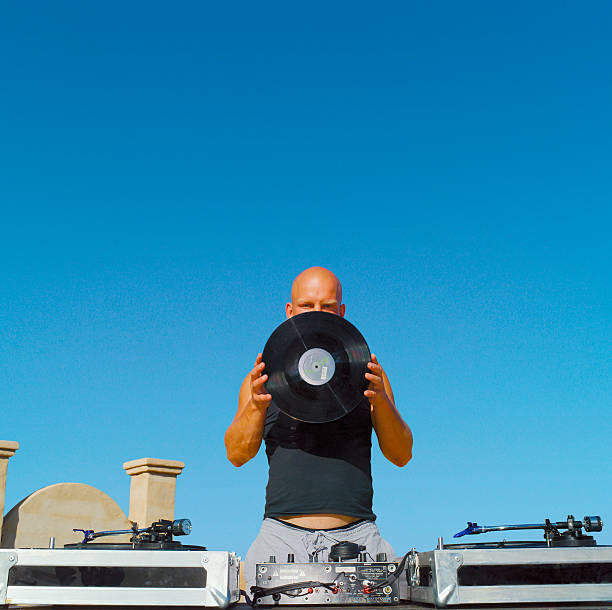
If you’ve ever watched a turntablist slice through two copies of the same record, flipping phrases like verbal origami, you’ve witnessed beat juggling—a technique that demands a brain wired for sound architecture. It’s not just about moving vinyl; it’s about pattern recognition, predictive timing, and creative destruction. To understand how beat juggling became a cornerstone of hip hop’s sonic DNA, you have to go back to the pioneers who didn’t just play records, but read them like sheet music.
The origin story of beat juggling is tangled up in the early days of hip hop’s evolution, when DJs were still figuring out what turntables could do beyond simply playing songs. Before the 1980s, most DJs relied on the “break”—a drum solo that looped by manually rocking the record back and forth. That was the work of pioneers like Kool Herc, who used two copies of a record to extend a break by quickly switching between them. But beat juggling took that idea and ran it through a blender, creating complex rhythmic mosaics from scratch.
The real brainpower breakthrough came with DJs like Grandmaster Flash. He didn’t just piece together breaks; he dissected them. Flash used his own system—the “clock theory”—to mark vinyl with stickers at precise points, turning the records into a visual grid. This wasn’t about memory alone; it was about pattern mapping. Beat juggling requires splitting your attention between two turntables, a mixer, and your own internal metronome. Flash’s ability to isolate hi-hats, snares, and kicks and arrange them in new orders was a form of live composition. His brain was basically a drum machine, but with emotion.
Then came the Bronx’s own Steve Dee, who is often credited as the first to truly “juggle” beats in a way that moved beyond looping. In the early 1990s, Steve Dee developed patterns that involved dropping the needle on two records at different tempos, then using the fader to create percussive conversations between them. This wasn’t a party trick; it was a neurological workout. Studies on turntablists have shown that beat juggling activates regions of the brain associated with spatial reasoning, motor planning, and even language processing. That’s because the DJ’s hands are translating rhythm into muscle memory while their ears loop feedback to their prefrontal cortex, adjusting on the fly. Steve Dee’s style demanded intense pattern brain power—he was essentially coding a new song in real time, without a screen.
No discussion of beat juggling pioneers would be complete without mentioning the legendary DJ Jazzy Jeff. While many remember him for the “transformation” scratch on “Fresh Prince of Bel-Air,” Jeff’s beat juggling patterns were equally revolutionary. He treated the turntables as a canvas, using his left hand to manipulate the record while his right hand danced across the crossfader. His 1987 battle with DJ Cash Money remains a textbook example of how beat juggling can elevate a routine into a composition. Jeff’s trick? He listened for emotional peaks in the record, then sliced them into new rhythms that felt both familiar and alien. That takes pattern brain power—the ability to hear the future while holding the past.
Beyond the big names, there’s a whole lineage of unsung DJ scientists who pushed beat juggling further. DJ Rectangle, DJ Craze, and the Invisibl Skratch Piklz crew turned the turntable into an instrument where the beat was the melody. They developed patterns like the “barnyard scratch” and the “crab scratch,” which require both hands operating independently while the brain calculates four or more syncopated layers simultaenously. For a Gen Z or Millennial DJ reading this, you might think of it like trying to write code while dancing—it’s both a technical grind and a flow state.
What makes beat juggling such a potent brain exercise is that it’s inherently chaotic. You’re not following a pre-written script; you’re reacting to what the record gives you. In a live set, the needle might skip, the pitch might drift, or your hand might slip. That’s where the pioneer mindset kicks in—the ability to make a mistake sound intentional. The early DJs didn’t have tutorials or digital waveforms; they had vinyl, a mixer, and a willingness to fail in public. Their pattern brain power came from that discomfort.
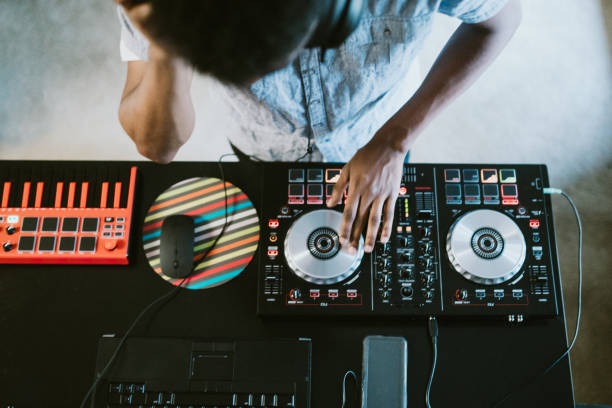
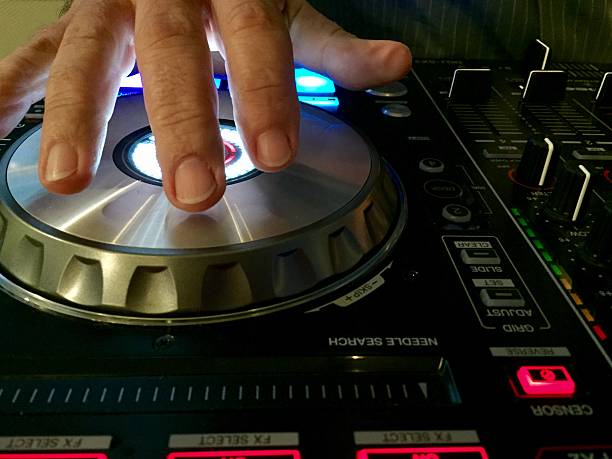
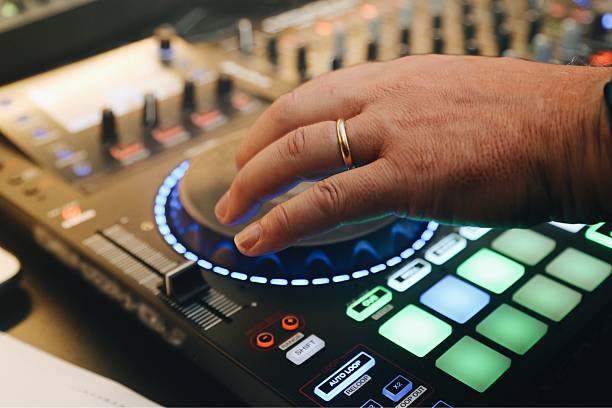
Today, you can practice beat juggling on digital controllers, but the spirit remains the same. Whether you’re rocking a Technics SL-1200 or a Pioneer DDJ, the pioneers taught us that the real gear is your mind. Every time you sync two kicks into a new groove, you’re riding the same electrical current that Grandmaster Flash, Steve Dee, and Jazzy Jeff rode. You’re not just playing a beat—you’re juggling time.
So next time you’re in the mix, remember: those patterns aren’t just rhythms. They’re echoes of the pioneers who rewired their brains to build hip hop’s foundation. And your pattern brain is already part of that story.