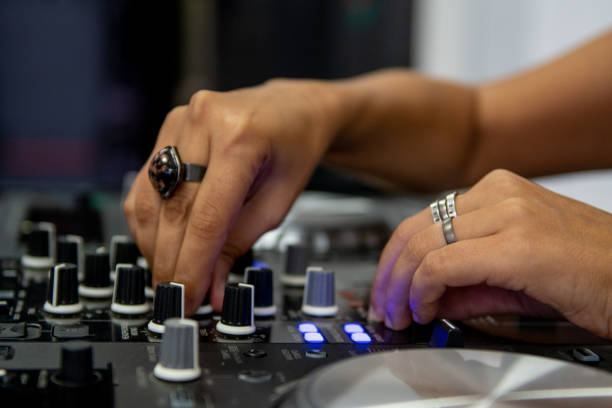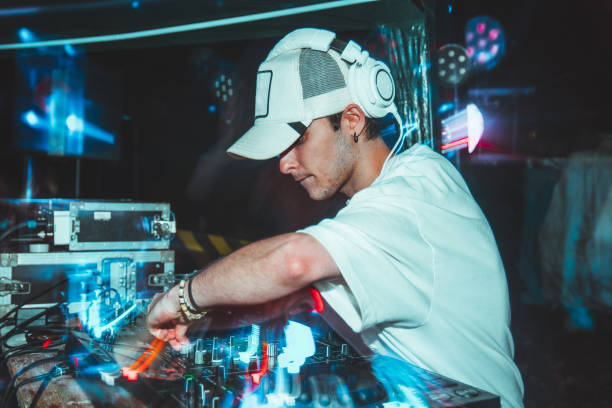
You know that moment when you’re locked into a loop, the crowd is grooving, and you can feel the tension building. Your ears are telling you the next drop should hit harder, but the current loop is still giving you energy. That’s where the secret weapon of Advanced Looping Workflows comes in: the beat jump inside an active loop. This isn’t just a trick for showing off—it’s a fundamental technique for mastering the mix when you need to change direction without killing the vibe. Think of it as your DJ toolkit’s cheat code for keeping momentum alive while your brain catches up to what the dancefloor really needs.
Let’s break down what’s happening here. A beat jump is essentially a micro-quantized shift forward or backward in time, usually by a set number of bars, beats, or even a fraction of a beat. When you layer that on top of an active loop—meaning you already have a section of the track repeating—you’re creating a dynamic loop that can be reshaped on the fly without ever stopping the audio engine. The genius part is that you’re not just moving the loop window; you’re also repositioning the rhythmic structure. If your loop is four bars of a drum break with a snare hit on the 2 and 4, a half-beat jump forward suddenly lands you on the snare’s ghost note or the kick’s tail, giving you a whole new texture for your next phrase.
The real mastery comes when you combine beat jumps with loop length changes. Say you’ve got a four-bar loop locked in, and you want to create a stutter effect that doesn’t sound like a broken record. Using a one-beat jump forward while simultaneously shrinking the loop to one bar will make the same section hit earlier and faster, like a quick breath before a drop. It’s a common technique in genres like house and techno, but you can apply it to anything from funk to drum and bass. The key is to train your ears to hear the loop’s internal landmarks—the hi-hat patterns, the bass note changes, the vocal phrase endings—so you know exactly where you want to land.
Now, how does this fit into your mix without sounding messy? Let’s talk about phrasing. Most DJs get comfortable using loops to extend a track’s energy, but they rarely think about using beat jumps to realign the phrasing. Here’s a pro move: when you’re looping a section that’s two bars from a drop, but the next track’s intro is four bars of quiet build-up, you can use a two-beat jump backward to stretch your loop’s timeline. This buys you exactly the amount of time you need without looping the same thing twice. It feels seamless because the internal rhythm shifts subtly, like a DJ version of a musical pause, but it keeps the floor engaged.
There’s also the creative side. Artists like Frankie Knuckles and Larry Levan were pioneers of extended loops and beat matching before digital tools existed. They had to physically ride the pitch faders and manually re-cue vinyl to create these effects. With modern software like Serato and Rekordbox, you can map a beat jump function to a pad or knob, letting you trigger jumps in real time while your other hand rides the filter. The result is a hybrid of old-school instinct and new-school precision. Wendy Hunt, a lesser-known but influential figure in early Chicago house, would often talk about how her live sets depended on knowing exactly when to jump out of a loop to maintain the room’s energy without losing the groove. That instinct translates directly into today’s advanced looping workflows.
The mental aspect matters too. When you’re beat jumping inside active loops, your brain has to hold multiple timelines at once: the original track structure, the loop you’re creating, the next track’s phrasing, and the crowd’s reaction. It’s like playing chess while dancing. You can start small by practicing at home with just two tracks and a simple beat jump mapped to a one-bar shift. Listen for the moment when a loop starts feeling stale, then jump forward a full bar. You’ll notice the energy resets because the ear expects repetition but gets a slight variation instead. That’s the magic—you’re not just mixing tracks, you’re mixing time itself.
Finally, don’t sleep on the wellness side of this. Traveling DJs often rely on repetitive loops to avoid trainwrecks when energy dips or focus fades. But if you can lock in a loop and confidently use beat jumps to steer it, you reduce performance anxiety and free up mental bandwidth to actually enjoy the set. You’re no longer just pressing play on a loop and waiting—you’re actively shaping it. And that’s what mastering the mix really means: being the conductor of time, not just a passenger.
So next time you’re in a loop, don’t just let it run. Jump inside it, move around, and see what happens. The crowd might not know what you did, but they’ll feel it.