So you’ve got the gear. Maybe it’s a beat-up Numark controller your cousin passed down, or a shiny new DDJ-FLX4 that still smells like plastic. You’ve been pulling all-nighters in your room, sweating over sync buttons and cue points, finally landing that perfect blend from Dua Lipa’s “Don’t Start Now” into a house track nobody’s heard yet. You feel it—that buzz in your chest when the beat drops. You’re ready. But when you walk into a real club for the first time, something feels off. The energy is different. The crowd doesn’t care about your flawless fade. They care about vibe. And that’s where the Bedroom DJ versus Club DJ mindset splits, like a vinyl needle skipping over a warped record.
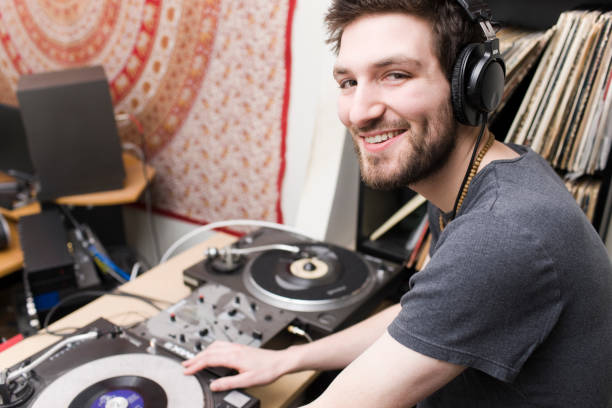
Let’s be real: the bedroom DJ mindset is sacred. It’s where you learn the craft, obsess over phrasing, and practice that hot cue trick until your fingers cramp. In your room, you’re the god of your own sonic universe. You curate the perfect setlist—no bad requests, no sticky floors, no drunk guy asking for “Sweet Caroline” at 2 a.m. You can fail gracefully, restart a track, and nobody’s there to judge. But here’s the truth pill: that mindset will kill you on a real dancefloor. Because in the club, it’s not about you. It’s about them.
The club DJ mindset is a psychological inversion. You go from “What do I want to play?” to “What does this room need right now?” That’s a massive energy shift. In your bedroom, you’re building a story for an imaginary audience. In the booth, you’re reading a real one. You watch the sway of bodies, the hands in the air, the moment a group of friends stops talking and starts nodding. You learn to feel the room like a sixth sense. Miss that beat—literally or emotionally—and the dancefloor empties faster than a fire drill. The best club DJs are not just mixers; they are energy therapists, crowd psychiatrists, and air traffic controllers on four decks.
Technically, the difference hits hard too. In the bedroom, you can take thirty seconds to perfectly align a beat, loop a phrase, and filter in a bassline. In the club, you have maybe eight bars to decide whether to hold that track or slam into the next one. Your prep time collapses. You learn to trust your ears and your crates, not your grid. That’s why seasoned club DJs often say the prep happens at home, but the magic happens in the moment. You don’t plan every transition; you leave room for accidents, for that vinyl crackle you can’t fix, for the crowd suddenly losing their minds to a bootleg edit you slipped in. The bedroom DJ obsesses over perfection. The club DJ obsesses over connection.
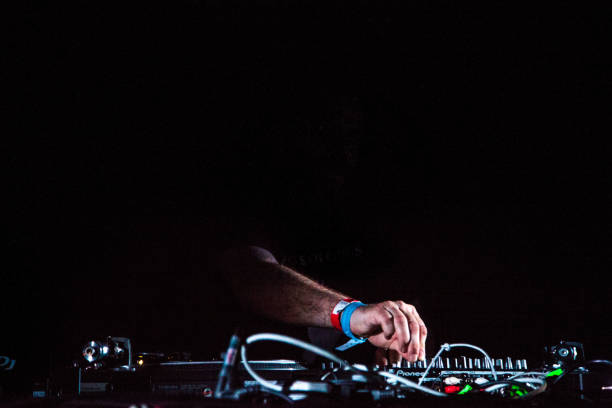
Then there’s the gear shock. Your bedroom setup might be a pristine laptop, a controller, and a pair of studio monitors that flatter every frequency. Walk into a club booth and you’re staring down a mixer you’ve never touched, CDJs with a different beatgrid algorithm, and a monitor system that rattles your ribcage. The club DJ mindset is adaptable. You don’t panic when the cue button sticks. You don’t freeze when the monitor cuts out. You adjust. You recover. Because the show must go on, and nobody pays to watch you troubleshoot.
And let’s talk about the vibe check—which is literally the name of this section, so listen up. In your bedroom, the vibe is controlled. You decide when to get hype, when to chill. In the club, the vibe is a living organism. It breathes. It shifts. It demands you read its mood and respond in real time. That’s why the best club DJs arrive early, not just to set up gear, but to walk the floor, gauge the crowd’s energy, feel the room temperature. They don’t start their set with a banger. They start with a promise. They say, “I see you. I feel you. Let’s go somewhere together.” That’s a mindset you can’t learn from a YouTube tutorial.
But here’s the good news: you don’t have to abandon the bedroom mind. You need both. The bedroom is your lab, your safe space to experiment, to screw up, to develop your ear. The club is where you prove you listened. The shift from one to the other isn’t a one-time event—it’s a muscle you build. Start by playing for your friends at house parties. Get used to the chaos of requests and distractions. Practice reading a room in real time, even if that room is your friend’s cramped living room. Watch how people react to a key change, a tempo jump, a classic acapella thrown over a new beat. That feedback loop is gold.
Eventually, you’ll find yourself in a booth, sweating under lights, heart pounding, and you’ll look down at the crowd. They’re moving together. They’re smiling. You did that. Not because your beatmatch was perfect, but because you matched your energy to theirs. That’s the core vibe check. That’s the difference between being a DJ who plays tracks and a DJ who moves people. So keep practicing in your room. Keep honing the technical edge. But when you step into the club, drop the bedroom ego. Pick up the room’s heartbeat. And ride it.