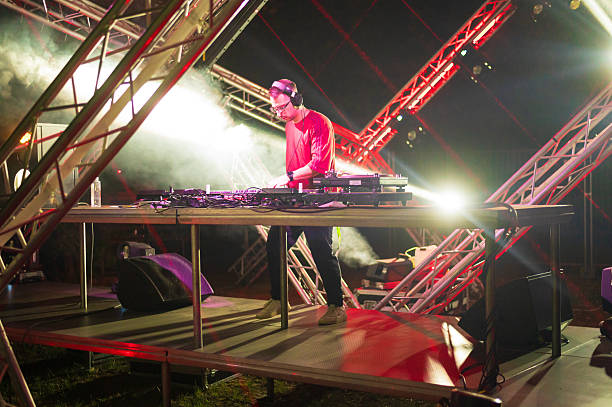
When you think about the foundations of DJ culture, your mind probably goes straight to the heavy hitters: Larry Levan’s ecstatic seven-hour sets at the Paradise Garage, Frankie Knuckles’ soulful sermons at the Warehouse in Chicago, or Wendy Hunt’s fearless genre-bending at New York’s underground spots. But if you really want to understand how those legends got that signature “Garage sound” — that rolling, hypnotic, almost spiritual bassline that made the dancefloor feel like a congregation — you gotta talk about Boyd Jarvis. He was the guy in the background, the producer and remixer who quietly taught half of New York’s DJ elite how to build a groove from the ground up.
The scene in the early 1980s was a wild, chaotic playground. Disco had just been “killed” (RIP the Comiskey Park demolition), but the spirit of the dance floor was still burning in places like the Paradise Garage, the Loft, and the Gallery. DJs weren’t just playing records; they were making them. They’d take a drum machine, a synth, and a DAT tape into the booth to create custom edits that would never see a commercial release. Into that world walked Boyd Jarvis, a young producer from New York who had a background in jazz and a deep understanding of what made people move.
Jarvis’s breakthrough came in 1982 with a track called “The Music’s Got Me,” made with his partner Timmy Regisford. If you’ve ever heard that opening riff — a simple, chugging piano line over a 909 kick that feels like it’s breathing — you’ve heard the blueprint for what became known as “garage house.” But here’s the part that doesn’t get enough love: Jarvis didn’t just drop the track and dip. He brought that energy into the DJ booth. At a time when most DJs were still playing two turntables and a mixer, Jarvis was layering drum machines, keyboards, and live percussion over his records, creating a live remix that no one else could replicate. He was basically doing what modern DJs do with Ableton and controllers, but with hardware you could literally carry in a duffel bag.
The connection to Larry Levan’s Paradise Garage is where it gets juicy. Levan was already the king of the crowd, but even he looked to Jarvis for the raw materials. Jarvis’s production style — those long, unreleased edits that stretched out the percussive breakdowns and let the bassline breathe for minutes on end — became the secret sauce of the Garage. Levan would take Jarvis’s tracks and drop them at the peak of the night, when the dancers were sweaty and the lights were just a haze of red and purple. You can hear it in the way those early garage records emphasize the “drop,” the moment when the kick drum comes back in after a breakdown and the whole room inhales and exhales as one. That’s Boyd Jarvis’s DNA.
But here’s the thing about being a pioneer: you don’t always get the credit while you’re alive. Jarvis wasn’t a showman like Levan, and he wasn’t a household name like Knuckles. He was a quiet studio rat who cared about the sound more than the spotlight. He mentored a generation of DJs who went on to define house music in New York, including Tony Humphries and Masters at Work. His approach to mixing — layering percussive elements, using delays and effects to create a “wet” sound that wrapped around you — is something every modern DJ borrows from, even if they don’t know it. When you hear a set today where the DJ adds a hi-hat pattern or loops a vocal phrase over a breakdown, that’s Boyd Jarvis’s legacy playing out in real time.
The Paradise Garage wasn’t just a club; it was a laboratory. And Boyd Jarvis was one of the head scientists. He understood that the dance floor is a collective organism, and the DJ’s job is to feed it the right frequencies. He didn’t just play records; he built them. He didn’t just mix; he sculpted sound. In an era where everyone wants to be a “curator” or a “selector,” Jarvis reminds us that the real magic happens when you get your hands dirty — when you take a track and make it yours, not by pressing play but by pressing record.
So next time you’re at a festival in the rain or a basement party with sticky floors, listen for that moment when the crowd loses its mind over a simple bassline that seems to go forever. Thank Boyd Jarvis. He might not have had the neon sign above the booth, but his fingers were on the mixer that built the whole scene.