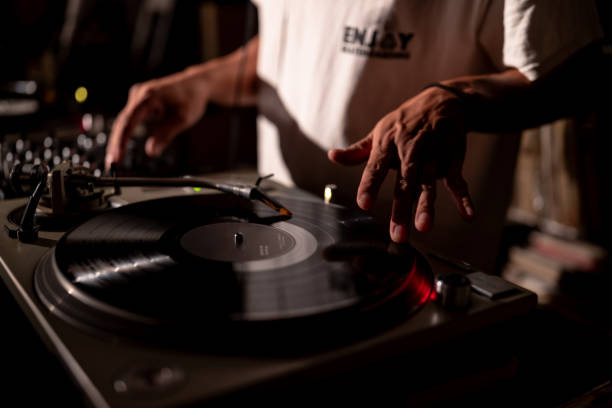
If you’ve ever found yourself nodding along to a set that suddenly drops into a frenzy of chopped breaks, pitched-up vocals, and piano stabs that hit like a sugar rush from 1992, you’ve already felt breakbeat hardcore. But do you know how to talk about it? Welcome to Genre Micro Definitions, where we slice through the noise and get real about the language that built the underground. This isn’t just a history lesson—it’s a reminder that every time you step behind the decks, you’re part of a lineage that stretches back to sweaty warehouses, pirate radio crackle, and DJs who treated turntables like instruments of chaos.
Let’s start with the obvious question: what is breakbeat hardcore? In the early 90s, UK ravers were already hooked on acid house and Belgian techno, but something shifted when producers started splicing funk and soul breakbeats—think James Brown’s “Funky Drummer” or the Amen break—into tracks that ran at 140 to 160 BPM. The results were frantic, joyful, and impossible to ignore. DJs like Fabio, Grooverider, and DJ Sy became legends by weaving this sound into sets that could flip from euphoric to menacing in a single bar. But to really get it, you need to speak the lingo.
First up, you’ve got “the drop.” In breakbeat hardcore, a drop isn’t just a bass kick—it’s a full-body reset. A good DJ will tease you with a breakdown, let the crowd breathe, and then slam the break back like a door slamming shut. That moment? That’s the drop. It’s the reason your playlist needs transition points that build tension, not just volume. If you’re mixing at home, practice fading out the highs during a breakdown, then cut the lows for a beat, and bring everything back in with the break at full force. Congrats, you just did a rudimentary hardcore drop.
Then there’s “the amen break.” You’ve heard it a million times—it’s that six-second drum solo from The Winstons’ 1969 track “Amen, Brother.” Breakbeat hardcore sampled it to death, sped it up, and turned it into a rhythmic weapon. If you’re a DJ looking to blend tracks, knowing your amen variations is crucial. Some are pitched up, some are chopped, and some have ghost snares that hit off-grid. When you hear a track that uses the amen break, you’re hearing history in motion. Drop it into a modern set and watch the heads in the crowd nod like they just remembered something important.
Another key term: “the hoover.” Not the vacuum—the synth sound. Think of a nasty, squelching lead that sounds like someone’s sucking the air out of the room. Tracks like “Mentasm” by Second Phase or “Dominator” by Human Resource used the hoover to create that iconic, aggressive energy. In your DJ language, calling a track “hoover-heavy” means it’s built for peak-time chaos. Layer it under a breakbeat and you’ve got a crowd-crusher.
Let’s talk “rewind” or “reload.” In the hardcore scene, a DJ might physically spin a record backward to restart a track if the crowd is losing it. It’s a power move. You don’t do it for every song—that’s just ego. But when a break hits so hard the room explodes, slapping the record back to the cue point and dropping it again is a ritual. It’s the DJ saying, “You liked that? Here it is again, harder.” Just don’t overdo it. One rewind per set? Classy. Three? You’re a show-off.
You also need “the piano riff.” Hardcore pianos are euphoric, cheap-sounding, and absolutely essential. Think “Let Me Be Your Fantasy” by Baby D or “Ain’t Talkin’ ‘Bout Dub” by Apollo 440. As a DJ, if you’re mixing two hardcore tracks, you want to align those piano riffs—let them overlap, create a cascade of joy. It’s called a “piano drop,” and it’s the closest you’ll get to a chemical reaction without the chemicals.
Finally, understand “tempo riding.” Breakbeat hardcore BPMs aren’t fixed. You’ll jump from 140 to 160 in a single track, so your beatmatching has to be quick. Use the pitch fader gently, and never fight the records. Let the breakbeats breathe. If you’re playing vinyl, learn to ride the pitch like you’re steering a car on a winding road. Digital DJs have it easier with sync, but the old-school feel comes from knowing when to ignore the grid and just go with the momentum.
So why does this matter? Because breakbeat hardcore isn’t nostalgia bait. It’s the DNA of jungle, drum and bass, and even parts of modern bass music. When you speak the language—drops, amens, hoovers, rewinds, pianos, and tempo riding—you’re not just mixing tracks. You’re summoning a spirit that refused to die in a dark room in 1992. Keep the history alive. Keep the breaks fast. And never forget: the best DJs don’t just play records. They translate energy.