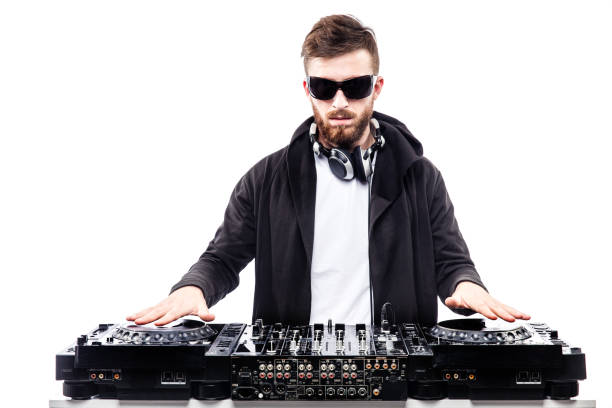
If you’ve ever hung around a DJ booth, watched a live stream, or scrolled through gear forums, you’ve heard it a hundred times: “I just use two CDJs and a mixer.” But here’s the thing—the player sitting in front of that DJ might not actually be a Pioneer CDJ. It could be a Denon SC6000, a Technics SL-1200, a Reloop, or even a laptop running Serato. Yet the term “CDJ” has become the Kleenex, the Xerox, the Google of DJ gear. It’s a brand name that turned into a generic term. And in the world of DJ lingo, learning to speak that language is part of the initiation.
Back in the 1990s, when CDs were still the shiny new way to play music, Pioneer dropped the first CDJ-500. It was a revelation—you could DJ with CDs just like you did with vinyl. No more rewinding tapes or worrying about scratched records in the club. The name “CDJ” literally stood for “Compact Disc Jockey,” and it quickly became the industry standard. By the 2000s, CDJs were in every major club. They were the unbreakable, reliable, workhorse players that promoters trusted and touring DJs demanded. If you showed up with a USB stick, you knew the booth would have two CDJ-2000s waiting.
Fast forward to today. Most DJs don’t even use CDs anymore. You load tracks from a USB drive, an SD card, or stream them from Wi-Fi. The technology has evolved, but the name stuck. When a DJ says “I need to grab my CDJs,” they’re not talking about compact discs. They’re talking about their media players, regardless of the brand. This isn’t laziness—it’s shorthand. It’s the same reason we say “I’ll Uber there” instead of “I’ll use a ride-hailing app.” The brand becomes the verb, the noun, the universal identifier.
But here’s where it gets tricky for new DJs. If you walk into a gear shop and ask for “CDJs,” a salesperson might immediately point you to Pioneer gear. And that’s fine, because Pioneer is still the gold standard. But if you’re budget-conscious or want different features—like standalone performance pads or dual-layer decks—a Denon SC6000 or a Numark Mixdeck might be a better fit. The problem is that saying “CDJ” can confuse a newbie into thinking they must buy Pioneer. The reality is that “CDJ” in everyday DJ speak just means “a digital turntable.” It’s the form factor, not the logo.
This genericization has been happening for decades. Think about “Photoshop” as a verb for any image editing, or “Coke” for any cola. In DJ culture, the list includes “Serato” for any DJ software (even if you use Traktor or Rekordbox), “Vestax” for any old-school scratch mixer, and “Technics” for any turntable—even though Technics stopped making the SL-1200 for years. The 1200s are iconic, but young DJs now use “Technics” as a synonym for “direct-drive turntable” regardless of manufacturer. It’s a kind of linguistic loyalty that honors the innovation while simplifying communication.
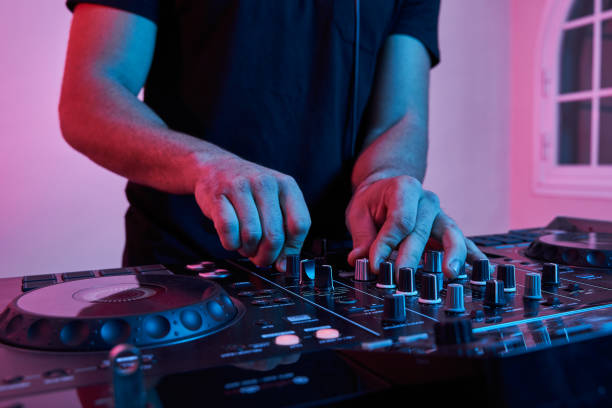
So why does this matter? Because when you’re learning to DJ, you need to understand the language of the booth. If you’re about to play a set and the promoter asks, “Are you bringing your own CDJs or using ours?” they’re really asking, “Do you have your own media players, or will you use what we have here?” The brand doesn’t matter in that moment—what matters is that you understand the expectation. If you show up with a laptop and a controller, and they have a traditional booth setup with two players and a mixer, you might need adapters, a sound card, or even a different workflow. Knowing that “CDJ” means “media player” helps you prep for the gig.
Also, when you’re chatting with other DJs online or at a festival, using “CDJ” as a generic term makes you sound like you belong. It’s like saying “cut” instead of “fade” or “beatmatch” instead of “sync.” It’s the secret handshake. You don’t have to be a Pioneer fanboy to say it. You just have to know that the community has decided that one word means “the thing you use to play your music on stage.” It’s efficient, it’s historic, and it’s a little bit cool.
Of course, there are purists who will correct you. They’ll say, “That’s not a CDJ, it’s a Denon.” And they’re technically right. But language evolves, especially in subcultures. The real skill is knowing when to be precise (when discussing specs or troubleshooting) and when to be generic (when ordering a drink at the bar of Berghain and telling the resident DJ you like their CDJ setup). If you ever buy a used “CDJ” off a marketplace and it turns out to be a different brand, don’t panic. You’ve just learned the first lesson of DJ lingo: it’s not about the name on the hardware—it’s about the culture behind it.
So next time someone asks what gear you use, you can say “I run two CDJs and a mixer” and everyone will nod. You’ll be speaking the language. And whether you’re rocking Pioneer, Denon, Reloop, or even a pair of refurbished Technics, you’re part of the same conversation. Just remember: the term “CDJ” is a ghost that now lives in the booth, long after the CDs themselves have disappeared. Embrace it. It’s one of the few things in DJ culture that’s still universally understood, from Larry Levan’s Paradise Garage to tomorrow’s warehouse rave.