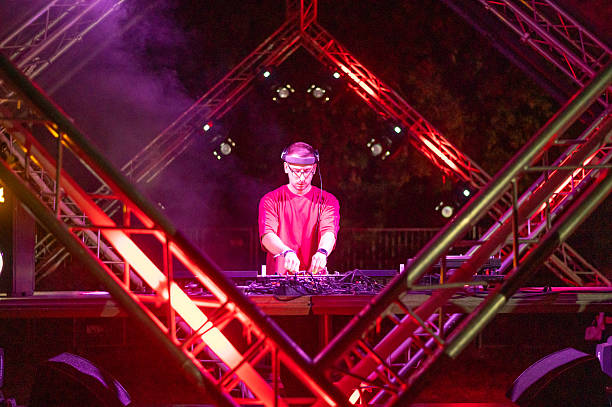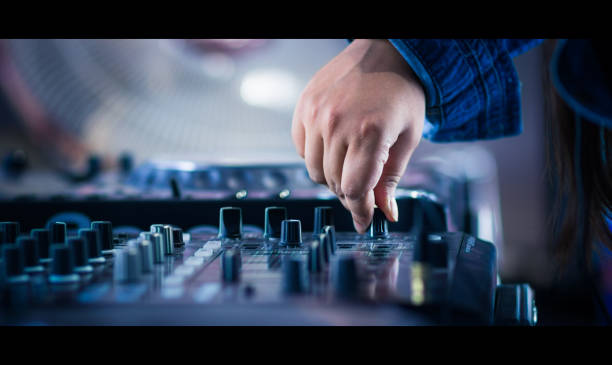
So you’ve got your laptop open, your headphones on, and a track queued up in the B deck. The crowd—or maybe just your roommate—is looking at you with that “go on, do your thing” energy. Your heart is doing that double-time thing, like a kick drum running away from itself. You’re about to hit play on the incoming track, but suddenly you realize: you have no idea how to count beats without your brain turning into static. Welcome to DJ Life 101, specifically the First Mix Ever Walkthrough, where we are going to breathe through this moment and actually land that transition.
Here is the secret that nobody tells you when you’re watching your favorite DJ casually blend two records: counting beats is not math. It is a rhythm, a feeling, a conversation between your ears and your fingertips. You are not in a classroom being tested on time signatures. You are a dancer with a mixer. So let’s peel back the panic and get you counting like you already know what you’re doing, because you do.
First, understand that every track is built on a repeating skeleton. You are listening for the four-count phrase, the universal language of house, techno, hip-hop, disco, and everything in between. Most dance music is structured in groups of four beats, and those groups stack into phrases of eight, sixteen, or thirty-two beats. Think of it like sentence fragments: four beats is a word, eight beats is a clause, sixteen beats is a full thought. Your job is not to count every single beat for the entire song. Your job is to lock into the downbeat—the one—and then let the groove carry you forward.
To practice this without spiraling, start at home with any track you know well. Close your eyes. Tap your finger on the one. Say “one” out loud on that first kick. Then let the next three kicks happen without speaking. Just let your body nod or tap along. The moment you try to count every single “one-two-three-four” with your voice, you will trip over yourself because your brain will race ahead. Instead, count only the ones. That is your anchor. Once you feel that one landing every four beats, you can reintroduce the other numbers silently in your head. The goal is to stop thinking about counting and start feeling the phrasing.
Now, here is where the panic usually peaks: when you hit play on the incoming track. You have to align that incoming downbeat with the outgoing downbeat, and your ears are telling you they are close but not perfect. Instead of freezing, simplify your focus. Listen only to the kick drum on the incoming track. Ignore the hi-hats, ignore the melody, ignore the bassline for a second. Just find that kick. Then listen to the kick on the master track. Are they walking together like two friends with the same stride? If the incoming kick is a hair behind, nudge the pitch slider forward gently. If it is ahead, pull it back. Do not yank it. Small, patient movements. You are not fixing a flat tire; you are adjusting a watch.
A huge piece of this puzzle is preparation. Before you even start your set, beatmatch the first two tracks in your headphones. Get them locked in while nobody is listening. That way, your first transition is already confident, and the room feels your command from the jump. You can even use the sync button if your gear has it—there is no shame in that. Sync is a tool, not a crutch. The real skill is musical flow, not manual wrestling. Larry Levan didn’t care about proving his manual pitch wizardry; he cared about the room moving. Frankie Knuckles built entire nights on seamless emotional arcs, not on how many seconds he spent nudging a platter. Wendy Hunt brought a deep, hypnotic precision to early New York radio mixes, and she didn’t panic when the vinyl wobbled. She just rode it.
If you lose the count mid-mix, do not stop the track and start over. That is the nuclear option and it kills momentum. Instead, reset by listening to the snare or clap on the two and four. Most dance music emphasizes the backbeat, that snappy hit on the second and fourth beat of every bar. If you catch that snare, you can instantly rebuild your orientation. From there, find the next one. You will be back in phrase within four beats. The audience does not know you got lost. They only know you kept going.
Finally, remember that your first mix does not need to be flawless. It needs to be honest. You are learning a craft that took the pioneers years to refine. Larry Levan’s early sets at The Loft were chaotic experiments. Frankie Knuckles started with disco records he barely knew how to beatmatch. Wendy Hunt figured it out on live air with no do-overs. The beat is always there, waiting for you. You just have to stop fighting it and start dancing with it. So take a breath, find the one, and hit play. You have got this.