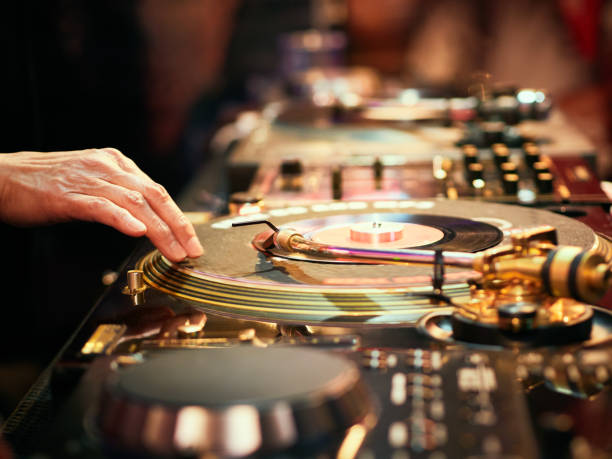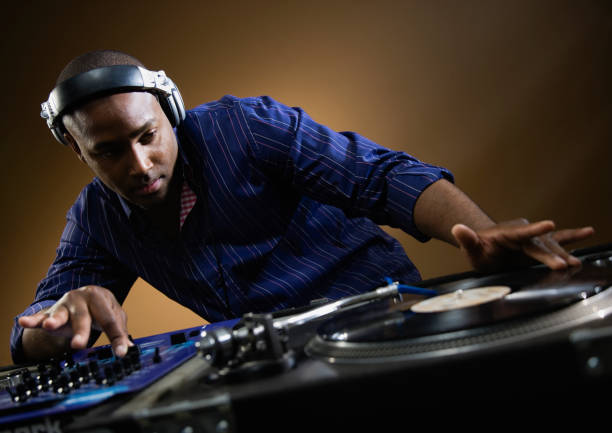
Let’s be real for a second. You’ve got a library full of bangers, you’ve practiced your beatmatching until your ears ring, and you can blend two tracks in your sleep. But if you’re still just hitting play on a track and fading into the next one, you’re leaving a whole universe of creative potential on the table. We’re talking about live mashups with loops. Not the pre-produced, studio-crafted versions you find on SoundCloud. We’re talking about building something new, right there in the booth, in real-time, with your audience as your co-creator. This is what we call mastering the mix, and it’s the secret sauce that separates a good DJ from a legendary one.
Loops are the building blocks of the modern DJ set. They aren’t just for extending a breakdown while you run to the bathroom. When you understand loops as your raw material, you become a producer on the fly. Think of it like this: every track in your crate is a painting. A loop is a single brushstroke. You can take a four-bar drum loop from a house track, layer a vocal hook from a pop song over the top, and then drop a bassline from a techno banger underneath. You’re not just mixing songs; you’re mixing frequencies, rhythms, and emotions. The magic happens when you find the pocket where two or three loops from completely different genres lock together like they were made for each other.
Start with your phrasing. The advanced looping workflow isn’t about random chaos. You need to know where your loops live. Most DJ software and hardware let you set loop lengths from one bar to thirty-two bars or more. For a live mashup, start with a solid rhythmic foundation. Grab an eight-bar loop of a track’s drum intro or a stripped-back groove. This is your canvas. Now, bring in a second track. Listen to its structure. Instead of playing the whole thing, cue a four-bar loop of its most recognizable vocal line or melodic hook. Hit play on that loop, and listen to how it sits over your foundation. Does the key clash? Does the tempo fight? Your ears are your best tool here, but don’t be afraid to use key lock or master tempo to keep everything in tune while you adjust speeds.
The real art is in the layering and the movement. A live mashup should breathe. You don’t just drop three loops on top of each other and walk away. That’s a cacophony. You need to treat each loop like a part of a conversation. Bring the vocal loop in, let it ride for sixteen bars, then slowly fade it out. Swap it for a synth stab loop from a different track. Cut the drums for a bar and let the bassline loop breathe alone. This is where your creativity shines. Use your EQ to carve out space. If the vocal loop is mid-range heavy, cut the mids on your drum loop so they don’t fight each other. If the bassline is thumping, duck the lows on your other loops. You’re sculpting sound live, and the crowd feels that effort.
Another pro tip for mastering the mix is to use your loop recall or memory cue features. Many modern controllers let you save your loop settings. Before your set, experiment at home. Find four or five tracks that share similar keys or complementary energy. Pre-set two-bar or four-bar loops on their best sections. Then, during your gig, you can dive into these loops without scrolling frantically through your library. This turns your set into a live jam session. You become a remixer, not just a playlist curator.
Don’t sleep on the power of silence, either. A live mashup can get dense fast. Knowing when to clear the air is just as important as knowing when to stack. Let a loop play out on its own for a moment. Let the crowd hear just the drums or just the vocal. Then, when you reintroduce another layer, the impact is massive. This dynamic tension is what keeps dance floors moving and people’s jaws on the ground.
Finally, remember why you’re doing this. The best live mashups tell a story. When Larry Levan would loop a groove at the Paradise Garage for twenty minutes, he wasn’t just showing off. He was building a vibe, a moment, a shared experience. Wendy Hunt, Frankie Knuckles, all those trailblazers understood that the mix is a living thing. Loops are your way of keeping that tradition alive while making it your own. So next time you’re behind the decks, don’t just play a song. Build one. Master the mix by crafting live mashups that only exist in that room, at that moment, for those people. That’s the ultimate flex.