You know that moment. You’re vibing behind the decks, the crowd is locked in, and then—crunch. That harsh, brittle high-end cuts through like nails on a chalkboard, making everyone wince. It’s the DJ’s nightmare: the dreaded “crunchy highs.” These are those piercing frequencies that sound overdriven, static-y, or just plain unnatural. They can kill a groove faster than a blown speaker. But here’s the thing—fixing crunchy highs isn’t just about knowing your equalizer. It’s about speaking the language of sound, which is exactly what our section on Descriptive Sound Adjectives is all about. Let’s decode the lingo so you can diagnose, describe, and fix those painful peaks before they wreck your set.
First, what even is a “crunchy high”? In DJ lingo, it’s a specific type of distortion that lives in the upper frequencies—think cymbals, hi-hats, or vocal sibilance. It’s not the warm saturation of vinyl or the smooth air of a well-mastered track. It’s that digital grit, that fizzy edge that sounds like someone ran the audio through a blender. When you hear it, you know it. You might describe it as “harsh,” “brittle,” or “tinny.” These are all adjectives we use to pinpoint the problem. If you’re in the booth and someone asks, “What’s wrong with the highs?” you don’t just point vaguely. You say, “They’re crunchy—needs some de-essing or a high-frequency roll-off.” That’s DJ talk, and it’s how you communicate like a pro.
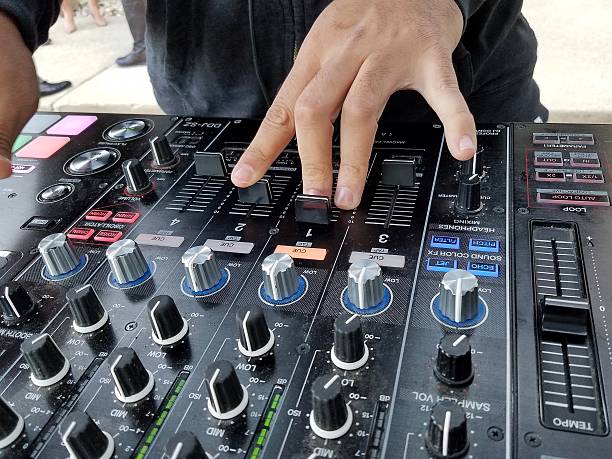
So how do you fix crunchy highs without nuking the whole track? Start with your EQ. On most mixers, the high-frequency knob (usually labeled “High” or “Treble”) cuts or boosts everything above a certain point. If you’re hearing crunch, ease that knob back a notch—or two. But careful: cutting too much makes the track sound dull, like a pillow over the speakers. The trick is to be surgical. Listen to the source: is the crunch in the original file? Sometimes a low-quality rip or an over-compressed streaming track is the culprit. In that case, you might need to swap to a cleaner version or use a subtle low-pass filter to shave off the extreme top end—around 16 kHz and up—where most of the nasty stuff hides. Pro tip: many DJ software platforms like Serato or Rekordbox have built-in EQs with “kill” switches. Don’t just kill the highs entirely; gently roll them off until the crunch disappears but the air remains.
But here’s where descriptive adjectives save your set. When you’re talking to a sound tech or another DJ, saying “the highs are crunchy” gives them a mental image of the problem. Compare that to “there’s too much high end”—which could mean anything from a slight boost to a full-on assault. Crunchy is specific. It says, “There’s a distorted, granular quality that needs smoothing.” If you want to get even more precise, try “hashy” (like a noisy radio signal) or “glassy” (cold, piercing). These aren’t just buzzwords—they’re the vocabulary of sound design. Legendary DJs like Frankie Knuckles and Larry Levan didn’t just mix tracks; they sculpted sound. They’d tell you that a track’s highs should be “sparkly” or “crisp,” not “sandpapery” or “frazzled.” Learning to hear and name these differences is how you level up from button-pusher to sound architect.
Another fix often overlooked is your gain staging. Crunchy highs can actually come from clipping in the mixer’s preamps rather than the track itself. If you’re redlining the channel fader or master output, you’re creating digital distortion that shows up loudest in the high frequencies. Keep your levels in the green, and if you need more volume, use the channel trim knob rather than pushing the fader past 0 dB. Also, check your headphones. If you’re monitoring loud, you might be adding ear fatigue and mishearing the mix. Take a break, reset your ears, and then ask yourself: does the crowd reaction feel tired or energized? Often, the simplest fix is lowering the overall volume by a hair—our ears naturally perceive highs as louder when the whole mix is cranked.
Finally, embrace the power of the descriptive adjectives glossary. On a website like ours—the ultimate guide to DJ life—we break down every word you need to speak the language. For highs, we’ve got “airy,” “open,” “sparkling,” “clear,” “sharp,” “piercing,” “brittle,” and yes, “crunchy.” When you can describe what you’re hearing with nuance, you can fix it fast. No more guessing. Next time you hear those unwanted crispy tops, you’ll know: a little EQ cut at 8 kHz, a gain adjustment, or a swap to a cleaner source. And when someone asks how you fixed it, you can say, “Just smoothed out the crunch—easy.” That’s DJ confidence. That’s speaking the language. Now go make your highs sing, not sting.