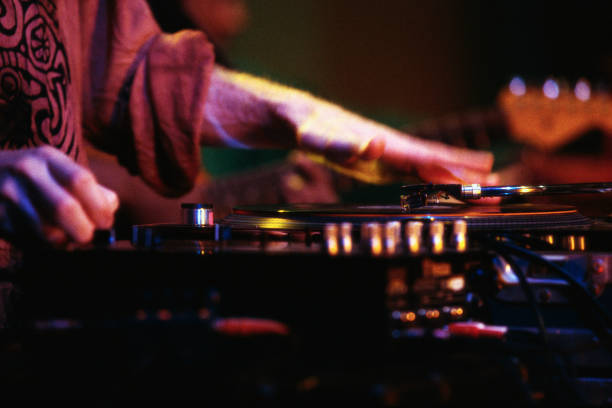
Before there were streaming sets, before there were Instagram stories from the booth, before anyone even thought to call a DJ an “artist,” there was a room in downtown Manhattan that smelled like sweat, Juicy Fruit gum, and liberation. That room was the Paradise Garage, and the man holding the decks was Larry Levan. If you’ve ever lost yourself in a four-hour mix, if you’ve ever realized you were dancing so hard you forgot your own name, you owe a piece of that moment to him. But here’s the thing the history books don’t always tell you: Levan wasn’t just about dancing. He was about deep listening. And sometimes, at the Garage, the dancing had to wait.
Let’s rewind to the late 1970s. Disco was peaking, but it was also being shoved into a commercial box—shiny, fast, and predictable. Enter Larry Levan, a Black queer DJ from Brooklyn who saw the turntable as a storytelling instrument. The Paradise Garage wasn’t your standard club. It was a converted parking garage on King Street, with a custom sound system designed by Levan and his crew. He called it the “house system” because the speakers were aligned to create a single point of sound—like a sound cloud you could stand in. If you’ve ever felt bass in your bones, that’s the Levan signature.
But here’s where the “deep listening over dancing” part comes in. Levan understood that a great set isn’t just about keeping people moving. It’s about taking them on a journey. He’d start a night with ambient space disco or dub reggae—tracks that were more about texture than tempo. The room would throb with anticipation. People would close their eyes, swaying, listening. He’d let a record play for twelve, sometimes fifteen minutes, looping and teasing, letting the crowd’s collective energy build. Then, bam—he’d drop a Tom Moulton remix or a fresh import from Philly, and the floor would erupt.
This approach was radical because it flipped the DJ’s role from “human jukebox” to “emotional conductor.” Levan didn’t just play records; he curated a spiritual experience. He’d cut into a track at its most vulnerable moment, let the bassline breathe, then drop out completely for a second of silence—a moment of pure tension—before slamming back in. That silence? That was the deep listening part. It was a reminder that the music lives in the spaces between beats, too.
The Garage became a sanctuary for New York’s marginalized communities—Black, Latinx, queer, and anyone else who felt out of place in the mainstream. The dress code was loose: high fashion mixed with DIY grit—sweatshirts, mesh tanks, vintage jackets, white sneakers. People danced in pairs, in groups, or alone with their eyes closed, lost in the sound. Levan’s booth was low, level with the dance floor, so he could see every face. He played for them, not for himself. He’d watch a couple swaying to a slow jam and hold the tempo there, letting the moment stretch. “Sometimes,” he once said, “you don’t need to dance. You just need to feel.”
But don’t mistake this for a chill vibe. The Garage was loud. Painfully loud. The speakers could rattle your organs. Levan’s sets often went past sunrise, sometimes into noon the next day. He’d play everything from garage house (the genre he helped invent) to rockabilly to African funk. No genre was off-limits if it served the emotional arc. He’d drop a Diana Ross anthem next to a rare Arthur Russell cello piece, and somehow it made perfect sense.
This philosophy—deep listening as a form of dancing, dancing as a form of listening—became the blueprint for the DJs who followed. Frankie Knuckles in Chicago took Levan’s house music energy and stripped it down to its soul, building the foundation for what we now call house. Wendy Hunt, another trailblazer, carried that same immersive, listening-first approach into West Coast clubs, emphasizing texture and atmosphere over relentless four-on-the-floor. The lineage is direct: from Levan’s garage to Knuckles’ Warehouse to every underground club where a DJ dares to play a slow track in the middle of the night.
For the modern DJ, the lesson is simple but profound. Yes, you need to know your BPMs and your beatmatching and your EQ curves. But the real craft is knowing when to pull back. When to let a record breathe. When to make the room stop dancing so they can start listening. That’s what separates a button-pusher from a pioneer.
So next time you’re in the booth and you feel the urge to keep the energy high at all costs, remember Larry Levan. Remember the Paradise Garage. Sometimes the most powerful move is to lower the volume, drop a dubby interlude, and let the crowd stand still for a moment. Let them feel the air. Let them listen. Because dancing is the destination, but deep listening is the fuel that gets you there.