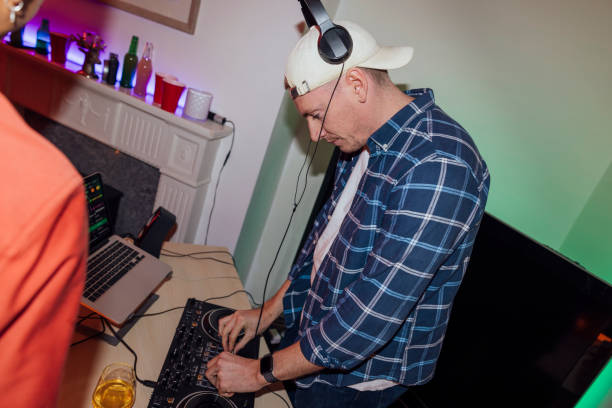
You’ve got Sync, you’ve got key detection, you’ve got waveforms that tell you exactly where the breakdown is. Modern DJ software practically spoon-feeds you the mix. But here’s the thing nobody tells you when you’re starting out: the computer doesn’t have ears. It has algorithms. And algorithms, my friend, cannot feel the room. That’s where harmonic mixing becomes an art, not a science, and why double checking by ear always remains the single most underrated skill in your DJ toolkit.
Let’s be real for a second. Harmonic mixing—mixing tracks that are in compatible musical keys so they don’t clash like a cat in a blender—is the backbone of a smooth, professional set. It’s why a drop from a D-major house track into an E-minor techno banger can send shivers down the crowd’s spine instead of making them cover their ears. Most DJs rely on the Camelot wheel or software like Mixed In Key or the key display in Serato or Rekordbox. And sure, those tools are fantastic starting points. They give you a map. But a map isn’t the same as walking the road.
I’ve watched too many bedroom DJs load up a track that says “5A” next to another “5A,” hit play, and then wonder why the mix sounds like two different conversations happening in the same room. The reason? That key label? It’s a guess. A very educated guess, but a guess nonetheless. Software analyzes frequencies and tries to figure out the root note, but it doesn’t account for modal ambiguity, weird chord extensions, or the fact that some producers intentionally write in harmonic gray areas. You ever drop a track that’s supposedly in F minor only to realize the bassline is actually flirting with a flat seventh that makes it sound like it’s in a different key entirely? That’s not a glitch. That’s music being music.
So what do you do? You train your ears. You start by listening to the key of a track in isolation, humming the root note, feeling the tonic in your chest. Then you cue up your next track and do the same. Don’t look at the screen. Close your eyes. Listen to the basslines. Listen to the pads. Does the new track’s root note sit comfortably with the outgoing track’s? Does it pull you forward or make you wince? That wince is your guide. If you feel it, the software is wrong. Trust the wince.
Here’s a practical move that separates the pros from the playlisters: when you’ve got two tracks loaded and the software says they’re compatible, preview the mix with just the lows and mids, no highs. The high frequencies can trick you into thinking a mix works when the harmonic foundation is actually off. If the basslines clash, even a little, you’ll hear it as a muddy rumble. That’s your cue to either nudge the pitch, change the phrasing, or admit that the software got it wrong and move on to a different track.
And don’t sleep on relative mixing either. Sometimes a track that’s a minor third away can work beautifully if you introduce it with a filter sweep or a well-timed echo—but again, you have to hear it. The algorithm can’t tell you that a 4A track might actually vibe with a 6B if the energy and texture are right. Only your ears can.
Double checking by ear also protects you from the dreaded “mix collapse” when you’re playing on unfamiliar gear. Not every club CDJ has the same analysis engine, and some older models read key data differently. If you’ve never trained your ear, you’re at the mercy of whatever screen is in front of you. That’s a dangerous place to be at 2 AM when the dancefloor is packed and your next track is cued up.
So here’s the challenge: for your next five mixes, don’t look at the key readout until after you’ve already matched and blended the tracks by ear. Then check it. You’ll be surprised how often your gut was spot on, and how many times the software was misleading you. Over time, you’ll build a muscle memory that no update or plugin can replace.
Harmonic mixing properly isn’t about following a wheel. It’s about developing a relationship with sound that goes beyond data. It’s about trusting the most important tool you own: your hearing. Double check by ear always. Your crowd will thank you, your mixes will breathe, and you’ll stop being a DJ who just reads numbers and start being one who moves people.