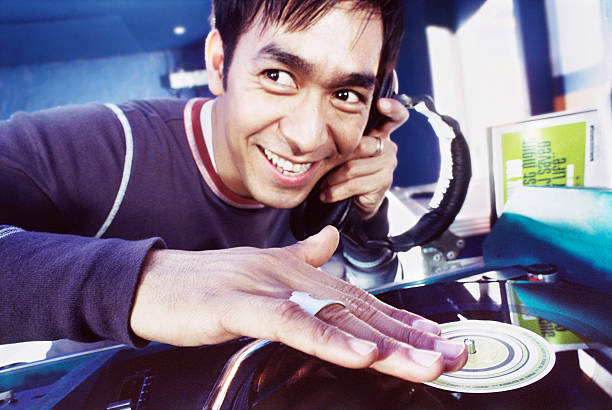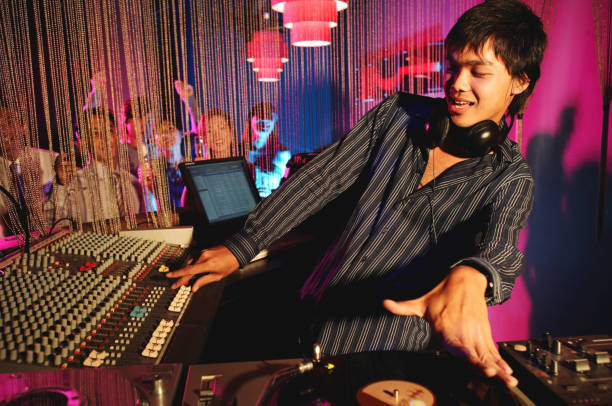
Imagine you’re standing in a sweaty basement club in the late 1970s. There’s no sync button, no laptop, no waveform on a screen. There’s just a guy in a booth with two turntables, a mixer, and a stack of reel-to-reel tapes. That guy is Frankie Knuckles—or maybe Larry Levan, or Wendy Hunt—and he’s literally cutting magnetic tape with a razor blade to stretch a four-on-the-floor kick drum for another eight minutes. This is the raw, hands-on origin of DJ culture. Before the CDJ, before Serato, before anyone ever said “drop the beat,” there was the reel machine. And the DJs who mastered it weren’t just playing records—they were editing disco into something that didn’t exist yet.
Let’s rewind to the mid-1970s. Disco is booming, but the problem for DJs is obvious: most disco tracks are only three to four minutes long. A dance floor needs a relentless groove, not a quick radio cut. So how do you keep the party going? You grab a reel-to-reel tape recorder, a splicing block, and a pair of editing shears. The pioneers of DJ culture—people like Tom Moulton, Walter Gibbons, and later Frankie Knuckles—became obsessive tape editors. They’d identify the most percussive, hypnotic section of a track, cut it out from the master tape, and physically loop it by reattaching the ends. This was the first “extended mix.” No quantization. No grid. Just a razor blade and pure feel.
Tom Moulton is often credited with inventing the remix. In 1972, he accidentally left a tape loop playing too long during a session, realized the crowd went nuts, and started manually creating endless percussion breaks. He’d use a reel machine to splice vocals, strings, and bass drums into arrangements that built and released tension over ten or fifteen minutes. That’s the DNA of every modern DJ set. Walter Gibbons took it further—he’d isolate a single drum fill, splice it into a groove, and press acetates overnight so he could play them at the Loft the next night. These guys didn’t have DAWs. They had their ears, their hands, and the willingness to destroy the original tape.
Frankie Knuckles came up in this world. When he moved from New York to Chicago in 1977 to take over the Warehouse, he brought that reel-to-reel mentality with him. Knuckles wasn’t just mixing records; he was editing them live. He’d layer drum machines like the TR-909 over reel loops he’d cut himself, creating the early sound of house. His sets were built on these extended, edited reels that turned a normal disco track into a hypnotic journey. He called it “disco editing on reel machines,” and it was the only way to get the longevity he needed for a six-hour night. Without his tape-splicing background, there’s no “Your Love,” no “Baby Wants to Ride,” no foundational house music as we know it.
Let’s not forget Wendy Hunt, one of the underappreciated trailblazers. At a time when women in the DJ booth were rare, Hunt was running reel edits in New York clubs like Paradise Garage. She’d use the machines to loop vocals over stripped-down beats, creating a style that directly influenced the early disco house crossover. Her approach was tactile—she’d mark the tape with a white pencil, locate the exact start of a hi-hat pattern, and slice it clean. Then she’d run that loop through a homemade reverb unit. This was science, art, and brute force all at once.
So why does this matter now? Because every time you hit the loop button on a Pioneer CDJ, you’re using a digital version of what these pioneers did with their hands. The sync button is a ghost of the razor blade. The crossfader is a descendant of the mute button on a reel-to-reel deck. The pioneers didn’t have the luxury of visual waveforms—they had to memorize the micro-second where the snare hit, mark it with a piece of Scotch tape, and hope the splice held during a live set. If it skipped? They’d re-splice it in the dark.
The lesson for any DJ today: respect the edit. The best sets aren’t just “song after song.” They’re curated, chopped, stretched, and reimagined. Frankie Knuckles, Larry Levan, Tom Moulton, and Wendy Hunt taught us that the real craft isn’t the gear—it’s the willingness to tear the music apart and put it back together with your own hands. So next time you cue up a track, remember the reel machine. And maybe put down the sync button for a sec. A razor blade isn’t required, but the spirit of the edit always is.