There’s a moment that separates a good DJ from a great one. It’s not the first track that gets the crowd moving, not the peak-time banger that breaks the internet, and not even the technical wizardry of a flawless beatmatch. It’s the last five minutes. The closing vibe. The way you choose to land the plane—or, if you’re feeling reckless, crash it beautifully. Mastering the mix isn’t just about how you get into a track; it’s about how you leave the room with everyone still buzzing, still connected, still feeling like they just witnessed something sacred.
Think about your favorite sets. The ones that stuck with you long after the strobes died down. Chances are, the closer is what you remember most. Did they drop a slow-burning house remix of a classic vocal? Did they fade out to nothing but the sound of a single synth pad and the crowd’s own cheers? Or did they hit you with a curveball—a left-field lo-fi edit that somehow made the whole night make sense? That’s the art of set storytelling. The ending isn’t just an ending; it’s the punchline, the exhale, the final brushstroke on a canvas you’ve been painting for hours.
Historically, the masters of this craft understood the psychological weight of a closer. Larry Levan at the Paradise Garage didn’t just stop the music—he’d often let the last track breathe, letting the crowd’s energy simmer into a collective moment of gratitude. Frankie Knuckles would weave in gospel-tinged house cuts that felt like a benediction, leaving dancers in a trance long after the lights came up. Wendy Hunt, a trailblazer in the early UK scene, knew that a closing vibe could be a statement—a political whisper or a quiet celebration that echoed back to the roots of disco and freedom. These DJs weren’t just playing songs; they were writing endings that felt inevitable.
So how do you craft that final drop today? Start with intention. The last track of your set shouldn’t be an afterthought or a last-minute panic scroll through your USB. It should be a deliberate choice that reflects the emotional arc of your entire mix. If you’ve been building tension, don’t release it with a generic anthem. Instead, consider a downtempo version of a track you teased earlier. Or loop a vocal hook from the opening of your set and let it fade into a field recording of rain, or a sample of a old DJ saying “thank you.” That kind of callback is pure storytelling mastery. It rewards the audience that stayed the whole ride.
Your BPM choice matters too. The vibe of a closing moment isn’t always about slowing down. Sure, a 90 BPM lullaby can work, but so can a 128 BPM stomper if you cut it abruptly—silence for three seconds, then let the natural hum of the system take over. That silence can be louder than any kick drum. It gives the crowd space to applaud, to cheer, to feel the absence of sound as a presence. That’s a move that takes confidence. You have to know your crowd well enough to know they won’t scatter. They’ll stay, held by the gravity of that gap.
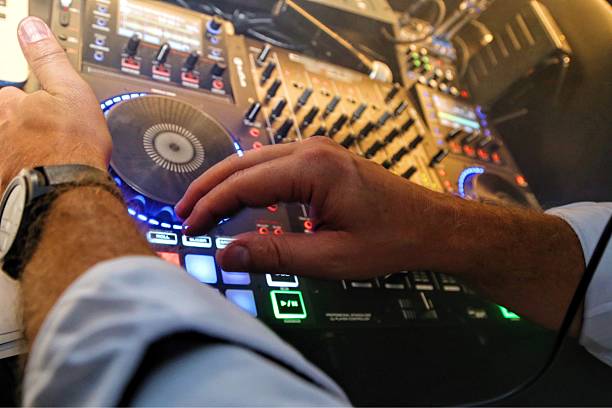
Equipment wise, don’t sleep on the power of a good reverb tail. Let the last note of your final track ring out into the room, and then ride the filter down slowly over thirty seconds. The DJ mixer becomes a conductor of emotion. Your hands on the EQs are no longer just mixing tools; they’re instruments of atmosphere. This is where technical skill meets pure feeling. And if you’re playing on vinyl, nothing beats the tactile ritual of lifting the needle—that pop and hiss is a signature closer that digital just can’t replicate.
But beyond the gear, the biggest factor is your own mental presence. You’ve been locked in, reading the room, sweating through a banger-heavy peak time. Now it’s time to chill your own energy. Take a breath. Look at the crowd. Smile or nod. That human moment—when you step back from the decks and let the track speak for itself—that’s the real closing vibe. It says: we did this together. And then, when the last note disappears, you raise a hand, not in a showy way, but in gratitude. That image sticks.
Remember the clubs on your bucket list: Berghain’s cavernous final hours where the sunrise creeps through smoke, or the slow bleed of a closing set at Fabric in London where the subs laugh one last time. In Asia, clubs like Hexagon in Seoul or Arkham in Shanghai have their own closing rituals—sometimes a skittering IDM track, sometimes a silence that feels spiritual. Study those moments. Record your own sets and listen back to your endings. Are they rushed? Are they too polite? Are they leaving an impression or just a fade-out?
At the end of the day, mastering the mix means mastering the entire journey, especially the final destination. A great closing vibe doesn’t just end the night; it begins the next one. It’s the story your audience will tell their friends the next day. It’s the reason they’ll come back. So pick that last track like it’s the most important of your life. Because in the world of set storytelling, it is.