When you first start beatmatching, it’s all about the grid. You lock in the kicks, you line up the snares, and you pretend that’s the whole job. But if you’ve been behind the decks long enough, you know that pure tempo sync is just the appetizer. The real magic—the stuff that makes a room stop and tilt their heads—happens when you start playing with the frequencies. We’re talking about EQ swapping, and it might be the most underrated tool in your creative transition kit.
Let’s get one thing straight: EQ swapping isn’t just “turning down the bass on Track A and turning up the bass on Track B.” That’s a basic filter fade, and it works fine for a four-on-the-floor beatmatching routine. But when you want to create an atmospheric blend—something that feels like a slow sunrise or a fog rolling in—you need to treat each frequency band like a separate character entering a scene. This is where mastering the mix becomes an art form, not a technical chore.
Imagine you’re blending two tracks that share a similar mood but live in different tonal spaces. Maybe your outgoing track has a warm, low-end synth pad that’s sitting around 150 Hz, and your incoming track has a crisp, airy vocal that lives above 5 kHz. A standard crossfader will just smash them together like two clashing textures. But EQ swapping lets you slowly trade those frequencies. You start by cutting the low-mids on the incoming track and boosting the highs on the outgoing track, so the pad slowly decays while the vocal starts to glimmer. Then, halfway through the blend, you reverse the roles: you bring the low-mids of the new track up as the highs of the old track fade. The result? A seamless, atmospheric shift where neither element fights for space. It feels like the room is breathing.
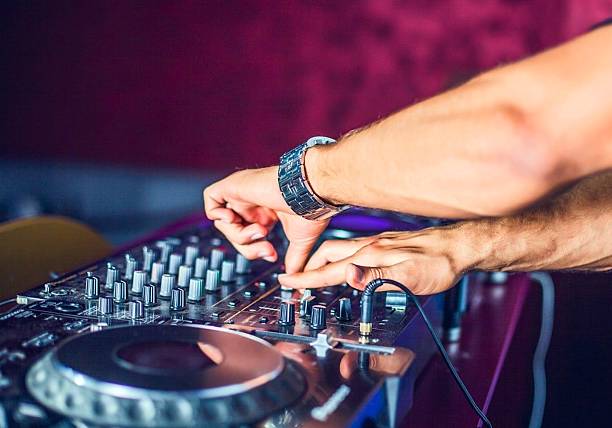
The trick is to listen with your hands, not just your ears. Think of your mixer’s EQ knobs as three tiny faders for different color zones. Low frequencies (bass and sub-bass) are the foundation—they give the room weight. Mid frequencies (vocals, leads, and guitars) are the emotional core—they carry the story. High frequencies (hi-hats, cymbals, and airy pads) are the texture—they create shimmer and space. When you swap EQs, you’re not just turning knobs; you’re deciding which part of the atmosphere you want to keep alive and which part you want to let dissolve.
Let’s say you’re going from a deep house track with a thick, rolling bassline into a melodic techno track with a sparse, driving kick. If you just slam the crossfader, you lose the dreamy vibe of the first track before the second one even finds its footing. Instead, draw out the outgoing track’s high-mid pad—that shimmering layer that sits around 2 kHz—and slowly roll off its bass. Meanwhile, bring in the new track’s kick but keep its high-end shelved down until the old pad has fully decayed. Then, at the peak of the blend, swap the lows back in and let the new track’s mids punch through. The crowd won’t hear a transition. They’ll just feel the room change color.
This technique shines especially in longer blends—think two to four minutes of overlap. You’re not rushing. You’re building a sonic landscape. It’s the same approach legends like Larry Levan and Frankie Knuckles used in the Paradise Garage and the Warehouse. They didn’t have sync buttons or stacked waveforms on a screen. They had three-band EQs and a deep understanding of how sound travels through a room. Levan would ride the lows of a disco track into a new track’s high-hats for what felt like an eternity, creating a hypnotic pulse that made dancers feel like they were riding a wave. Knuckles, meanwhile, was a master of the slow swap—letting the vocal of one record hang in the air while the bass of another record took over the floor.
And don’t sleep on the mental game. EQ swapping forces you to stay present. You’re not just pressing play and walking away. You’re actively sculpting the energy of the room. That’s why it’s a cornerstone of creative transition techniques—it keeps you locked in with the music and the crowd. Plus, it’s a great way to protect your ears and your mental health on a long gig. Instead of constantly hunting for the next drop, you can settle into a groove of gentle frequency exchanges. It’s meditative. It’s technical. And it sounds beautiful.
So next time you’re standing behind the decks, resist the urge to slam that crossfader or nudge the fader up in one go. Instead, try a slow EQ swap over sixteen, thirty-two, or even sixty-four bars. Let the frequencies dance with each other. Let the atmosphere breathe. That’s how you move from a DJ who plays tracks to a DJ who shapes a world.