EQ and filtering are not just cleanup tools. They’re the plot twists of a DJ set. Once you move past “cut the bass so the vocals don’t clash,” you enter the advanced zone where frequencies become feelings. A small twist of a knob can make a room lean forward, suck the air out of a breakdown, or turn a familiar track into something completely unreleased. The dancefloor doesn’t know what you did, but it knows something happened. That’s the whole vibe.
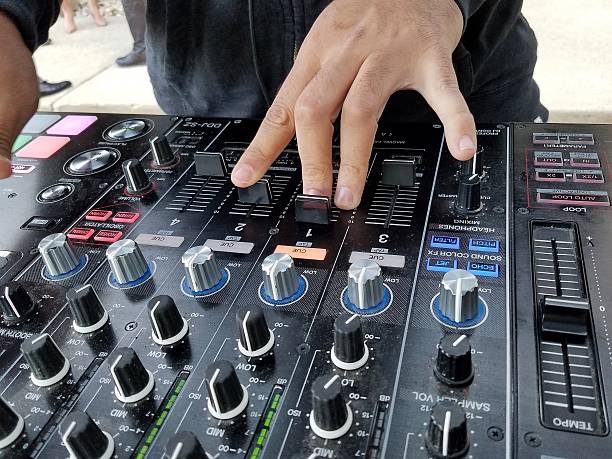
Start with EQ as a shaping tool, not a rescue mission. Every track has a fingerprint: sub-bass, kick weight, low-mid warmth, nasal honk, vocal presence, hi-hat shimmer, air. In a mix, your job is to carve space so those fingerprints don’t smudge into one muddy blob. The low end is where most sets live or die. If both tracks are pushing 40 to 80 Hz, the room will sound like a washing machine full of wet socks. Use a high-pass filter on the incoming track to thin it out while the outgoing track keeps the weight. Then, right at the drop or phrase change, swap the bass. That’s the classic bassline swap, and it still hits because it works.
Midrange is where the drama hides. Too much 200 to 500 Hz and everything feels boxy and tired. Too much 1 to 3 kHz and the crowd gets ear fatigue before midnight. Too little and vocals disappear. Advanced EQ means making decisions in motion. Maybe you scoop a little 300 Hz from the new track so the old one’s vocal cuts through. Maybe you boost a tiny bit of 2 kHz on an acapella so it pops over a dense instrumental. Subtle moves win. If you’re cranking a band more than a few dB, ask yourself if you’re fixing the mix or just making it louder and weirder.
Filtering is EQ’s more theatrical cousin. A low-pass filter rolls off the highs, making a track sound like it’s underwater or coming from another room. A high-pass filter strips the lows, leaving vocals, snares, and synths floating. DJs use these for tension. Let a track play filtered for 16 bars, then open it up. That moment when the highs rush back in? Chef’s kiss. It’s the audio version of a main character walking in slow motion.
Resonance is the spicy detail. Turn it up and the filter gets a vocal, almost singing quality at the cutoff point. That can be gorgeous on a breakdown or unhinged on a peak-time drop. But resonance is not your friend if you leave it screaming for too long. It can spike certain frequencies, make tweeters cry, and turn a beautiful sweep into a whistle that nobody asked for. Use it like hot sauce: just enough to wake up the mix, not enough to ruin the meal.
The real advanced move is combining EQ and filtering with timing. Don’t just sweep randomly. Know the phrase. If the track is built in 32-bar blocks, start your filter sweep 16 bars before the drop. Cut the bass eight bars out. Tease the vocal with a high-pass filter, then let the kick return exactly when the crowd expects it. That’s not just mixing; that’s call and response. The dancefloor trusts you because you’re speaking its language.
Also, remember that different systems lie to you. The club’s void system, your bedroom headphones, and your car speakers are three different realities. A filter sweep that sounds lush in your room might sound thin on a big rig. A bass EQ boost that slaps in the car might turn into a muddy mess in a warehouse. Trust your ears, but also learn your room. Walk the floor. Listen near the subs and near the bar. If the low end is inconsistent, be conservative.
One more thing: don’t over-EQ. It’s easy to get lost in tiny cuts and boosts until the track loses its soul. The best DJs use frequency control to serve the story, not to show off. Sometimes the right move is a gentle high-pass. Sometimes it’s a full filter kill. Sometimes it’s leaving the EQ flat and letting two great tracks breathe. The goal is energy, clarity, and surprise. When you nail it, the crowd doesn’t think, “Nice EQ.” They just dance harder. That’s the point.