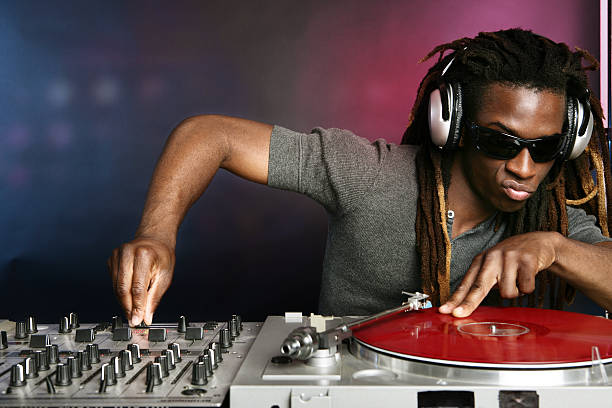
Let’s be real for a second. You’ve got two tracks locked in, the beatmatch is tight, but the crowd’s energy is hovering somewhere between head-nod and body-melt. You need a lift, a jolt, a moment of collective “oh, snap.” That’s where filter sweeps come in—not as a crutch, but as a weapon. In the world of DJing, mastering the mix isn’t just about cueing up the next banger; it’s about sculpting air, tension, and release. And few tools do that faster than a well-placed filter sweep. This isn’t your granddad’s crossfader fade. We’re talking about using high-pass, low-pass, and band-pass filters to create breathing room, inject suspense, and drop the hammer with surgical precision. Welcome to Creative Transition Techniques, where we turn raw tracks into rollercoasters.
First, let’s get the basics straight. A filter sweep is when you roll a filter (usually a low-pass or high-pass filter) across the frequency spectrum in real-time. Low-pass cuts the highs, leaving a muffled, bass-heavy thump. High-pass slices off the lows, leaving a tinny, skeletal top end. When you sweep from one extreme to the other, you’re essentially playing the frequency range like a synth pad. The magic happens when you use this to build energy mid-transition. Imagine you’re mixing out of a house track into a techno stomper. Instead of a standard echo-out or a hard cut, start rolling a high-pass filter on the outgoing track around the 16-bar mark. Slowly, the bass drops out, the crowd feels the floor getting hollow, and they lean in. Then, right as you bring the incoming track’s bass in with a low-pass filter opening up, you get that glorious “whoosh” sensation. The energy doesn’t dip—it amplifies.
But let’s talk nuance. Not all sweeps are created equal. A lazy, full-turn knob rotation will feel like elevator music. To really boost energy, you need rhythmic intention. Try syncing your filter sweep with the phrase structure. For example, on a 32-bar phrase, start your high-pass sweep on the 24th bar, cutting the low end gradually. By bar 28, the track should sound like a distant radio signal. Then, on bar 31, slam the filter back to full bandwidth as you bring in a crash cymbal or a snare roll from the incoming track. That sudden restoration of low-end hits like a shot of espresso. It’s a classic move from the Larry Levan playbook—he used the club’s massive sound system to tease the crowd with spectral deprivation before rewarding them with pure, unadulterated bass weight.
Another pro tip: layer your filter sweeps with effects like reverb or delay. If you’re using a digital mixer like a Pioneer DJM-V10 or a Traktor S4, you can map a filter to a knob while simultaneously dousing the outgoing track in a short delay. As you sweep the filter closed, the echo gets trapped, creating a ghostly afterimage. Then, when you open the incoming track’s filter with a sidechain compressor or a subtle noise gate, the transition feels like a fever breaking. The crowd’s energy spikes because their ears just went through a mini narrative: tension, confusion, clarity, release.
Don’t sleep on the EQ version either. Some DJs argue that a proper filter sweep is redundant if you already have three-band EQs, but filters offer a different texture. EQs cut specific bands; filters sweep across a broader curve with resonance. That resonance—a boost at the cutoff point—is your secret weapon. Crank it up and you’ll get a resonant sweep that screams “build-up.” Think of it as the audio equivalent of a roller coaster clicking upward. Use it sparingly, though, because too much resonance can make your mix sound like a jam session in a tin can.
Now, how does this tie into the bigger picture of mastering the mix? It’s about intentionality. The best DJs—from Frankie Knuckles to modern tastemakers like Honey Dijon—understand that transitions are not bridges; they are scenes in a movie. A filter sweep is your dramatic zoom-in. It tells the crowd to pay attention because something is about to shift. Pair it with a vocal chop, a riser, or even just a sudden silence, and you’ll have people screaming for more. And if you’re a traveling DJ, you know that energy management is everything. A cleverly timed sweep can save a dead floor or calm a chaotic one. It’s part of the wellness of the room—keeping the vibe balanced, like a DJ’s version of mindful breathing.
So next time you’re in the mix, don’t just let tracks fade into each other. Command the air. Sweep the filters with purpose, and watch the energy surge. Because in the end, mastering the mix isn’t about perfection—it’s about creating moments that nobody saw coming.