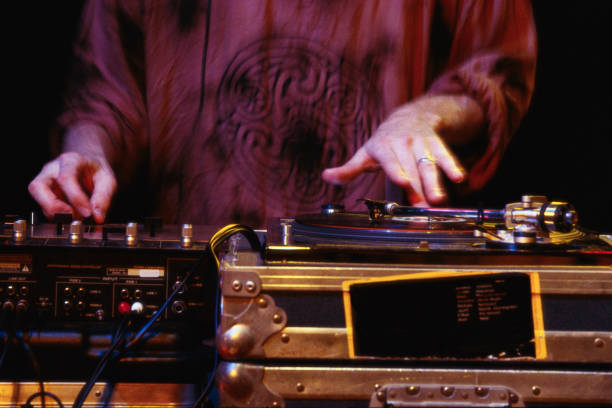
If you’ve ever been in the middle of a set, dropped a hot acapella over a grooving instrumental, and felt the room go from “okay, cool” to “wait, how did she do that?”, you know the rush. That moment—when the phrasing of one vocal track locks perfectly into the structure of another—is what we call the phrasing match point. It’s not just about pitch or tempo; it’s about timing, tension, and release. And for anyone serious about layering acapellas live, mastering this concept is like finding the cheat code for your DJ booth.
Let’s be real: acapella layering is one of the most satisfying tricks in the DJ toolkit. You can take a familiar vocal from a house banger, drop it over a deep tech groove, and suddenly create something that feels brand new. But here’s the thing—slapping a vocal on top of a beat without considering phrasing is like wearing two left shoes. Sure, you’re moving, but nobody’s vibing. The phrase match point is the exact moment where the vocal’s energy aligns with the instrumental’s energy, creating a seamless, almost telepathic connection between the two tracks.
Think of phrasing like paragraphs in a song. Most tracks are built in 8-bar or 16-bar phrases. The hook comes in, the kick drops out, the snare builds—these are all cues. When you’re layering an acapella live, you’re not just matching the tempo and key (though please, for the love of Larry Levan, do that too). You’re matching where the vocalist takes a breath, where the production feels a lift, and where the beat lands a thud. The phrasing match point is that sweet spot where the acapella’s verse ends on beat one, and your instrumental’s chorus crashes in right after. It’s the moment everything clicks.
How do you find it in the heat of a set? Start by knowing your tracks inside out. Before you even load that acapella into your USB or crate, listen to it on its own. Count the bars. Where does the vocalist pause? When does the energy peak? Then do the same for your instrumental. The goal is to find a natural overlap—not a forced one. For example, if your acapella has a 16-bar verse followed by a 4-bar pre-chorus, set your cue point at the start of that pre-chorus. Now, drop it into your instrumental right as the breakdown clears out the low end. That’s your match point: the vocal’s lift meets the instrumental’s drop.
This is where live mixing gets poetic. You don’t want to just slam the fader and pray. Instead, use your EQ to carve space. If your instrumental has a lot of mid-range vocal activity, cut those frequencies on the beat track before you bring in the acapella. Let the vocal breathe. Then, when you hit that phrasing match point, it’s like the vocal was always meant to be there. The crowd won’t know why it feels so right—they’ll just keep dancing.
Remember the pioneers who laid the groundwork for this kind of magic. Frankie Knuckles and Larry Levan didn’t have sync buttons or visual waveforms. They had ears and intuition. Levan’s sets at the Paradise Garage were legendary for how he’d layer acapellas over extended drum patterns, pulling the crowd into a trance. Wendy Hunt, another trailblazer, used phrasing to tell stories in her mixes, blending soulful vocals with raw beats. They understood that the match point isn’t just technical—it’s emotional. It’s about knowing when to let a vocal linger and when to cut it loose.
For the traveling DJ, this skill is a lifeline. Maybe you’re on a tiny Funktion-One system in a basement club in Berlin, or on a massive rig at a festival in Thailand. The phrasing match point works everywhere. It costs you nothing but attention. And it frees you from relying too heavily on pre-planned mashups. When you can find the phrase match live, you become a true curator of energy, not just a button-pusher.
One pro tip: practice with acapellas that have distinct phrasing—like old disco vocals or modern rap verses. Disco tracks are gold because their phrasing is often hyper-structured: 8 bars of melody, 8 bars of groove. Rap acapellas can be trickier because flows vary, but that’s where the thrill lives. Use your headphones to listen ahead, and trust your gut. If the vocal’s last word lands one beat before you think it should, adjust—either loop the instrumental for one more bar, or cue the acapella a beat earlier. That micro-adjustment is what separates decent DJs from ones who make rooms levitate.
At the end of the day, the phrasing match point is about respect. Respect for the original track’s architecture, respect for the crowd’s journey, and respect for your own craft. When you hit it, you’ll feel it—not just in the monitor, but in the way heads snap up and feet shuffle closer. So next time you’re layering an acapella live, don’t just think about key and BPM. Think about where the vocal wants to go, and let the beat meet it there. That’s the match point. That’s the mix.