If you’ve ever vibed to a seamless transition between two tracks at a club or festival, you have one man to thank: Francis Grasso. Long before sync buttons, before Serato, before anyone even knew what “beatmatching” meant, Grasso was clashing records together in a dimly lit New York club, inventing the art of blending songs by hand. Welcome to the Disco Demolition Roots, where we trace the pioneers who made DJ culture what it is today. And trust me, Grasso’s story is the kind of origin tale that makes you want to dig through crates of vinyl and give a little nod to the ghosts of the dancefloor.
The scene was New York City, late 1960s. Disco hadn’t exploded yet, but the underground was humming. Clubs like The Sanctuary, a former German Baptist church turned gay dance club on 43rd Street, were the breeding ground for something revolutionary. DJs at the time mostly just played records one after another, maybe fading out one song and fading in the next, or using a microphone to talk over the end of a track. Nobody had thought to make the music flow continuously. Nobody, that is, until a young guy named Francis Grasso walked in.
Grasso wasn’t a trained musician or a radio jock. He was a kid who loved the energy of a room moving together. He started spinning at The Sanctuary in 1969, and he quickly realized something: the best moments on the dancefloor came when the beat held. When a song ended and a new one started, that momentum died. People left the floor. He wanted to keep them locked in, riding a wave of groove that never broke.
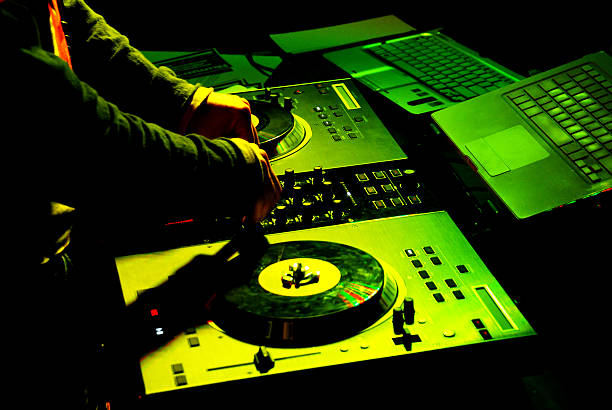
So he started experimenting. He would cue up a second turntable, listen to the incoming track on headphones, and physically push or pull the vinyl to match the tempo of the song playing. This was beatmixing. No one had done it before. He wasn’t using a pitch fader like modern DJs do—those didn’t exist on home turntables yet. Instead, he used his fingers on the record label to speed up or slow down the disc until the beats aligned. He’d slide the crossfader over, and suddenly two songs became one continuous rhythm. The crowd lost their minds.
Grasso also pioneered what we now call “slip-cueing.” Instead of letting a record drop with a thud, he would spin it backward in the groove while the needle was down, holding it in place until the exact moment he wanted the sound to hit. This let him start a song on the downbeat with surgical precision. Imagine doing that with wax, no visual waveform, no BPM counter—just your ears and your hands. That’s raw talent.
But Grasso’s biggest gift to DJ culture was the idea of the mix as a performance. Before him, DJs were glorified jukebox operators. After Grasso, the DJ became a creator, an interpreter, a conductor of energy. He would layer drum breaks from James Brown over psychedelic rock tracks, or drop the vocals from a soul record onto a funky instrumental. This wasn’t just mixing; it was the birth of the edit, the mashup, the remix. He was effectively remixing in real-time with only two turntables and a mixer, decades before digital tools made it easy.
The equipment he used is the stuff of legend. He spun on Thorens TD-124 turntables paired with a Shure M44-7 cartridge—gear that’s still revered by vintage collectors today. His mixer was a modified tube-powered Grampian, a beast that weighed as much as a small dog. He didn’t have a cue system like modern mixers, so he would physically hold the record on one turntable while the other played, counting beats in his head. The physicality of it, the sweat, the instinct—that was the magic.
Grasso’s influence rippled through the 1970s and into the DJs who would become legends themselves. Larry Levan, Frankie Knuckles, Wendy Hunt—they all cite Grasso’s approach as the foundation of their own styles. When Knuckles moved to Chicago and started playing at The Warehouse, he took Grasso’s beatmixing and turned it into the gospel of house music. Levan took it and made it hallucinatory at The Paradise Garage. Without Grasso, there is no seamless set, no endless groove, no “trainwreck” when two beats clash. He gave us the vocabulary.
Sadly, Francis Grasso never got rich from his invention. He kept spinning, eventually moving to other clubs, but the music industry rarely rewards the actual architects. He passed away in 2001 in relative obscurity, but anyone who has ever floated through a perfectly mixed DJ set knows his ghost is spinning in the background.
So next time you hit that sync button or even just feel the rush of two songs locking into each other, take a second to remember the kid at The Sanctuary with his fingers on the groove, pushing vinyl with nothing but his instinct and a love for the crowd. Francis Grasso didn’t just mix beats. He built the first bridge between songs, and every DJ who ever followed has been walking across it ever since.