Imagine this: you’re a teenager in the Bronx, 1975. Your mom is losing her mind because you’re blasting music in your bedroom at 2 AM. She yells, “Turn it down or I’m pulling the plug!” So, you do what any resourceful kid would do—you press your hand against the vinyl record to stop it dead. But you don’t lift the needle. You keep it on the groove while the turntable is still spinning. And in that split second, you hear something no one has ever heard before: a rhythmic, percussive “shh-shh-shh” sound. You just invented scratching. That kid? Grand Wizard Theodore. And that accident? It’s the foundation of every DJ set, every hip hop beat, and every drop you’ve ever vibed to.
Let’s rewind to the golden era of block parties and two turntables and a microphone. Before Theodore, DJs like Kool Herc and Grandmaster Flash were already doing incredible things—mixing breaks, extending funk loops, and creating the blueprint for hip hop as a culture. But scratching wasn’t part of the equation. It just wasn’t a thing. Turntables were for playing records, not for making new sounds out of them. Then Theodore, a kid who’d been hanging around his older brother’s DJ setup and eventually became a protégé of Flash himself, accidentally cracked the code.
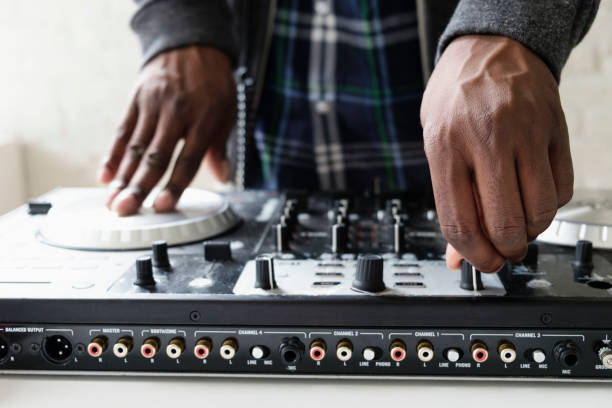
Here’s the full story. Theodore was in his room during the early hours, practicing his moves. His mom, like any exhausted parent, banged on the door and yelled at him to cut the noise. Instinctively, he grabbed the record with his hand while the turntable was still spinning. But instead of lifting the needle and stopping the sound completely, he kept it on the groove. The friction created that iconic “skidding” noise—a sound that had never been intentionally used for music before. At first, he probably thought he’d broken something. But then he tried it again on purpose. And again. And suddenly, he realized he could control the speed and rhythm of that noise, making it sync with the beat. That’s the birth of scratching.
Now, here’s the part that makes Theodore a true pioneer: he didn’t just stumble into it and leave it at that. He spent hours perfecting the technique. He developed the “needle drop” (precise cueing for quick breaks), the “transform” (rapid on-off volume cutting), and even early versions of flares and chirps. Without him, there’s no “scratch solo” at a DJ battle. No DJ Qbert, no Jazzy Jeff spinning a record backwards on the Fresh Prince theme, no DMC World Championships. Every DJ who has ever made a record scream owes a debt to a teenager in a bedroom with an angry mom.
It’s wild to think that one of the most foundational moves in DJ culture came from a moment of frustration. But that’s the story of hip hop, right? Taking limitations and turning them into art. Theodore didn’t have a sampler, a drum machine, or a laptop. He had two Technics 1200s and a loud mom. And he turned that restriction into a global language.
Fast forward to today, and scratching is everywhere. You hear it in trap beats, bass music, even pop songs trying to sound “authentic.” But real heads know: it’s not just a gimmick. It’s a technique that requires insane hand-eye coordination, timing, and musicality. When you see a DJ like Grandmaster Flash beat-juggle or Jazzy Jeff execute a flawless crab scratch, you’re watching the legacy of Theodore’s accident play out in real time.
For the new generation of DJs reading this, take note. The best innovations don’t come from manuals or YouTube tutorials. They come from messing up, from pressing too hard, from your mom yelling at you at 2 AM. Theodore’s scratch wasn’t planned. It was a happy error. But he had the ear to recognize it wasn’t just noise—it was a new instrument.
So next time you’re practicing in your room and a mix sounds off or you accidentally press the record instead of the fader, don’t get frustrated. Get curious. You might just invent the next thing that changes everything. And if your mom bangs on the door? Tell her you’re paying tribute to a legend.
The scratch wasn’t born in a studio. It was born in a bedroom, out of love, frustration, and a refusal to stop playing. That’s the spirit of the DJ. That’s the spirit of hip hop.