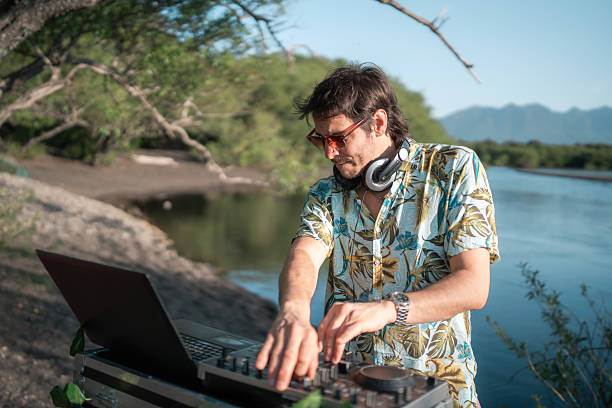
Let’s be real: the DJ life looks glamorous from the outside. You’re in a new city every week, the crowd is losing it to your set, and the afterparty stories are legendary. But anyone who’s actually done the grind knows the hidden cost: travel anxiety. It’s that gnawing feeling in your chest when you land in a country where your phone doesn’t work, your maps are blank, and you’re one missed WhatsApp away from missing your soundcheck. You’re a professional who can beat-match in your sleep, but the second your data cuts out, you’re a mess. That’s where the humble local SIM plan becomes your most underrated wellness tool.
Think about it. Your phone is your lifeline. It’s not just for scrolling memes between sets—it’s your navigation, your promoter contacts, your Uber account, your mental health app, and your video call home. When you’re stuck roaming on a janky international plan, you’re paying five dollars a megabyte and stressing about every text. That stress doesn’t stay in your phone; it lives in your shoulders, your jaw, your gut. Travel anxiety thrives on uncertainty. A local SIM plan kills that uncertainty dead.
Getting a local SIM is a tiny, actionable step that gives you back control. You land, you slot in a tiny piece of plastic, and suddenly you’re not a lost tourist. You’re a local. You can pull up directions to the club, call the hotel that’s “just around the corner” (it’s never just around the corner), and still have enough juice to send your mom a photo of the venue. For under twenty bucks, you’ve eliminated a major vector of anxiety. That’s not just smart logistics; that’s a mental health hack.
And here’s the part that directly ties into your wellness routine: a local SIM lets you stay connected to your grounding practices. Maybe you meditate with a guided app every morning. Maybe you use a GPS-based running route to clear your head before a gig. Maybe you just need to text your best friend that you’re feeling a little spacy. Without reliable data, those small rituals slip away, and you’re left raw and exposed in a foreign hotel room. That’s how anxiety spirals. A local SIM plan ensures you can keep your routine intact no matter what time zone you land in.
It also protects you from the silent killer: overthinking. When you’re constantly worried about data caps or spotty Wi-Fi, your brain is in survival mode. You start scanning for threats, mistrusting your environment. The club manager hasn’t replied? Your blood pressure spikes. The taxi driver doesn’t speak English? Panic mode. With a cheap, fast local data plan, you can fact-check your worries in real time. “Is it normal for the promoter to be late?” A quick search on local DJ forums says yes. “Is this neighborhood safe?” You check the route. Suddenly, your brain can stop being a paranoid guard dog and start being a creative, relaxed performer.
For DJs who tour internationally, eSIMs have been a game-changer. Apps like Airalo or Holafly let you buy a plan before you even leave the airport. You don’t have to hunt down a SIM vendor in a foreign language. You just scan a QR code, and boom—you’re connected. That extra layer of friction removed? That’s minutes of saved cognitive load. And cognitive load is the silent drainer for traveling artists. The more decisions you automate, the more mental energy you have for the actual craft.
Of course, there’s also the practical side: you can use your local number for ride-sharing, food delivery, and booking backup gear without getting hit with international fees. No more bizarre phone bills that make you question your existence. That financial peace of mind alone can shrink your travel anxiety by half.
So next time you’re packing your headphones, your laptop, and your lucky shirt, throw a local SIM plan or eSIM into your prep list. It’s not just about staying online. It’s about staying centered. When you know your connection is solid, you can let go of the grip on your phone and actually breathe. You can trust that you’ll find the club, you’ll make the set, and you’ll crash in a bed that feels a little less foreign. Because at the end of the day, being a DJ isn’t just about dropping flawless transitions—it’s about keeping your head clear enough to enjoy the ride.