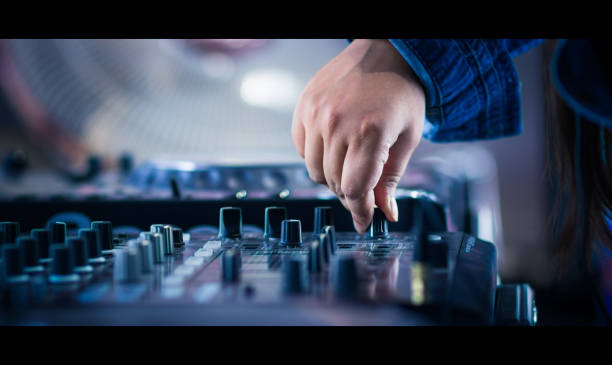
So you’ve got your hands on your first DJ controller, you’ve queued up your favorite tracks, and you’re staring at that glowing master volume knob. It’s tempting to crank it all the way to the right, feel the bass shake your soul, and pretend you’re headlining Berghain at 3 AM. But hold up—before you blow out your speakers, your ears, and your whole vibe, let’s talk about one of the most underrated skills in the DJ life: volume discipline. This is the first real walkthrough for your first mix ever, and it starts with understanding exactly how loud is too loud.
When you’re just starting out, the natural instinct is to push everything into the red. You see those little LEDs on your mixer go from green to yellow to angry red, and if you’re like most new DJs, you think “Red means louder, louder means better.” Wrong. In the world of beat mixing, red means distortion, clipping, and a muddy mess that will make your crowd’s ears hurt before the first drop. The sweet spot for your master volume is actually in the yellow zone—roughly between -6 dB and 0 dB on most mixers. That’s where your track breathes, the transients hit clean, and your sub bass doesn’t turn into a flabby disaster. If you see red, you’re too loud. Simple as that.
But it’s not just about your mixer. The real danger of “too loud” is permanent hearing damage. We all love that chest-thumping kick drum, but your inner ear hair cells don’t regenerate. Once they’re gone, they’re gone. In the DJ scene, we talk a lot about gear and track selection, but we rarely talk about tinnitus—that constant ringing in your ears that some veteran DJs quietly deal with after years of standing next to monitor speakers. For your first mix, you don’t need to deafen yourself to feel the music. Invest in a pair of high-fidelity earplugs (Eargasm or Loop are solid starter brands) and keep your headphone volume low enough that you can still have a conversation when you take them off. If you’re leaving a practice session with a dull roar in your ears, you’re already in too loud territory.
Now, let’s bring this into your first real mix scenario. You’re in your bedroom, you’ve got your cue points set, and you’re about to blend track one into track two. Before you even touch the crossfader, set your master volume so that the loudest part of your first track peeks into the yellow. That’s your baseline. When you bring in the second track, don’t let its volume overwhelm that baseline. Use your channel faders to gradually swap energy, and never—seriously, never—just slam both channels to max. That’s how you get a wall of noise instead of a groove. The art of DJing is about dynamics, not raw loudness. Think of it like cooking: you’re not dumping a whole jar of salt in at once. You’re seasoning gradually, tasting as you go. Your ears are your tongs.
This concept of loudness ties back to the roots of our craft. Go back to the Paradise Garage with Larry Levan, or the Warehouse with Frankie Knuckles. Those pioneers didn’t have modern limiters or digital metering. They worked with massive sound systems that required careful gain staging—too quiet and the room lost its pulse, too loud and the system would distort. They knew that the perfect volume made people dance without making them cringe. Wendy Hunt, another trailblazer who shaped the early club scene, understood that volume was a tool for building tension and release, not a blunt instrument. Your first mix should honor that legacy: every blend you make should feel like a conversation, not a shouting match.
A practical tip for your walkthrough: after you finish your first mix, record it and listen back at a moderate volume on different systems—your laptop speakers, your car stereo, your friend’s Bluetooth speaker. If it sounds harsh or fizzy on any of them, you were probably peaking too high during the recording. Aim for a mix that feels full but clear, with headroom to spare. Professional DJs often mix at lower volumes than beginners expect; it’s a sign of control, not weakness. The loudness war is over, and the crowd who cares about vibe over volume already won.
Finally, remember that “too loud” isn’t just a technical term. It’s a social one. If you’re playing at a party and people are backing away from the speakers, you’re too loud. If the bartender is giving you the death glare, you’re too loud. If your own ears start ringing after thirty minutes, you’re definitely too loud. The best DJs read the room and adjust, and that includes volume. So for your first mix, start quiet, stay in the yellow, protect your ears, and trust that the music itself—not the sheer decibel count—will do the heavy lifting. Your future self, with working hearing and a tight mix, will thank you.