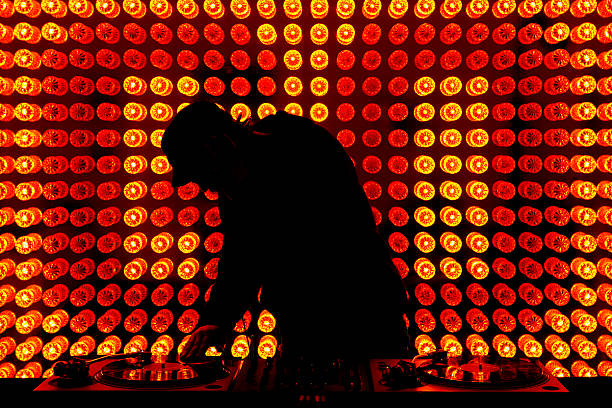
You know that moment when a 909 kick drum hits your chest like a controlled explosion, and the only lights in the room are red LEDs and a strobe? That feeling—that clean, hypnotic, almost surgical vibe—doesn’t come from nowhere. It comes from four German guys in matching turtlenecks who rarely smiled on stage. Kraftwerk didn’t just make electronic music. They literally built the operating system that Detroit’s DJ pioneers used to code the future of dance floors.
Let’s rewind to the late 1970s, when funk and disco were ruling the airwaves. Over in Düsseldorf, Kraftwerk was already talking about “man-machine” unity. Their album The Man-Machine (1978) isn’t just a record—it’s a manifesto. Tracks like “The Model” and “Neon Lights” sounded like a factory humming at midnight, but with a strange warmth underneath the precision. Meanwhile, in Detroit, a generation of Black teenagers was listening to The Electrifying Mojo on the radio, absorbing P-Funk, Giorgio Moroder, and the abstract futuristic sounds of Parliament’s Mothership. But something was missing in that mix. The groove was there, but the soul needed a mechanical heartbeat.
Enter the DJ pioneers. Juan Atkins, Derrick May, and Kevin Saunderson—the Belleville Three—were tape-trading, record-hunting kids who caught Kraftwerk’s Trans-Europe Express and realized that music didn’t need a human drummer to make you move. They heard “Numbers” and “Computer World” and understood that repetition wasn’t boring—it was a spiritual trance. The coldness wasn’t alienating. It was liberating. Kraftwerk’s influence wasn’t about copying their sound note-for-note. It was about borrowing the method: using drum machines, sequencers, and minimal arrangements to create a new kind of dance floor ecstasy.
Fast-forward to the early 1980s. The Paradise Garage and The Warehouse were still the temples of house music in Chicago and New York, but Detroit’s scene was different. It was harder, faster, and more industrial. The Mojo, Detroit’s legendary radio DJ, played Kraftwerk’s “Pocket Calculator” next to Prince and Afrika Bambaataa, showing kids that technology could be funky. But the true ignition came when Juan Atkins started producing as Model 500. His track “No UFO’s” is a direct descendant of Kraftwerk’s logic—a relentless, clicking beat with a bassline that sounded like a robotic heartbeat. Atkins famously said that Kraftwerk’s music made him feel like the future was already here, and he just needed to get the rest of the world to catch up.
Derrick May, the godfather of “high-tech soul,” took that cold influence and injected it with a deeper emotional pull. Tracks like “Strings of Life” kept the deadpan rhythmic structure but layered in aching piano chords and a frantic, almost chaotic energy. May wasn’t trying to make you think about robots. He was trying to make you feel the loneliness of a city that was falling apart—Detroit in the 80s was a place of economic ruin and empty factories. Kraftwerk’s coldness matched that landscape perfectly. The mechanical precision felt like the only honest response to a broken system.
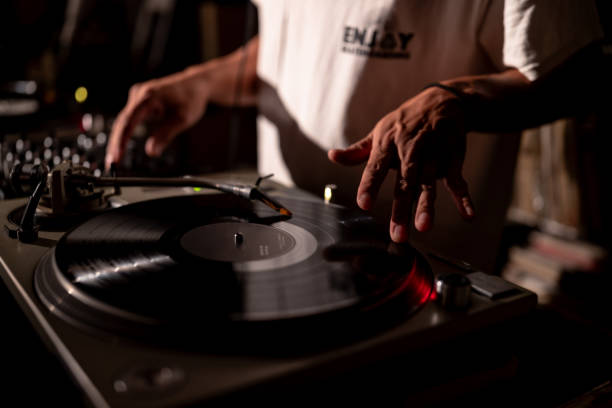
Kevin Saunderson’s Inner City project took Kraftwerk’s blueprint straight to the pop charts with “Big Fun” and “Good Life.” But the underground still belonged to the DJs who understood that Kraftwerk’s influence wasn’t just about gear—it was about philosophy. The idea that a DJ doesn’t need to be a rockstar. You can stand behind two turntables, wear black, stay focused, and let the machine do the talking. That’s why the Detroit techno aesthetic, from the early Cybotron records to today’s Berghain sets, still carries that German-engineered minimalism.
Without Kraftwerk, the DJ pioneers of Detroit would have been making funk jams or rockabilly covers. Instead, they used those cold, mechanical templates to build a genre that still defines the best clubs in Europe, America, and Asia. When you step into a bucket-list club like Tresor in Berlin or a warehouse in Detroit, you’re standing on the electronic bones of Kraftwerk 1 and Computer World. The coldness never went away—it just got warmer with each generation’s touch.
So next time you’re beat-mixing two tracks and that lock groove hits perfectly, remember that the DJs who started it all were just kids in Detroit, listening to a bunch of Germans in turtlenecks, dreaming of a future that sounds exactly like right now.