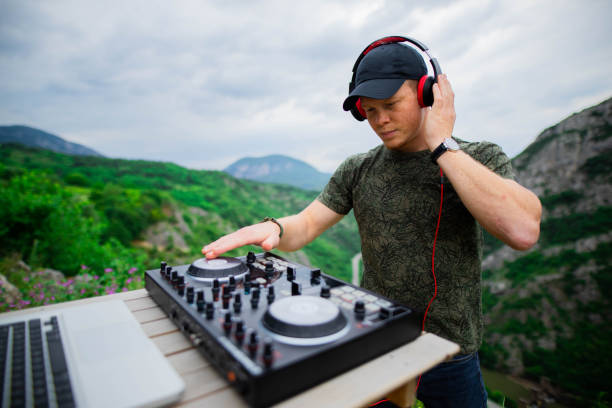
You know that moment in a set when the kick drum hits, the whole room locks in, and you feel like you’re floating on a wave of pure energy? Then, just when your ears are begging for a break, the next track slams in with zero air, everything gets noisy, and the vibe starts to feel like a crowded elevator. That’s the opposite of what we’re about to talk about. Welcome to the “Let It Breathe” philosophy—a cornerstone of DJ lingo that separates beginners who chase peaks from masters who craft journeys.
In the world of beat mixing and club culture, “letting it breathe” isn’t just about taking a sip of water between tracks. It’s a mindset, a technique, and a whole vibe. It means giving the dancefloor space to exist between the drops. It means not cramming every second with synth stabs, vocal chops, or double-time snares. Think of it like a conversation: if you talk nonstop, nobody listens. But when you pause, people lean in. That pause is where the magic lives.
What Does “Let It Breathe” Actually Sound Like?
Picture a classic house track from Larry Levan’s Paradise Garage days. The kick is steady, the hi-hats whisper, and the bassline rolls like a lazy river. For minutes, nothing “happens”—no breakdown, no fake-out, no big riser. The crowd just moves. That’s breathing. It’s the space between phrases, the moment where the track’s elements trade off, the silence after a hi-pass filter clears everything out. When you let the track breathe, you’re trusting the dancers to feel the groove without needing a constant dopamine hit.
Technically, you achieve this by using EQ, filters, and careful track selection. Instead of slamming the fader at the hottest part of a track, you might bring in a new element during a breakdown, let the old track fade naturally, or ride the filter knob to create a “whoosh” that opens up a new section. Legendary Chicago DJ Frankie Knuckles was famous for this—he’d let a track ride for ten minutes, barely touching the mixer, because he knew the room needed to breathe before the next peak. Wendy Hunt, another trailblazer from the New York underground, used long, patient mixes that let drum patterns evolve slowly, almost like a conversation between decks.
Why It Matters on the Dancefloor
The modern festival culture has trained a generation of dancers to expect a drop every thirty seconds. But the deepest club moments happen when you break that pattern. Letting the music breathe builds tension and release on a macro level. If every track is a banger, no track is. If you never drop the energy, your peaks feel flat. The breathing moments—the quiet bridges, the stripped-down drum loops, the ambient intros—make the peaks hit harder.
Plus, the dancefloor is a living organism. People get tired. Their ears fatigue. If you constantly force high energy, you’ll lose the room before the second hour. By letting the set breathe, you allow people to regroup, reset, and dive back in. That’s how you keep the floor full at 4 AM.
How to Practice the Let It Breathe Philosophy
Start with your playlist. Don’t just stack bangers back-to-back. Sequence tracks so that energy flows like a wave—peak, plateau, dip, peak. Lead into a “breather track” with a longer intro or a slower BPM. Use the filter sweep on your mixer to gently pull out the high frequencies, creating a hushed moment before rolling in the next kick.
Also, listen in your headphones. If both tracks are trying to dominate the mids and highs, you’re not breathing—you’re fighting. Let one track sit in the low-lows while the other carries the melody. Swap roles every few minutes. This isn’t about showing off your sync button skills; it’s about telling a story with room for silence.
Finally, watch the crowd. If they’re bouncing but their eyes are glazing over, they need a breath. Drop a track with a longer breakdown. Let the hi-hats disappear for a bar. You’ll see shoulders drop, then rise again when the groove returns. That’s the signal.
The Legacy of Letting Go
This philosophy isn’t new. It’s part of the DNA of DJ culture from Larry Levan’s extended mixes to the ambient-trance of the ‘90s European clubs. It’s why a bucket-list club like Berlin’s Berghain feels so different from a Main Stage festival—the space between sounds is sacred. As you build your own sets, remember: the best DJs don’t just play tracks. They conduct air. They let the room breathe, so the dancers can live inside the music.