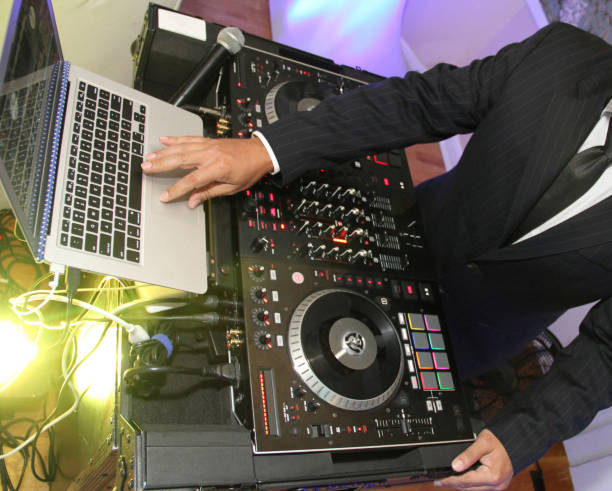
You know that moment. The DJ booth is vibrating with energy, the crowd is bouncing, and your monitor wedge is absolutely screaming at you. It feels good. It feels powerful. It feels like you’re one with the bass. But here’s the hard truth: cranking your monitor volume to eleven is the fastest way to sabotage your own longevity behind the decks. And when we talk about DJ wellness—especially under the hood of Backstage Brain Management—protecting your ears and your nervous system isn’t just smart, it’s non-negotiable. Let’s get into why limiting monitor volume immediately might be the most underrated move you make all night.
First, let’s talk about what actually happens when you push your monitor setup past the sweet spot. Your brain is already working overtime, splitting attention between cueing the next track, watching the crowd’s energy, and communicating with the sound tech or the club owner. Now add an aggressive monitor pushing 100+ decibels directly at your face. Your ears don’t just hear that noise—they physically react to it. The tiny hair cells in your inner cochlea start bending and, over time, breaking. They don’t grow back. This isn’t some future-you problem. Hearing damage is immediate and cumulative. Ever left a set with that telltale ringing in your ears? That’s your auditory system sending you a hard shutdown signal. Limiting monitor volume right now, before the ringing even starts, is the difference between a lifelong career and a constant search for the tinnitus app on your phone.
But it’s not just about your ears. Monitor volume directly hijacks your brain’s executive function. When you’re blasted with excessive sound pressure, your amygdala—the part of your brain that processes fear and threat—lights up like a Christmas tree. Your body dumps cortisol and adrenaline because it thinks you’re in danger. That might feel like hype energy during a peak-time set, but it’s actually making you less precise. You miss subtle mix cues. You second-guess your phrasing. Your fader hand gets shaky. By turning that monitor down to a clean, manageable level, you actually let your prefrontal cortex stay online. You become a sharper, more intuitive selector. This is Backstage Brain Management 101: your brain works best when it isn’t fighting for survival.
Now, let’s be real about the culture. From Larry Levan blasting the Paradise Garage with those custom JBL cabinets to Frankie Knuckles stitching together house grooves at the Warehouse, volume has always been part of the mythology. Those legendary sets were loud. But here’s what the legends also knew: they took breaks, they stepped away, and they didn’t stand directly in front of a monitor for eight hours straight. Wendy Hunt, one of the early trailblazers, was known for her meticulous sound design and her careful listening environment. She understood that monitoring is about clarity, not pain. If you’re emulating the greats, emulate their smart habits, not just their loud kicks.
So how do you do it practically? First, arrive early enough to get a proper soundcheck. Don’t just let the monitor engineer set your levels while you scroll Instagram. Ask for a volume that lets you hear your mix clearly without feeling pressure in your ear canals. That sweet spot is usually around 85–90 dB at ear level. If the club is too loud for that, invest in a good pair of high-fidelity earplugs—the ones with flat attenuation, not the foam ones that turn everything into mud. You can still feel the bass, you can still hear the crowd, and your ears won’t be fried by 2 a.m. Second, practice mixing with lower headphone volume as well. If your headphones are cranked, you’re just doubling the damage. Train yourself to hear the blend at moderate levels. Your future self will thank you when you’re still sharp at 40, 50, 60 years old.
Finally, let’s address the ego. There’s a weird flex in DJ culture where louder monitor equals more control, more presence, more power. But the actual flex? It’s finishing a three-hour set without a headache, without tinnitus, and with your mix still tight on every transition. It’s showing up to the afterparty clear-headed instead of wrecked. It’s knowing that your brain and ears are your most valuable gear, and you wouldn’t leave a $3,000 mixer out in the rain, so why leave your neurology in a blast zone? Limiting monitor volume isn’t being weak. It’s being a professional.
So next time you step into the booth, take a breath, cue up that first track, and check your monitor level. If it’s pushing you back, pull it down. Your brain, your ears, and your next decade of sets will all thank you. Stay healthy, stay sharp, and remember: the real control is knowing when to turn it down.