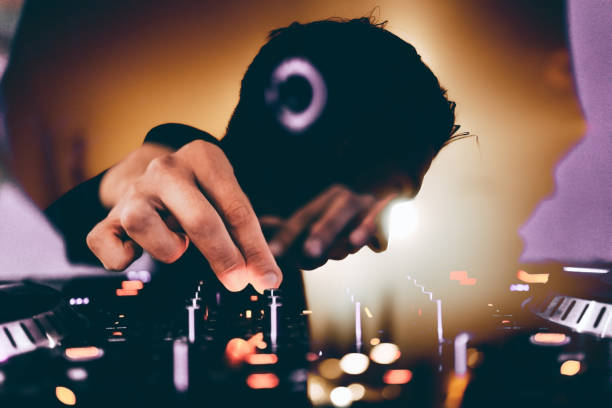
You know that moment in the middle of a set when the bassline starts to wobble like your legs after a three-day bender, the pads go all glassy-eyed, and suddenly your chest feels like it’s either about to burst or cry? That moment isn’t just a vibe—it’s a thing. It has a name. And if you’re a DJ trying to speak the language of the booth, you need to know it. Welcome to the genre micro-definition of Liquid DnB Emotional Rollercoaster—the drop, the rise, the breakdown, the fake-out, and the full-body release that keeps floors packed from Bristol to Bangkok.
First, let’s get the terminology straight because this isn’t just another subgenre. Liquid DnB itself is the smooth, soulful cousin of jungle and neurofunk. Think less angry reese bass, more floaty synth work, vocal chops that sound like they were sampled from a dream, and drums that roll like a river. The Emotional Rollercoaster is the structure of a great liquid track—and the DJ’s job is to become the ride operator. You’re not just pressing play. You’re building tension, releasing it, then building it again until the crowd is holding onto the rails.
The lingo you need: breakdown, rollout, double drop, rewind, lift, and cheese. But in liquid, the Emotional Rollercoaster is its own beast. It’s the moment the kick drum pulls away, the hats step back, and the melody takes over. Every head in the room suddenly makes eye contact. Phone lights go up. Someone’s girlfriend is crying. That’s the lift—that soaring, feminine vocal that feels like the sun breaking through clouds in a DBZ anime. Then, just when everyone is emotionally exposed, you hit the drop. But not just any drop—a liquid drop where the drums rush back in like a hug, not a punch.
The trap for new DJs is thinking the “emotional” part means you have to play sad. Nah. It’s about contrast. You need the ebb before the flow. That’s where the lingo gets specific. When you’re mixing two liquid tracks, you’re not just matching BPMs (usually around 172–175, but let’s be real, 174 is the sweet spot). You’re matching moods. The Emotional Rollercoaster is a phrase DJs use to describe a set that takes people from euphoria to melancholy to pure adrenaline in under four minutes. It’s what separates a set that feels like background music from one that feels like therapy.
Let’s talk the rewind. In liquid, a rewind isn’t just a “drop it again” flex. It’s an emotional reset button. If you’re on a rollercoaster and you love the first drop, you don’t go backwards up the hill. You go again from the top. When a crowd roars after a particularly beautiful breakdown, you rewind that record (or, more realistically, hit the cue button and spin it back on a controller) just to give them that lift one more time. It’s a gesture of respect—you’re saying, “Yeah, I felt that too.”
Now, the double drop—the pro move that creates the steepest part of the emotional curve. In liquid, double dropping isn’t about chaos. It’s about layering two breakdowns so the vocals overlap into a new chord, or syncing two rolling basslines so they dance together. When the drop hits from both tracks simultaneously, your crowd doesn’t just cheer. They gasp. That gasp is the top of the rollercoaster. The big view. Then the drums come back and they’re falling again. That’s pure DJ alchemy.
But here’s the secret the best liquid DJs know: the Emotional Rollercoaster works best when you leave room for silence—or near-silence. The breakdown with no kick is the classic bait. You let the crowd float on pads and vocals for sixteen bars, then you bring the half-time beat under it. They think it’s going to drop heavy? Nope. You tease a double drop, then pull it. That’s the cheese move—but in the best way. Liquid crowds love being toyed with. They came for the ride, not the destination.
As a DJ, you’re also the conductor of micro-emotions. You need to read the room. If the floor is full of people with their eyes closed, swaying—you don’t whiplash them into a neurofunk switch-up. You ride the lift. You let the rollercoaster go up slowly. Give them a long fade on the outgoing track while you blend the new vocal in. That slow, seamless transition is the “soft landing” that makes the next drop hit harder. The lingo for that is surgical blending—when you time the EQ so the lows from track A are fading just as the mids of track B open up. It’s not just mixing. It’s coaxing a feeling out of a room.
And let’s be honest, liquid DnB and the Emotional Rollercoaster aren’t just for the dancefloor. They’re a lifestyle. You cannot fake the feeling. Either you’ve cried to a Logistics track in your car at 3 AM or you haven’t. Either you’ve had your soul lifted by a Lenzman or Pola & Bryson drop or you’re still stuck on the same four-to-the-floor loop. That’s the language. When you hear a fellow DJ say that liquid rollercoaster hit, you know what they mean. It’s the moment your hands leave the mixer, you look at the crowd, and you just nod.
So next time you’re behind the decks—whether it’s a warehouse in Berlin or a booth in Osaka—remember: you’re not playing songs. You’re designing a ride. Build the lift. Trust the breakdown. Drop with purpose. Rewind if they need it. Speak the language. And if you make someone cry? Good. That’s the emotional rollercoaster. Welcome to the booth.