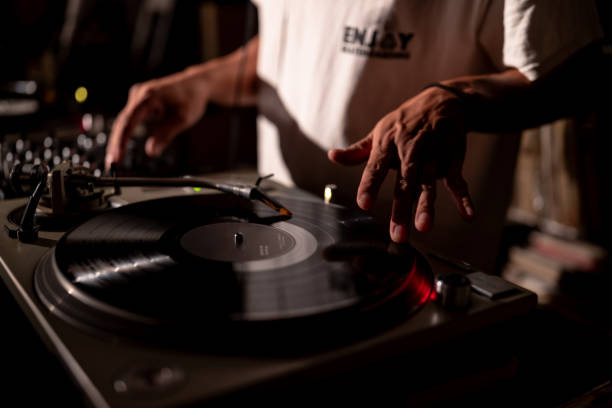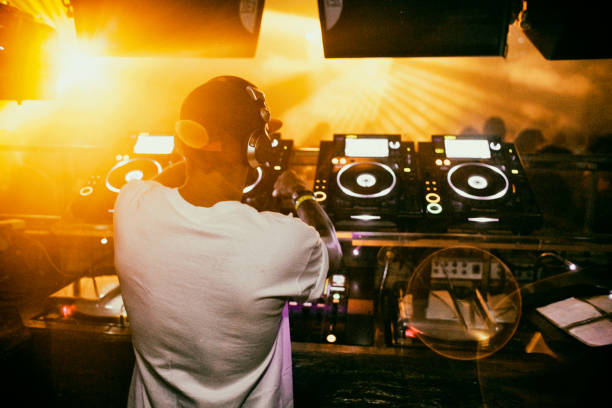
You’re in the middle of a set, the kick is thumping, the crowd is locked in, and then—you make the drums walk. Not just pan left to right, but actually move around the room like they’re alive, circling the heads of everyone on the dancefloor. That’s not a gimmick. That’s the future of DJing, and it’s already here, riding on the wave of immersive audio formats that are changing how we think about the booth, the speakers, and the very physics of a night out.
For decades, DJs have been stuck in stereo. Two speakers, left and right, maybe a sub if you’re lucky. That’s served us well from the Paradise Garage to Berghain, but the next chapter isn’t about louder soundsystems—it’s about smarter ones. Immersive audio formats like Dolby Atmos, Sony 360 Reality Audio, and even binaural streaming are letting producers and DJs place sounds in a 3D sphere. And the most exciting playground for this tech is exactly what the title says: making drums move around the room.
Think about what that does to a mix. Normally, a drum loop sits in the center or gets a little stereo width, but in a spatial mix, you can send the snare on a slow orbit around the listener. The kick can punch from the front, the hi-hats can flicker from above, and the clap can fire from behind your left ear. For a DJ, this is a total game-changer because it means you can sculpt the energy of a room in real time. You’re not just choosing tracks; you’re choreographing sound movement. That’s the kind of power that separates a great set from a transcendent one.
The practical side for working DJs is already developing. Some controllers and software, like Ableton Live with its native spatial audio routing or certain Pioneer gear that supports 3D output, are beginning to include tools for this. You don’t need a full Atmos-certified venue to start playing with spatial movement. You can prep tracks in a DAW that encode positional data, or use stem-based mixing to send individual drum elements to different channels in a multi-speaker rig. The key is understanding that the drum isn’t just a rhythm—it’s a location. When you make the drums move, you’re telling the crowd a story about space itself.
This isn’t just about technical flexing either. Immersive audio formats tap into something primal about human perception. Your ears are built to locate sounds in 3D; it’s a survival instinct. When a DJ uses that, the brain locks in harder. Dancers report feeling more “inside” the music, less like they’re listening and more like they’re swimming in it. That’s the ultimate goal of any DJ—to dissolve the boundary between performer, track, and audience. Making drums move around the room achieves that with an almost hypnotic effect.
Of course, the transition isn’t instant. Most clubs still run stereo, and the cost of a full immersive install is steep—think arrays of speakers hung from the ceiling, calibrated processing, and sound engineers who understand object-based mixing. But like any format shift (mono to stereo, vinyl to digital), the early adopters set the trend. Festivals are starting to feature immersive stages. Headphone listening through binaural mixes on streaming platforms is already spatial-ready. The DJ who learns to mix with movement now will be the one headlining those spaces later.
For the culture that Larry Levan, Frankie Knuckles, and Wendy Hunt helped build—where sound is a sacred, communal experience—immersive audio isn’t a departure. It’s a homecoming. They understood that a great DJ doesn’t just play records; they paint with frequencies. Now the canvas is three-dimensional. So next time you’re in the studio or the booth, think about where your drums are going. Let them walk. Let them circle. Let them move.
The future of DJing isn’t louder. It’s wider. It’s deeper. And it’s already orbiting around you.