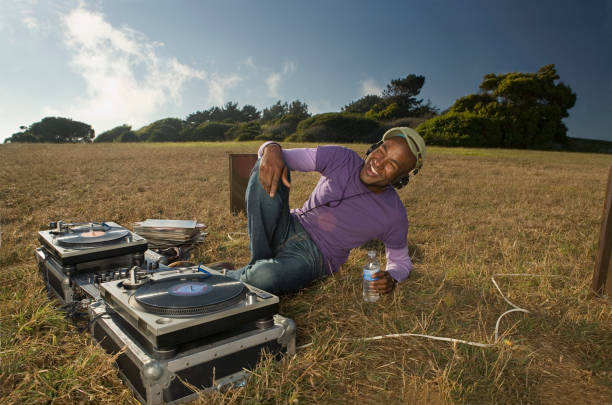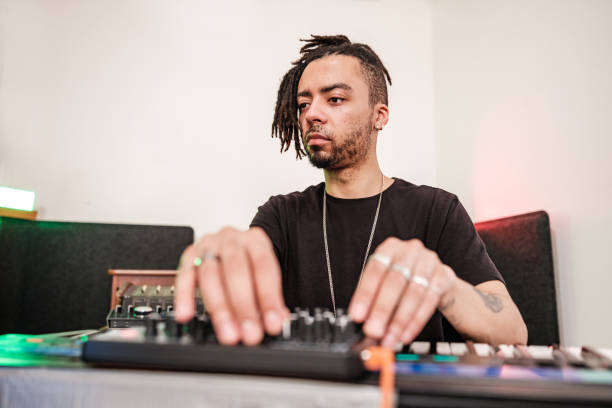
Let’s be real for a second. You’ve probably watched a DJ drop a live acapella over a beat nobody saw coming, and the crowd lost it. That moment—when a familiar vocal rides a fresh instrumental like it was made for it—is pure alchemy. It’s what separates a playlist-pusher from a real architect of sound. But here’s the hard truth that every aspiring mashup artist needs to hear: that magic doesn’t happen in the club. It doesn’t happen on a livestream. It doesn’t happen when you’ve got 300 people staring at you waiting for the drop. It happens in your bedroom, your basement, or your kitchen table at 2 AM with headphones on and zero pressure. Mastering the mix starts with mashup practice at home first, and that’s not a suggestion—it’s a rite of passage.
Think about the legends who paved the way. Larry Levan didn’t perfect his Paradise Garage sets by winging it on Friday night. He spent hours in his room, splicing tape, testing bass frequencies, and figuring out how to layer a disco acapella over a drum machine pattern until the two sounds became one organism. Frankie Knuckles was notorious for his obsessive rehearsal, fine-tuning the emotional arc of a five-hour set before he ever touched the turntables at the Warehouse. Even Wendy Hunt, a pioneer who often gets lost in the history books, understood that live layering requires a muscle memory that only comes from repetition in a safe space. These icons weren’t geniuses who never made mistakes—they were craftspeople who made every mistake in private so their audience only ever saw the magic.
So what does effective mashup practice at home actually look like? First, forget about perfection. Grab two tracks you love—one with a strong, recognizable vocal (think old-school house, R&B, or even a pop acapella) and one with a clean instrumental that has a locked groove. Load them into your DAW or your DJ software and start listening. Don’t touch the faders yet. Just listen to how the phrasing sits. Where does the acapella singer take a breath? Does the beat have a snare that hits on the two and four? You’re looking for that sweet spot where the vocal’s energy matches the instrumental’s dynamic. Once you find it, loop a four-bar section and practice dropping the acapella in at different points. You’ll fail a lot. The vocal will clash. The keys will sound wrong. But each failure teaches your ears what to avoid, and more importantly, it builds your internal clock.
This is where the “live” part of “layering acapellas live” really comes into play. The goal isn’t to produce a polished studio edit that you trigger from a USB stick—it’s to develop the instinct to react in real time. When you practice at home, you’re not just working on song selection; you’re building the neural pathways that let you hear a breakdown coming and know exactly when to slide that acapella in. You’re learning to ride the EQ, to cut the lows on the vocal so it doesn’t muddy the kick, to bring in a high-pass filter on the instrumental so the voice shines through without losing the groove. That’s not theory. That’s sweat equity.
And let’s talk about your gear. You don’t need a Pioneer DJM‑V10 with a rotary mixer and a Funktion‑One rig to get good. A laptop, a cheap controller, and a decent pair of headphones are enough to start. What matters more than the equipment is the environment. Set up your space like a lab. Keep your tracks organized by key and BPM. Have a notebook (or a notes app) where you write down what worked and what didn’t. Did that acapella of “Finally” by CeCe Peniston feel wobbly over a deep house beat but perfect over a garage two‑step? Write it down. Those notes become your cheat sheet when you’re facing a live crowd and your brain wants to freeze.
The other massive advantage of home practice is that you can explore without ego. You can try the weirdest combos—a ’90s hip‑hop acapella over a techno beat, a vocal from a soul ballad over a drum‑and‑bass roller—and nobody judges you. That freedom is what pushes the craft forward. The best mashup DJs in the world, from the gritty basements of Detroit to the bucket-list clubs like Berghain and Fabric, all share one trait: they treat their home studio like a dojo. They fail, they tweak, they fail again, and then one night, everything clicks. And when it clicks in the club, it’s because it clicked in their headphones a hundred times first.
So before you worry about your stage outfit or your festival booking, spend a month just practicing. Find acapellas from classic disco, modern pop, even some obscure tracks from the Larry Levan era. Layer them over house, over breaks, over minimal tech. Learn how a vocal sounds with reverb versus without. Learn how to use a delay to make a transition smoother. This isn’t busywork—it’s the foundation of your entire DJ identity. The crowd can feel the difference between a mashup that’s been rehearsed and one that’s been thrown together on the fly. They might not know why they’re losing their minds, but you will. And that confidence is what turns a good set into an unforgettable one.
Master the mix at home, and the club will never scare you again.