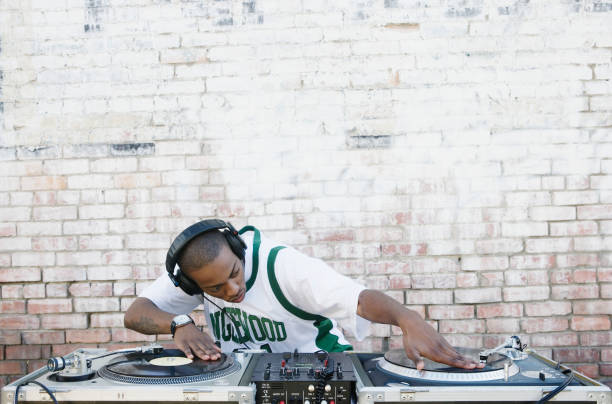
Let’s be real for a second—2020 basically put the entire live music industry on pause. While we were all stuck in our apartments watching DJ sets on Instagram Live from someone’s cramped bedroom, something clicked. It wasn’t enough. We needed more than a flat screen and a shaky phone mount. We needed to feel the bass, see the crowd, and vibe with strangers across the globe. Enter the Meta Quest Pro, the headset that’s quietly rewriting the rules of what a club space can be. And for DJs, this isn’t just a fancy toy—it’s a whole new stage.
First off, let’s talk about immersion. If you’ve ever thrown on a basic VR headset, you know the novelty wears off fast when the graphics look like a PlayStation 2 game and your hands float around like disconnected balloons. The Quest Pro changes that. With full-color passthrough, eye tracking, and facial expression sensors, it brings you closer to real-life presence than anything before. For a DJ, that means you can actually see your crowd’s reaction—whether they’re nodding, grinning, or throwing up the sign of the horn. You’re no longer just pressing play in a silent room; you’re reading the room, even if that room exists in a digital cloud.
But here’s where it gets really wild for club spaces. Platforms like VRChat, Rec Room, and dedicated clubbing apps like Tribo or VR Club are now optimizing for the Quest Pro’s processing power. You can walk into a neon-drenched warehouse in Tokyo at 3 AM, drop a house track, and watch avatars from Berlin, São Paulo, and Lagos start moving together. The latency is low enough that you can actually mix in real time—no buffering, no awkward delays. And because the Quest Pro tracks your hands and controllers with precision, you can simulate scratching on virtual turntables, tweak EQs with your fingers, and even gesture to the crowd like you’re at Berghain. It’s not just a gimmick; it’s a legit performance tool.
Now, let’s address the elephant in the virtual room. Can a VR club ever replace the real thing? Probably not entirely—and that’s okay. The sticky floors, the sweat, the random guy who yells “Freebird” at 3 AM—those are irreplaceable. But what VR does is break down barriers. Imagine you’re a DJ living in a small town in Nebraska. You don’t have a club down the street that books house music. You don’t have a residency. But with a Quest Pro and a decent internet connection, you can spin for a global audience tonight. You can test new tracks, build a following, and even get feedback from seasoned pros who happen to be browsing virtual clubs between tours. That’s not the future—that’s happening right now.
And for the health-conscious DJs out there—yeah, we see you. Touring is brutal. The sleep deprivation, the airport anxiety, the constant pressure to be “on.” VR clubs offer a middle ground. You can play a four-hour set from your hotel room after soundcheck, then immediately crash without the post-gig adrenaline spike. You’re saving your ears from club-level volume, your body from standing on concrete for hours, and your mind from the social overload of a packed booth. Plus, you can curate your own vibe—add visualizers, change the lighting, even control the temperature. It’s a DJ sanctuary that fits in your backpack.
Of course, the gear matters. The Quest Pro isn’t cheap, but neither was a pair of Technics 1200s back in the day. For DJs serious about expanding their reach, it’s an investment in a new medium. Pair it with a good audio interface, some quality headphones (yes, VR headphones exist now), and a subscription to a VR music platform, and you’ve got a mobile studio that doubles as a global nightclub. No more lugging crates of vinyl or wrestling with broken flight cases. Your whole library fits on a microSD card.
Let’s not forget the history we’re building on. Larry Levan didn’t have VR—he had the Paradise Garage, a physical space where sound and community collided. Frankie Knuckles spun records at the Warehouse in Chicago, shaping an entire genre without a single pixel. Wendy Hunt kept the dance floor alive at iconic clubs like the Loft, proving that a DJ is only as good as the energy they create. They built their legacies on sweat, instinct, and raw connection. And now, with tools like the Quest Pro, we’re extending that legacy into a new dimension. The craft doesn’t change—the tools do.
So if you’re a DJ scrolling through this, wondering if VR is just a passing trend, take a second. Try a demo. Join a virtual club night. Feel the bass rumble through a haptic vest while you watch avatars dance in sync with your mix. It’s weird, it’s early, and it’s full of bugs. But it’s also the first real step toward a future where no DJ is limited by geography, budget, or circumstance. The club space is expanding, and the Quest Pro is your backstage pass.