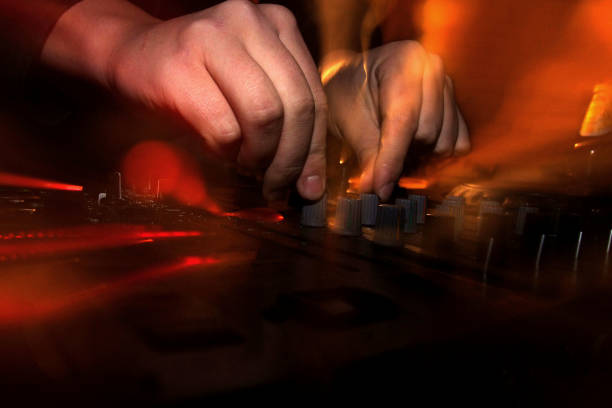
So you’ve finally landed that opening slot at the club, or maybe you’re running a weekly radio show where your voice is just as important as the tracks you’re blending. You’ve got your headphones dialed, your cue points set, and your USB sticks loaded with floor-fillers. But here’s the thing nobody tells you until it’s too late: that cheap mic input on the back of your mixer is a one-way ticket to feedback hell, muddy vocals, and a crowd that can’t understand a single hype cue you’re dropping. If you’re stepping into the pro-level mixer game—the kind of desks that legends like Larry Levan or Frankie Knuckles would’ve killed for—you need to understand that mic inputs aren’t just a checkbox. They’re the difference between sounding like you’re shouting through a tin can and commanding the room like a true architect of energy.
Let’s rewind for a second. Back in the day, when DJs like Larry Levan at the Paradise Garage were shaping entire nights with just turntables, a mixer, and a microphone, the mic input was basically an afterthought. You plugged in a dynamic mic, prayed the gain staging wasn’t terrible, and hoped the reverb didn’t scream. But we’re not in the 1980s anymore. Today’s mixers—especially the pro-level beasts from brands like Pioneer DJ, Allen & Heath, and Rane—come loaded with features that treat your voice as an instrument. And if you’re serious about hype duties, you need to gear up accordingly.
First off, let’s talk about the type of mic input you’re actually looking for. Most entry-level mixers give you a single, unbalanced 1/4-inch jack. That’s fine if you’re just doing a quick shout-out or reading the weather, but for hype duties—call-and-response, drop-calling, real-time crowd engagement—you want a combination XLR/1/4-inch input. Why? Because XLR is balanced. That means it cancels out the hum and interference from all the power cables, lighting rigs, and subwoofers buzzing around your booth. A balanced XLR input gives you clean, noise-free signal from the mic to the master. This isn’t just a luxury; it’s a necessity when you’re five feet away from a massive sound system and you need your voice to cut through without distortion.
Then there’s the phantom power button. Don’t sleep on this. If you’re running a condenser microphone—and honestly, for hype duties, a good dynamic mic like the Shure SM58 is usually your best bet—phantom power might not matter. But if you ever want to experiment with a high-end condenser for that extra crispness in quieter sets or podcast-style interludes, your mixer needs that +48V switch. Pro-level mixers like the Pioneer DJM-A9 or the Allen & Heath Xone:96 have dedicated phantom power switches per channel. That’s the kind of flexibility that lets you swap mics mid-set without patching in some external preamp that adds latency.
Speaking of latency, there’s the preamp quality. Don’t let anyone tell you all preamps are the same. When you’re hyping a drop at 2 AM, the last thing you want is a weak preamp that forces you to crank the gain to the point where the noise floor sounds like a frying pan. High-end mixers use low-noise, high-headroom preamps that let you push your voice without that gross hiss. Look for a mixer that has a dedicated mic gain knob separate from the channel fader. You want to dial in your level before it hits any EQ or effects. That way, when you hit that “PUT YOUR HANDS UP” moment, you’re not redlining the master.
Don’t overlook the onboard EQ for the mic channel either. A three-band EQ with sweepable mids is gold for hype work. You can cut the low-end rumble that makes your voice muddy, boost the highs for presence, and if you have a parametric mid, you can notch out whatever frequency is feeding back from your monitor wedges. This is the kind of control that separates the DJs who sound amateur from those who sound like they’ve got a radio engineer in the booth.
And let’s talk effects. Reverb, delay, echo—these are your friends, but only if they’re applied tastefully. Some mixers have dedicated mic effects sends with separate wet/dry knobs. That means you can add a slapback delay for dramatic hype lines without drenching the entire track. The DJM-V10, for instance, has a dedicated mic section with its own effects send. That’s pro-level thinking.
Finally, don’t forget the routing. Can you send the mic to the booth monitors independently from the master? Can you mute it with a single fader or a dedicated on/off switch? These subtle features matter when you’re juggling a queue of requests, a live mix, and a crowd that’s ready to explode.
At the end of the day, your mic input is the bridge between you and the room. Whether you’re channeling the spirit of Frankie Knuckles or building your own legacy, invest in a mixer that treats your voice like the instrument it is. Because hype duties aren’t just about volume—they’re about control, clarity, and making every syllable land like a drop.