You’ve got the tracks loaded, the crowd is vibing, and your monitor speakers are thumping. But what happens when the club’s PA system is a hot mess of reverb, the booth monitors are feeding back, or you’re playing a set where the sound engineer just shrugs at you? That’s when every seasoned DJ pulls out their secret weapon: mixing in headphones only, also known as pro mode. This isn’t just a backup plan for dodgy sound systems—it’s a core technique that separates bedroom beat-mashers from true masters of the mix. And when you’re dealing with advanced EQ and filtering, doing it all in your cans forces you to hear the music with surgical precision.
First, let’s get real about why this matters. When you mix on loudspeakers, you’re fighting room acoustics, crowd chatter, and the sheer volume of the main system. Your ears get fatigued, and subtle frequency clashes—like a muddy low-mid buildup or a piercing high-end snare—get lost in the noise. But when you flip to headphones only, you’re creating a sealed sonic environment. There’s no bleed from the master output, no room reflection, just pure, unfiltered audio. This is where advanced EQ and filtering really shine. You can hear exactly where the kick of your incoming track is sitting relative to the bassline of the playing track. You can isolate the hats. You can feel the sub-bass as a physical pressure rather than a vague rumble.
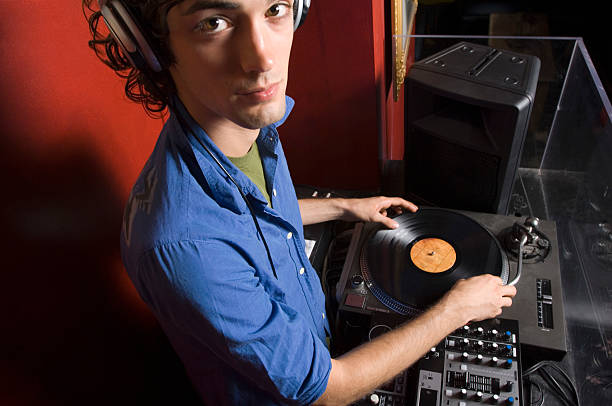
The trick with pro mode isn’t just about hitting sync and calling it a day. It’s about using your headphones as a mixing console. Most modern DJ gear has a cue mix knob that lets you blend the master output with your incoming track in the headphones. But in full pro mode, you completely kill the master output in your cans, hearing only the incoming track. Then, you rely on your visual waveform, your memory, and your trained ear to know where the playing track is at. This forces you to become hyper-aware of phrasing and energy. You’re not distracted by the crowd’s reaction or the booth rumble—you’re focused on the microscopic details of your transition.
Here’s where advanced EQ and filtering become your best friends. Without the crutch of loudspeakers, you learn to use high-pass filters aggressively. A track’s low-end might be clashing with your current track’s sub, so you roll off the incoming track’s lows until the drop lands. In headphones, you can hear exactly when that filter opens and the bass comes in—it’s a tactile, almost physical sensation. You can also use mid-range scooping to create space for vocals. While the crowd hears a massive wall of sound from the main system, in your headphones you’re carving out tiny frequency pockets so the next track slides in like a ghost.
Another pro tip: use the split-cue function if your mixer has it. This sends your incoming track to your left ear and the master track to your right ear. It might feel disorienting at first, but it’s like having x-ray vision for your mix. You can hear the high-end of your playing track’s ride cymbal in one ear while tuning the low-pass filter of your new track in the other. This stereo separation lets you dial in EQ curves with ridiculous accuracy. You’ll find yourself high-passing the new track at 120 Hz while boosting the presence around 3 kHz to cut through the current track’s muffled mids. Try doing that with monitor speakers when the room is a boomy nightmare.
Of course, this level of control comes with practice. When you’re first learning, mixing in headphones only feels like driving blindfolded. You might drift on the beat, or miss a vocal cue. That’s totally normal. Start by doing it for just one transition per set. Then two. Before you know it, you’ll prefer it, especially in weird clubs with terrible acoustics or at outdoor festivals where the wind messes with your speakers. Legendary DJs like Larry Levan and Frankie Knuckles didn’t have modern digital headphones or split-cue functions, but they understood the principle: if you can mix cleanly in your headphones, you can mix cleanly anywhere. Wendy Hunt and other trailblazers in the Chicago and New York scenes built entire careers on razor-sharp EQ work in less-than-ideal conditions.
For the modern DJ, mastering this technique is non-negotiable if you want to play bucket-list clubs in Europe like Berghain or Fabric, or American icons like Smartbar or Output before it closed. Those rooms have incredible sound systems, but the DJ booth is often isolated from the dancefloor. You can’t rely on hearing the main system clearly. So you dial it in on your cans, and you trust your advanced filtering to make the shifts seamless.
In the end, mixing in headphones only pro mode isn’t a limitation—it’s liberation. It turns your headphones into a mixing studio on your head. You become the sound engineer, the crowd, and the performer all at once. The next time you’re practicing, kill the monitors. Let the filter knobs become your paintbrushes. Your transitions will be tighter, your EQ decisions more intentional, and your sets will hit harder because every frequency was placed with purpose. That’s the difference between a DJ and a master of the mix.