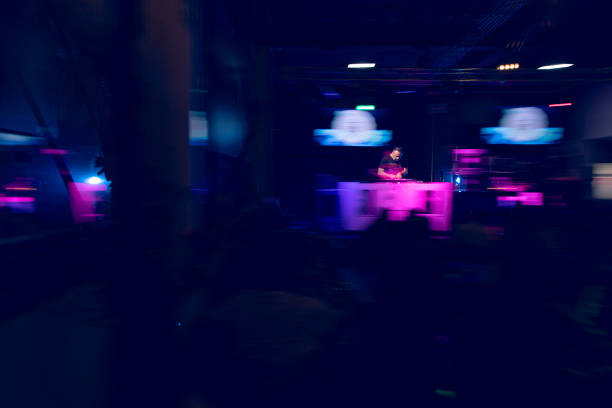
If you’ve ever stood in the middle of a crumbling industrial shell, feeling the low-end thud of a 909 kick drum bounce off concrete walls that haven’t held a machine since the 1980s, you know exactly what the Packard Plant Rave Energy Shift felt like. It wasn’t just a party. It was a sonic reset button for an entire scene—a moment where Detroit’s DJ pioneers decided that techno didn’t have to live in pristine clubs with velvet ropes. It could thrive in the wreckage of the very industry that gave the city its soul.
The Packard Plant, for those who haven’t wandered its haunted halls, is a five-million-square-foot automotive graveyard on Detroit’s east side. By the late 1990s and early 2000s, it had become a cathedral for underground ravers. But the DJs who played there weren’t just spinning records for a crowd of dusty boots and glow sticks. They were rewriting the DNA of techno itself. The energy shift happened when these artists realized that the space wasn’t a backdrop—it was an instrument.
Let’s talk about the DJ pioneers who made this happen. Guys like Claude Young, Blake Baxter, and later, newer fire-starters like DJ Minx and Mike Huckaby, understood that a rave in a decaying factory isn’t about polished track transitions. It’s about texture. The reverb off bare brick, the hiss of broken windows, the way the bass vibrates through steel beams that haven’t flexed in decades—these sounds became part of the mix. Young, a true vet of the Detroit scene, used to cut his sets with long, hypnotic loops that mirrored the repetitive machinery of the plant’s former life. He wasn’t just playing techno. He was playing the room.
The shift didn’t happen overnight. In the late ’80s and early ’90s, Detroit techno was finding its footing in places like the Music Institute, a more controlled environment where DJs like Derrick May and Juan Atkins were crafting that signature “Belleville Three” sound—cold, futuristic, minimal. But the Packard Plant represented a different phase. The pioneers who took over those ruins were crafting a grittier, more industrial sound that matched the crumbling cityscape. They were pulling from electro, from Chicago house, from the analog grit of Kraftwerk’s broken-down cousin. And they were doing it in a space that forced you to feel every delay, every distortion, every drop.
One of the most pivotal figures in this energy shift was DJ Sean Deason, whose sets at the Packard Plant became legendary for their raw, uncompromising drive. Deason didn’t just cue up tracks; he layered them like a painter layering oil over rust. His 1999 mix at the plant is still whispered about among collectors—a four-hour journey through broken beats, synth stabs, and vocal samples that seemed to echo off the urinals of a forgotten bathroom. That’s the thing about the Packard Plant: every element of the environment, no matter how grim, became part of the DJ’s palette.
And then there were the women. DJ Minx, the “First Lady of Wax,” brought a house-inflected energy that softened the industrial edge just enough to keep bodies moving. She’d drop a vocal loop from a forgotten R&B record over a relentless four-on-the-floor kick, and suddenly the plant felt less like a tomb and more like a womb. Her sets proved that the Packard Plant rave energy shift wasn’t about aggression—it was about transformation. These DJs were turning decay into dance.
What makes the Packard Plant story so essential to the Techno Originators In Detroit narrative is that it blurred the line between performer and space. Unlike the sterile DJ booths of Vegas or Ibiza, these pioneers were physically immersed in the ruin. They’d sweat with the crowd, their gear sometimes getting knocked by a passing raver, their records occasionally warping in the humidity. That vulnerability fueled a raw, improvisational style that you can’t fake in a studio. It’s why old-heads still say that the Packard Plant sets felt like the music was breathing.
The shift also influenced later generations. Producers like DJ Stingray and even international acts like Carl Craig (who never played the plant but was inspired by its lore) started incorporating field recordings of industrial spaces into their tracks. The clang of a falling beam, the crack of a dusty floor—these sounds became sampled artifacts, turning Detroit’s architecture into a permanent guest on the turntable.
So when we talk about the Packard Plant Rave Energy Shift, we’re talking about a moment when DJ pioneers stopped treating techno as a product and started treating it as a conversation with history. They didn’t need a clean booth or a pristine sound system. They needed a space that already hummed with the ghost of industrial labor. And they knew exactly how to dial that ghost into the mix.