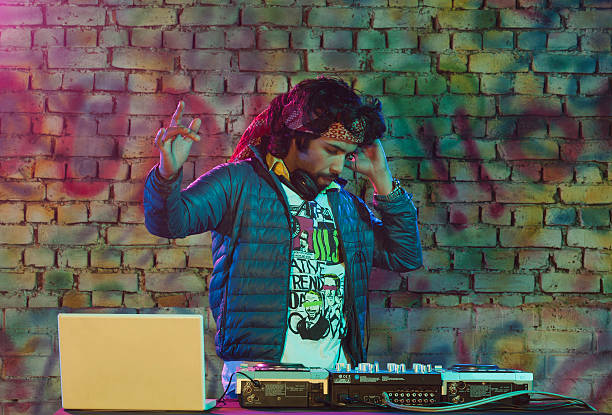
If you’ve ever found yourself lost in a four-hour set, watching a crowd lose its collective mind to a drop you’ve heard a thousand times, you owe a little gratitude to a guy named Paul Oakenfold. Specifically, you owe it to one night in 1987 at a club called The Landmark in London. That night—often called the “Spectrum Landmark” era—didn’t just launch Oakenfold into legend; it essentially wrote the first chapter of UK rave sound system culture as we know it. We’re talking about a moment that bridged the gap between New York house pioneers like Larry Levan and Frankie Knuckles and the warehouse parties that would define British youth for decades. This is the origin story of how a DJ became a shaman, a club became a temple, and a sound system became a religion.
Back in the mid-80s, the UK club scene was still clinging to the remnants of disco and post-punk, but something was bubbling under the surface. Oakenfold had been living in New York, soaking up the Paradise Garage vibe where Levan was basically conducting a spiritual ceremony every weekend. He also saw what Frankie Knuckles was doing at the Warehouse in Chicago—turning soul and disco into something faster, more mechanical, more euphoric. When Oakenfold came back to London, he knew the energy was missing. The local scene was safe, predictable, and definitely not ready for what he was about to do.
Enter The Landmark. It wasn’t some massive super-club like Fabric or Ministry of Sound (which didn’t even exist yet). It was a venue in a rundown part of London that Oakenfold transformed into a hub for what he called “Spectrum.” This was his first proper residency, and it was where he truly pioneered the UK’s take on balearic, house, and acid house. But here’s the thing that made it iconic for sound system culture: Oakenfold didn’t just play records. He curbed the entire experience. He brought in a custom sound system that rumbled through your bones, not just your ears. He pushed back against the “DJ as background music” mentality and demanded that people dance, sweat, and feel the music as a physical force. Sound system culture in the UK had already been codified by reggae soundsystem crews, but Oakenfold was among the first to apply that same heavy, visceral approach to house and electronic music. The Landmark’s bass was so deep that people claimed you could feel it two streets away.
But the real history here isn’t just the gear or the BPMs. It’s the crowd. The Spectrum nights were a melting pot of fashion students, soccer hooligans, gay club kids, and rave neophytes. This was before “EDM” was a term, before festival headliners had corporate sponsorships. This was raw, underground, and slightly dangerous. Oakenfold would play tracks like “Promised Land” by Joe Smooth or “Your Love” by Frankie Knuckles, and the entire room would transcend. This directly paved the way for the “second summer of love” in 1988 and the explosion of illegal raves across the M25 motorway. Without the Spectrum Landmark nights, UK rave sound system culture might have stayed a niche import instead of becoming a global export.
Oakenfold later took that same energy to places like Cream in Liverpool and became a megastar, but the purest version of what he did—the DJ as a pioneer, not a performer—happened in that intimate, sweaty room. He wasn’t just mixing records; he was crafting a narrative. He understood that a DJ’s job is to read the room, but also to build the room. Sound system culture at its core is about creating a shared sonic environment where everyone is equal. That egalitarian ethos, where the music and the system are the stars, and the DJ is just a guide, started with guys like Levan and Knuckles in America, but Oakenfold was the one who amplified it for the UK rave generation.
Today, when you see a modern DJ with a custom Funktion-One rig playing a seven-hour set to a packed warehouse, remember that the blueprint was drawn at The Landmark. Oakenfold didn’t just pioneer a sound. He pioneered a mindset: that the DJ is the curator of an experience, the sound system is the altar, and the dance floor is where everyone gets to be a believer. Spectrum Landmark wasn’t just a night. It was a declaration that UK rave culture had arrived, and it was here to shake the walls.
In the endless conversation about who started what and where the credit belongs, Oakenfold’s Spectrum Landmark deserves a permanent spot on the timeline. Larry Levan gave us the gospel. Frankie Knuckles gave us the church. Paul Oakenfold built the congregation that still gathers every weekend, from Ibiza to Berlin to your local club’s Thursday night. Keep that energy alive, and never underestimate the power of a good sound system.