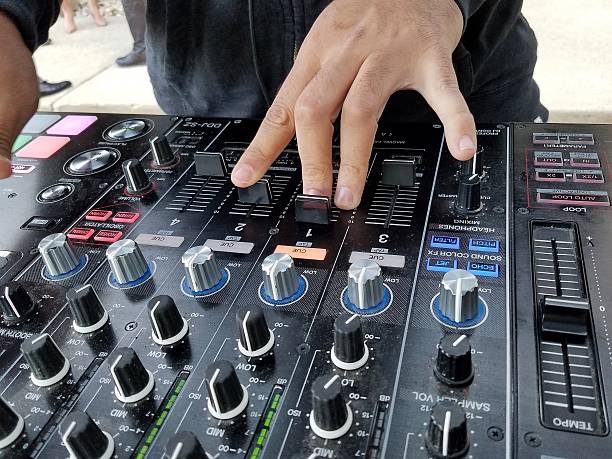
When you’re standing behind the decks, that needle drop is just the start. Anyone can beatmatch, anyone can fade one track into the next, but the real magic—the stuff that makes people stop, turn around, and ask “who is this?”—happens when you start playing with pitch and color like they’re the same instrument. This is where Mastering The Mix stops being about technical correctness and starts being about emotional architecture. And the tool that bridges that gap? FX as secret sauce.
Let’s get one thing straight: using effects isn’t cheating. Back in the days of Larry Levan at the Paradise Garage, he wasn’t just playing records. He was twisting the mixer’s EQ knobs like a sculptor, building tension with the reverb on that classic Roland Space Echo, slapping echo on the snare so it felt like the room was breathing. Frankie Knuckles took those same tools and turned them into a spiritual practice. Wendy Hunt, one of the unsung heroes who helped shape the early underground scene in New York, knew that the right wash of delay could turn a two-minute breakdown into a transcendental moment. They weren’t just DJs—they were alchemists. And their lab was the mixer.
So how do you level up your own set without sounding like a beginner who just discovered a reverb button? It starts with pitch play. Most DJs think of pitch control as a mechanical function—speed up or slow down to lock in the BPM. But when you think of pitch as a color palette, everything changes. That vocal sample sounds thin? Nudge the pitch down a few cents and it gets weight, shadow, body. That bassline feels too aggressive? Bump the pitch up a tad and it opens up a little air, letting the track breathe. This is the kind of subtle tweak that separates a set from a playlist.
Now layer in the sound color. Your mixer’s EQ isn’t just for carving out space between kicks—it’s your brush. Grab the low-mid and pull it down while boosting the high-mids, and suddenly that house track feels like it’s floating on a cloud. Crank the low end while dipping the highs, and you’ve got a depth charge. The trick is to treat every knob as a modifier for the emotion you’re chasing. You’re not fixing a mix; you’re painting with frequencies.
Now bring in the secret sauce: FX. Reverb, delay, filter sweeps, bit crushers, phasers—these are your spice rack. But you don’t dump the whole jar in. A short ping-pong delay on a percussive element can create a rhythm within a rhythm. A high-pass filter slowly opening over eight bars is a tension builder that pays off harder than any drop. Even a tiny touch of reverb on a vocal can make it feel like the singer is standing in a cathedral while the crowd is in a basement. The key is restraint. Use FX to highlight a moment, not to fill silence. The silence itself is an instrument.
Here’s a pro-level move: combine pitch play with FX in real time. Drop the pitch on a track by four percent while adding a long reverb tail, then filter out the lows. You’ve just created a transition that feels less like a change of song and more like a hallucination. The crowd isn’t sure when one track ended and the next began, they just know they’re deeper in the ride than they were thirty seconds ago. That’s mastery.
And don’t sleep on the history here. This isn’t a new flex. The best DJs have always understood that the mixer is a musical instrument, not a control panel. From the Chicago warehouse nights where Frankie Knuckles turned a single snare hit into an endless shimmer, to the Ibiza sunrises where every delay and echo was a prayer, the people who moved the culture forward were the ones who treated FX as part of the composition. When you’re working a room in Berlin, Tokyo, or Brooklyn, the crowd can feel the intention. They know when you’re just mixing. They know when you’re molding.
So the next time you’re in the booth, stop thinking about “which track comes next.” Start thinking about “what does this moment need?” Maybe it needs the pitch to drop a hair and the color to shift warmer. Maybe it needs a slap delay that feels like an echo from another dimension. Maybe it needs nothing but a filter and silence. The secret sauce isn’t a preset. It’s your ear, your touch, and your willingness to play.
That’s Mastering The Mix. That’s the history. That’s you, right now, becoming part of it.