So you’ve got the gear. You’ve watched a few YouTube tutorials. You’ve even spent an embarrassing amount of time scrolling through beatport and worrying if your track selection says too much about your emotional state. Now comes the part nobody wants to talk about: hitting record on your very first mix and actually listening back. It’s going to be cringe. It’s supposed to be cringe. And that’s exactly why you need to do it.
Welcome to DJ Life 101, where the first rule of getting started is that your first mix will absolutely not be fire. It will be a little off. The transitions might sound like two songs fighting in an elevator. You might accidentally fade out the main drop just as the crowd would have lost their minds. That’s the point. Recording yourself is the single most underrated skill in the DJ toolkit, and it’s the one thing that separates people who talk about being a DJ from people who actually become one.
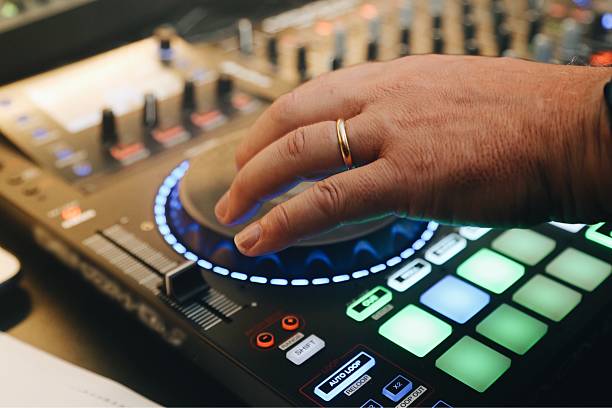
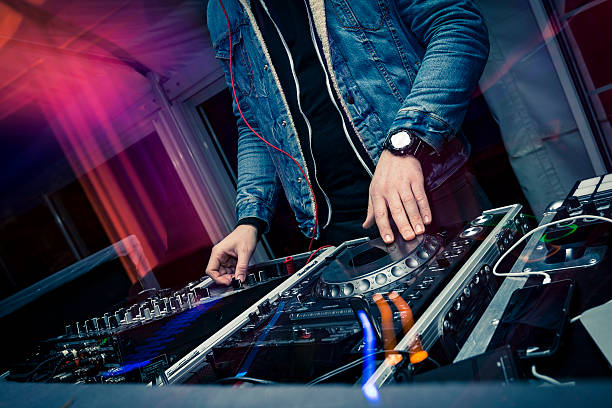
Let’s be real for a second. When you’re standing over your controller or turntables, headphones on, trying to beatmatch by ear, you’re in the zone. You think it sounds good. The brain is generous to itself in the moment. Then you play back the recording and hear that the kick drums were dragging by a quarter beat for a full minute. Or that the eq was so muddy your ears feel assaulted. That moment of cringe is a gift. It’s the fastest way to train your ear because you’re not guessing anymore. You’re hearing exactly what the audience heard, and you can fix it.
Start by choosing two tracks you love. Not two tracks that are technically perfect for mixing, but two that make you feel something. Maybe one is a classic house track with a long intro, and the other is a modern banger with a clean four-on-the-floor beat. Load them into your software or onto your decks. Set a three-minute timer. Press record. That’s it. You don’t need to plan a whole hour-long journey or a festival-ready set. Your first mix ever should be a three-minute experiment where you try to blend the end of one track into the beginning of another. If it works, great. If it doesn’t, you’ve learned more than if you’d spent an hour tweaking your cue points.
Here’s a pro tip that the legends like Frankie Knuckles and Larry Levan would probably approve of: listen to your recording on different systems. Hear it on your phone speaker, on headphones, on a bluetooth speaker in the kitchen. Each playback reveals something new. The cringe factor might hit hardest when you hear that bass frequencies are clashing, but that’s data. That’s growth. Larry Levan didn’t become the godfather of the Paradise Garage by avoiding rough mixes. He played mistakes, recovered, and learned how reading a room meant reading your own ego too.
Now, about the gear. You don’t need a Pioneer DJM-V10 or a full CDJ-3000 setup for this. A used DDJ-400 or a cheap controller with Rekordbox will do. What matters is that you have a record button. Most software has one built in. If not, use your phone’s voice memo app. The quality won’t be perfect, but perfect isn’t the goal. The goal is to get comfortable with imperfection. The goal is to build the habit of self-critique without self-judgment. That’s the real skill.
Mental health check: recording yourself can be brutal. You might feel embarrassed or frustrated. That’s normal. DJing is a performance art, and performance artists are the most self-critical people on the planet. But here’s the wellness angle we promote on this site: treat your first mix like a practice session, not a product. You wouldn’t run a marathon without some training runs that look and feel messy. Your first mix is the DJ equivalent of falling off the treadmill. Get back up, hit record again, and try a different transition.
As you move forward, you’ll start collecting those early recordings. Keep them. In six months, you’ll look back and laugh, but you’ll also see how far you’ve come. You might even find that a cringe moment from your first mix actually had a cool accidental loop or a unique blend that you wouldn’t have discovered without just going for it.
So open your DAW, hit that red button, and let the cringe begin. It’s the first step toward your first real mix. And trust me, the freedom you feel when you stop being afraid of sounding bad is the same freedom that turns a bedroom DJ into someone who can command a booth at Berghain or the Paradise Garage replica in your hometown. Record it. Even if it’s cringe. Especially if it’s cringe.