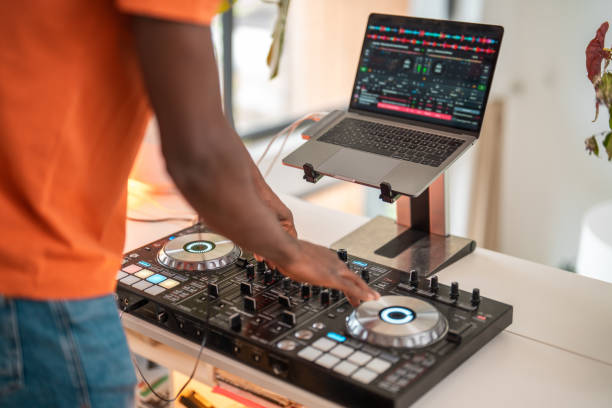
You just got your first controller. Maybe it’s a used DDJ-400 you scored on OfferUp, or a new Numark party box your roommates pitched in for. The headphones still smell like fresh plastic, and you’ve already spent three hours trying to beatmatch two house tracks that should not go together but you’re making them work anyway. Feels good, right? Now here’s the hard truth nobody tells you in the starter kit unboxing video: you need to hit record on every single one of those sessions, starting right now, before you even learn what a hot cue is.
Recording your mixes from day one isn’t about putting content on SoundCloud before you’re ready. It’s about building a time machine for your ears. When you listen back to a mix you recorded last week, you hear things you completely missed while you were in the zone. That transition where you let the bass clash for four extra bars? Brutally obvious in playback. The key change that hit perfectly? That feels like a superpower you want to replicate. You can’t improve what you can’t review, and your memory of a live mix is always a little bit romanticized. The recording is merciless and real, and that’s exactly what you need.
Think of it like this. In the old days, DJs like Larry Levan at the Paradise Garage or Frankie Knuckles at the Warehouse didn’t have the luxury of recording every night. They had to trust their gut, their crowd, and their crates. But when they did get tapes, those recordings became textbooks for generations of spinners. Wendy Hunt, the legendary Chicago house pioneer, used reels to study her own phrasing and energy flow. She didn’t have a laptop screen showing her waveform. She had ears and patience and a tape hiss that taught her more than any YouTube tutorial ever could. You have it easier. You have a record button that costs nothing but storage space.
The biggest fear new DJs have is that their first hundred mixes will sound terrible. They will. That’s the point. If your first mix sounded good, you’d be a prodigy or you’d be lying to yourself. The goal isn’t to post them. The goal is to listen to them in the car, on the bus, while you’re washing dishes, and not let yourself skip the cringe moments. That cringe is your curriculum. When you hear yourself panic into a trainwreck thirty minutes in, you learn exactly where you need to tighten your phrasing or trust your EQs. You start noticing patterns. Maybe you always drop the new track too early on the breakdown. Maybe you always let the hi‑hats ring out too long. Your recordings will rat you out every single time, and that’s the best friend you’ll ever have as a beginner.
Also, recording builds a library of proof. Not proof for anyone else—proof for you. A few months from now, when you’re feeling frustrated and stuck, you can scroll back to your second recorded mix and hear how far you’ve actually come. That dopamine hit is real. It keeps you motivated when progression feels invisible. It also gives you raw material to share with a mentor or an online DJ community if you want honest feedback. Nobody can tell you what you need to fix just by watching you fumble with headphones. But send them a three‑minute clip of a live recording, and they can pinpoint your weak spots instantly.
For the bare minimum setup, this is almost too easy. You don’t need an external recorder or a fancy interface. Most DJ software—Rekordbox, Serato, Traktor, Virtual DJ—has a record function built right in. Plug in your USB, pick the “Record To File” option, and let it roll. Set it to WAV if you have drive space, or 320kbps MP3 if you’re tight on memory. Name the file with the date and a simple tag like “SaturdayNightFrustration” so you can find it later. That’s it. One button. No excuses.
The pro move is to record not just your practice sets but also your library sorting sessions. Yes, even the boring hour you spent cueing up new tracks. Sometimes you accidentally play two records together while browsing, and that happy accident becomes a transition you stole from the universe. Record everything. The gems hide in the noise.
So before you tweak your EQ curve or buy a custom slipmat, make recording a non‑negotiable part of your ritual. Click record before you touch the jog wheels. Treat it like brushing your teeth for your ears. Every mix is a journal entry, a diagnostic test, and a victory lap all at once. Larry Levan didn’t have that luxury. Frankie Knuckles didn’t. Wendy Hunt had to fight tape hiss just to capture a ghost of her own magic. You have infinite memory and zero friction. Use it from day one, and your future self will thank you every time you press play.