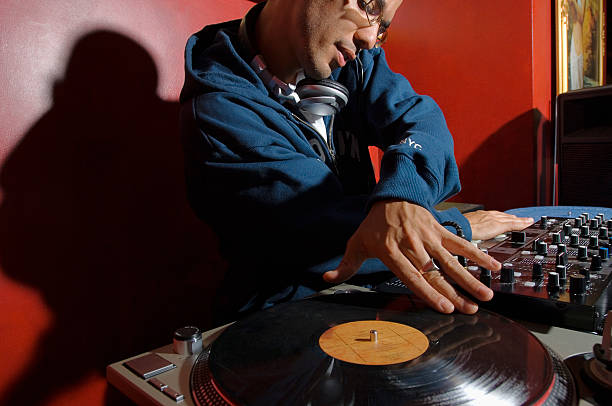
If you’ve ever listened to a club track and felt that final crack of the snare just hover in space like a ghost before the drop hits, you already know the feeling. That’s not an accident. That’s the Reverb Throw. And in the world of DJing and beat mixing, it’s one of the most underrated moves in the “secret sauce” toolkit. It’s the kind of trick that separates a solid transition from a moment that makes the crowd actually look up from their phones. We’re talking about mastering the mix in a way that feels intentional, not just technical.
Let’s break it down in real talk. A reverb throw is exactly what it sounds like: you slap a big, room-eating reverb on the very last snare hit of a phrase or a section, and then you let that decay hang in the air like a question mark. The kick drops out, the bass thins out, and for a half-second, all that’s left is the echoing snare ringing into nothing. Then boom—the next track or next drop slams in. It’s a tension builder. It’s a reset button. And when you’re trying to master the mix, it’s a god-tier tool for managing energy.
Now, why does this matter for DJs? Because we’re not just playing songs—we’re telling stories. Think about the pioneers. Larry Levan at the Paradise Garage didn’t have a laptop with a million plugins, but he understood space. He used reverb on his drum machines to make the room feel alive. Frankie Knuckles would layer delays into his edits so the snare felt like it was bouncing off the walls of the Warehouse. And Wendy Hunt, who was spinning in New York’s underground scene, knew that the last snare of a breakdown could make or break a floor. The reverb throw is a direct lineage from that era. It’s not new. It’s just been polished into a digital weapon.
Here’s how you actually do it without overthinking. Grab a track that has a clear four-bar or eight-bar phrase ending on a snare. In your DAW or on your DJ controller with effects—like a Pioneer DJM mixer’s built-in reverb or a plugin like Valhalla Room or Eventide Blackhole—set the reverb to a long decay, like three to four seconds, with a high mix level. Right on that last snare hit, you automate or manually trigger the reverb. Let it bloom. Then, as the reverb is still tailing off, cut or filter out all other elements. Just let the ghost of that snare hang. You get a breath. And then you bring in your next track with a kick that punches through that reverb wash. Instant drama.
Does it work for every genre? Hard yes. In house and techno, it’s the classic “clearing the floor for the drop” move. In DnB, it feels like the snare is running away from you into a tunnel. In hip-hop, it’s a way to let the last snare linger like a signature before the next verse. Even in open format sets where you’re mixing pop and disco, a subtle reverb throw on the snare right before a breakdown makes the transition feel cinematic—like the crowd is being passed from one moment to the next through a door of sound.
But here’s where mastering the mix gets deeper: the reverb throw isn’t just an effect. It’s a mix decision. If you let it ring too long, you muddy the entrance of the next track. If you cut it too short, you lose the tension. The secret is to match the reverb’s decay to the energy of the room. In a big festival tent with tons of reverb already bouncing off concrete, you might need a shorter throw. In a tight club booth with dead sound, you can go longer. Listen to the room. That’s what the greats did. Levan would listen to the Garage’s natural echoes and decide when to use effects like a conductor.
And don’t sleep on the hardware. If you’re using a mixer like the Allen & Heath Xone:96 or a Denon SC6000, the effect sends are your friend. You can route the snare solo to a reverb bus while leaving the kick dry. That’s a pro move right there. Your kick stays tight and punchy while the snare floats away. That’s the difference between a throw that sounds like a mistake and one that sounds like a signature.
For the traveling DJ, especially if you’re bouncing between bucket-list clubs like Berghain in Berlin, DC10 in Ibiza, or Sound in Los Angeles, the reverb throw is a lifesaver when you’re adapting to different sound systems. Some rooms are boomy, some are dry. You can’t rely on the venue’s reverb. Carry your tricks with you. A good reverb throw on a last snare is like a portable vibe controller. It tells the crowd “we’re leaving this section now, get ready for what’s next.”
So next time you’re in your crate or your studio, don’t just think about EQing kicks or sync buttons. That reverb throw on the last snare? That’s your secret sauce. It’s a hat tip to the history of the craft, a tool for energy management, and a way to make your mix sound like you’re not just pressing play—you’re conducting the room. The snare hits. The echo lingers. And the crowd waits for the drop. That’s the power of mastering the mix. That’s the difference between a DJ and a storyteller.