If you’ve spent any time scrolling through Discord servers, TikTok live streams, or Reddit threads dedicated to beat-making, you’ve probably seen the term “sample challenge” pop up more than a few times. What started as a niche way for bedroom producers to flex their creativity has quietly become one of the most influential forces shaping the future of DJing. And honestly? It’s wild how much this trend is rewriting everything we thought we knew about the craft.
Think back to the old-school days—Larry Levan mixing tracks by hand at the Paradise Garage, Frankie Knuckles threading disco and soul into something entirely new in Chicago, or Wendy Hunt spinning deep house in London basements before the term “bedroom producer” even existed. Those legends didn’t have sample packs or cloud libraries. They relied on vinyl, intuition, and a deep connection to the music they loved. Fast forward to now, and the game has flipped. The sample challenge community is basically the modern-day equivalent of those early crate-digging sessions, but the crates are digital and the digging happens at 2 AM in your dorm room.
So what exactly is a sample challenge? It’s pretty simple: a community—often on platforms like Splice, BandLab, or even Instagram—drops a shared audio clip. Could be a drum break, a vocal snippet, a synth loop, or even a field recording of rain hitting a tin roof. Everyone gets the same starting point, and the goal is to flip it into something uniquely yours within a set time frame, usually a week or less. No two tracks ever sound the same, because each producer brings their own perspective, genre influences, and technical quirks. That’s the beauty of it. But here’s where it gets interesting for DJs: these challenges are training your ears and your workflow in ways that directly affect how you mix, layer, and read a crowd.
Think about the skills you’re sharpening when you take on a sample challenge. You have to listen critically. You have to edit, stretch, pitch, and rearrange audio on the fly. You have to make split-second decisions about what works and what doesn’t. That’s literally the same muscle you use when you’re beat-matching two tracks in a club and the energy is shifting. The sample challenge community is, in many ways, a low-stakes rehearsal space for high-stakes DJ sets. And because so many of these challenges are posted for feedback, you’re also learning how to handle criticism and adapt your sound—which is gold for anyone trying to move from the bedroom to the booth.
There’s also a deeper shift happening here, one that ties directly into the bedroom producer economy. For years, DJing was gatekept by expensive gear, exclusive vinyl, and insider connections. You needed a mentor or a club residency just to understand the basics. Now, anyone with a laptop and a free DAW can participate in sample challenges that teach arrangement, EQing, and dynamic control. The barrier to entry has collapsed, and the result is a generation of DJs who are not just mixers but actual producers, sound designers, and curators all rolled into one. That’s a future where the line between “DJ” and “artist” is completely blurred, and honestly, that’s where the magic lives.
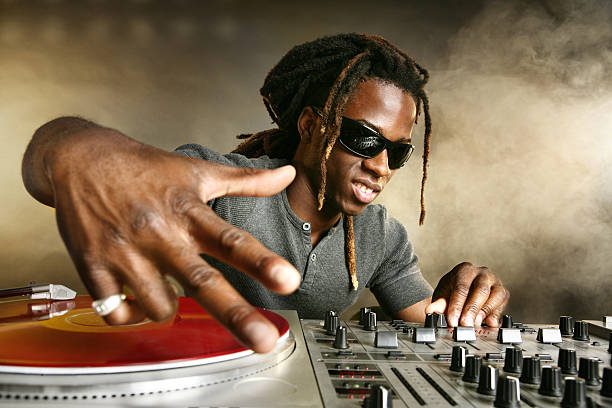
This evolution also affects the way DJs approach their live sets. When you’ve spent hours flipping a single sample into a whole track, you start to hear mixing opportunities that someone who only plays full-length songs might miss. You’re more likely to drop a quick acapella over a bassline you recognize from a challenge you did last month. You’re more likely to build tension with a filtered loop rather than just waiting for a drop. The sample challenge mindset turns your DJ performance into a live remix session, which is exactly what crowds are craving these days. They don’t want a pre-planned playlist. They want you to react, to morph, to surprise them.
Of course, this all comes with its own set of challenges. The sample challenge community is massive, which means standing out is harder than ever. And with so many producers using the same source material, there’s a risk of sonic homogeneity if you’re not careful. But that’s where the real skill comes in: your ability to inject your personality, your weird little influences, your love for obscure genres—the same kind of love that drove the pioneers like Knuckles and Levan to experiment without a safety net.
As the bedroom producer economy continues to grow, expect sample challenges to become even more integrated into the DJ curriculum. They’re already being used in online courses, in mentorship circles, and even by labels scouting fresh talent. The future of DJing isn’t just about playing records anymore. It’s about building communities around shared sounds, remixing reality itself, and turning a single loop into a whole universe. And that future? It’s already spinning.