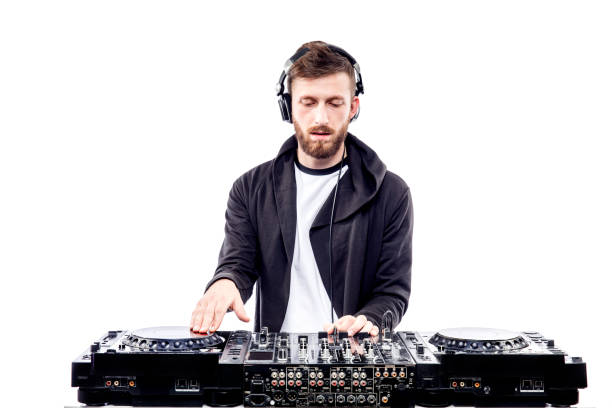
Before the strobe lights flickered in massive commercial clubs, before the echo of a kick drum could be programmed into a laptop, New York City had a secret. It wasn’t just the location of the parties—it was what happened in the dark, sweaty rooms that changed music forever. The Disco Demolition of 1979 wasn’t the end of the movement; it was the moment the real players went underground. The vaults, the lofts, and the overlooked basements became laboratories for sound. And the scientists running the experiments were the DJ pioneers—the ones who didn’t just play records but literally invented the way we mix music today.
For a generation raised on streaming and auto-sync, it’s hard to picture a world where beatmatching was a secret language. But in the 1970s, DJs like Larry Levan and Frankie Knuckles weren’t just selecting songs; they were rewiring the nervous system of dance music. Larry Levan, the undisputed god of the Paradise Garage, built his sets like emotional arcs. He didn’t care about genre purity. He’d slide from a disco anthem into a weird gospel track into a dub echo, and somehow the crowd lost their minds. He used a custom sound system that was so advanced for its time that other DJs would come just to hear the room vibrate. But Levan’s real magic was his intuition. He knew when to drop the energy just enough so that the next peak hit harder. That’s not a technical skill; that’s a sixth sense.
And then there was Frankie Knuckles, the Godfather of House. Sure, he moved to Chicago and became the face of a genre, but his roots are pure New York. At the Continental Baths and later the Warehouse, Knuckles did something radical: he started looping the disco tracks he loved using reel-to-reel tape. He’d stretch a four-minute song into a ten-minute dream. He’d remove the vocals to focus on the drums. That’s the secret origin of house music—it was literally born from a DJ’s frustration with the limits of a pre-cut vinyl. He wanted more control, so he built it. That same hunger lives in every DJ who today nudges a jog wheel or adjusts a sync button.
But let’s not overlook Wendy Hunt. She isn’t as canonized as Levan or Knuckles, but she was a visionary in her own right, threading the needle between the uptown gay balls and the downtown art scene. Wendy understood that a DJ isn’t just a music source; they’re a curator of a temporary community. Her vault sets at the Loft and private friends-only parties were legendary for their fluidity. She’d play a Philly soul groove, then a Brazilian percussion record, then a weird experimental synth piece, and the room stayed united. She proved that the DJ’s most powerful tool isn’t the mixer—it’s the playlist. She was the master of the long, slow build that makes a room feel like it’s levitating.
These pioneers operated in a world without manuals. They had to physically cut tape, mark records with white labels, or memorize the B-side’s BPM by ear. There was no Spotify preview, no Rekordbox memory stick. They carried crates of wax and risked their back and sanity just to get a sound that didn’t exist yet. And because the mainstream burned disco in effigy—literally, by blowing up a pile of records in Comiskey Park—they went deeper into the vaults. Those secret rooms in Manhattan, Brooklyn, and Queens became the sacred training grounds.
The legacy isn’t just in the songs they played, but in the mindset they created. Every DJ today who drops a dramatic key change, who layers an acapella over a dub version, who stretches a breakdown until the crowd begs for the drop—they are channeling Larry Levan’s tension and release. Every DJ who builds a marathon set instead of a pre-programmed banger sequence is channeling Frankie Knuckles’ patience. Every DJ who trusts their gut to play something unclassifiable is channeling Wendy Hunt’s courage.
So when you’re standing behind a pair of turntables—or a controller with four decks—remember that the beatmatching, the phrasing, the energy mapping all emerged from a time when being a DJ meant being a sonic architect. The secret disco vaults weren’t just physical spaces; they were states of mind. And the pioneers? They’re still whispering in the grooves of every record you smash to the floor.