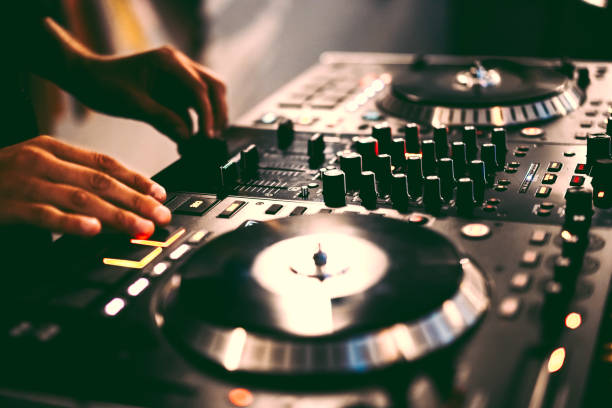
If you’ve ever peeked behind the decks at a club, festival, or even a basement boiler room set, you’ve seen them. Those little, chunky, retro-looking headphones perched on the ears of everyone from Carl Cox to your local bedroom beat-juggler. They look like they were designed in a 1980s air traffic control tower, and honestly? They kind of were. I’m talking, of course, about the Sennheiser HD 25. And if you’re serious about DJing—or even just trying to look like you know what you’re doing—you need to understand the supremacy of this particular piece of gear. This isn’t just a headphone. It’s a rite of passage.
Let’s start with the obvious: the build. The HD 25 is not flashy. It doesn’t have RGB lights, wireless Bluetooth, or noise-cancelling wizardry. It’s all plastic, metal, and a very specific kind of utilitarian vibe. But that’s the point. This thing is built to survive the road. Touring DJs treat gear like rental cars—they get thrown in bags, dropped on concrete, tangled in cables, and exposed to sweat, rain, and beer spills. The HD 25 shrugs it all off. The headband is split, so if you press way too hard to hear a mix in a loud room, the pressure distributes evenly. The cups rotate and fold flat. The cable is detachable and replaceable. You can actually buy every single part of this headphone individually. If the foam ear pads wear out, you swap them. If the hinge snaps (and believe me, the first time you feel that plastic crack your heart will sink), you can replace the entire assembly. It’s the LEGO of the audio world.
But the real magic is in the sound. The HD 25 is famous for its isolation. Not electronic noise cancellation, but pure, brute-force physical blocking. The on-ear design presses the driver directly against your ear, creating a tight seal. In a room where the subwoofers are rattling your ribcage, the HD 25 still lets you hear your cue track with clarity. This is critical when you’re beatmatching by ear, which you should absolutely be learning how to do even if you rely on sync. The frequency response is punchy and clinical. The bass is present but not bloated. The mids and highs are sharp enough to hear the exact transient of a kick drum. It’s not a headphone for casual listening on the bus; it’s a tool. It’s designed to help you lock in a mix, not to make your favorite tracks sound like a warm hug. And that’s why DJs trust it.
Now, let’s talk about the “Supremacy” part. For years, the HD 25 has dominated the DJ market. You’ll see beginners buying them because the guy they follow on Twitch uses them. You’ll see veterans still using the same pair they bought in 1997. But why hasn’t anything knocked it off the throne? Other brands have tried—Pioneer, Audio-Technica, V-Moda—and they’ve made great cans. But none of them have the same cult status. The HD 25 has that je ne sais quoi of being the standard. It’s the industry reference. When you wear these, you’re not just wearing headphones; you’re wearing a badge that says, “I’ve been in the trenches.” It’s the same energy as a guitarist playing a beaten-up Fender Telecaster: it’s not about being new, it’s about being trusted.
There’s also the practical side for the modern DJ. If you’re mixing digitally with a laptop or a controller, the HD 25’s impedance is low enough to drive off your phone or a cheap interface, but high enough to handle pro club mixer headphone jacks. And because they’re on-ear, they don’t trap as much heat as big over-ears. You know that moment when you’re playing a three-hour set and your ears feel like they’re marinating in swamp juice? The HD 25 mitigates that. Plus, they look iconic. That chunky, retro aesthetic has become synonymous with DJ culture. It’s part of the visual language now. You see those headphones and you immediately think of a DJ leaning in, one ear off the cup, hand on the platter.
Look, if you’re building your kit for the first time, you can spend less on headphones and get something decent. But the HD 25 is not about being decent. It’s about having a piece of history that still works perfectly today. It’s about knowing that when you step into a booth, you’re using the same tool that Frankie Knuckles might have worn while mixing house classics at the Warehouse, that Larry Levan threaded through his fingers at the Paradise Garage, that Wendy Hunt probably cranked up in the early days of the scene. That lineage matters. The equipment we choose is part of our identity as DJs. And the Sennethiser HD 25 isn’t just a headphone—it’s a statement. You’re not just a person pressing play. You’re part of a lineage. Now go get a pair, learn to cue with one ear off, and don’t lose the little foam winder thing.