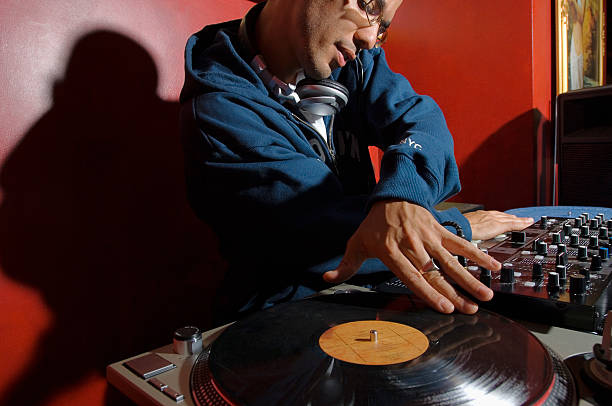
You’re in the middle of a four-hour set, the floor is locked in, and you feel that moment coming—the one where a simple kick-snare pattern needs to breathe, or you want to hit a quick roll before dropping into a bass-heavy breakdown. You could cue a fresh track, but you’re not ready to commit. You could spin the jog wheel, but that feels clunky when you’re trying to keep flow. Enter the slip loop for quick rolls. This isn’t just a trick; it’s a foundational technique in advanced looping workflows that separates a good night from a transcendent one. At Mastering The Mix, we live for these small moves that create big moments, and the slip loop is your backstage pass to effortless tension and release without ever leaving the groove.
First, let’s break down what a slip loop actually does. In most modern DJ software and hardware—think Rekordbox, Serato, Traktor, or a Pioneer CDJ setup in slip mode—a slip loop is a temporary loop that plays over the track while the underlying track keeps running silently in the background. When you release the loop, the track jumps back to where it would have been if you’d never touched it. That’s the magic: you can scroll through a phrase, sample a four-beat slice, or hammer a one-beat roll, and the track never loses its place. It’s like having a time machine for your mix. For quick rolls specifically, you’re using that loop to create rapid-fire repeats—think of a snare drum rolling every eighth note for a bar, then snapping back to the main beat as if nothing happened. The effect is pure dopamine for the floor.
Why should this be in your advanced looping toolbox? Because it lets you play with energy in real time without committing to a full loop or losing sync. Picture this: you’re mixing a house track into a techno banger. The outgoing track has a four-on-the-floor kick, but you want to tease the incoming track’s vocal phrase. With slip loop, you set a one-beat loop on a snare or a hi-hat, then tap it in and out at the end of every eight bars. The crowd hears a stuttered roll that builds anticipation, then a clean drop back into the groove. No train wrecks, no awkward silence. You’re basically shaping the track’s DNA on the fly, and the slip mode ensures you never miss a downbeat. This is especially clutch when you’re playing vinyl-emulated setups or older gear that doesn’t have unlimited quantise—slip loop is your safety net for creative risk-taking.
A pro tip from the Mastering The Mix vault: use the slip loop for quick rolls during breakdowns or during the last four bars before a build. Start with a half-bar loop, then rapidly toggle it to a quarter-bar, then an eighth-bar, creating an accelerating roll that feels like a drum fill. The key is to keep your hand loose and your ears open—you’re not a machine, you’re a conductor. Pair this with a high-pass filter sweep, and you’ll send the crowd into a frenzy when the full beat returns. I’ve personally used this in clubs from Berlin to Tokyo, and it always gets a head-nod from the seasoned heads who know exactly what you’re doing. It’s subtle but devastating.
Now, how does this fit into the bigger picture of advanced looping workflows? Think of slip loops as the middle ground between manual beat-juggling and preset auto-loops. Auto-loops are rigid—they lock you into a fixed length and can feel robotic if used too often. Manual juggling is high-risk and requires serious muscle memory. The slip loop offers a hybrid: you can be spontaneous, but you also have a safety net. In the same set, you might use a four-bar slip loop to build a long tension layer, then switch to quick one-beat rolls for accent hits. The workflow is fluid because you never have to stop the music or hunt for cue points. That’s the whole point of advanced workflows—they let you focus on the crowd, not the gear.
For DJs who are still building their technique, start small. Pick a track you know inside out, set your deck to slip mode, and practice looping a single kick for two bars. Let it play, then release—notice how the track breathes back in. Next, try a snare roll: loop the snare on beat two and four, then tap it out after eight beats. Record yourself and listen back. You’ll hear where it adds magic and where it might feel forced. Over time, you’ll develop an instinct for when a quick roll is the right move—usually right before a drop, during a vocal pause, or when you want to transition between two tracks that have different energy levels. The slip loop is your Swiss army knife for those moments.
At the end of the day, mastering the mix is about knowing when to step forward and when to step back. The slip loop for quick rolls is a forward step—a small but powerful statement that says, “I’m in control, and I’m here to take you somewhere.” Whether you’re a bedroom DJ dreaming of closing Berghain or a veteran playing weekly sets, this technique belongs in your arsenal. It’s clean, it’s creative, and it respects the source material while letting you paint over it. So go ahead, load up a track, engage slip mode, and start rolling. Your next peak moment is just a loop away.