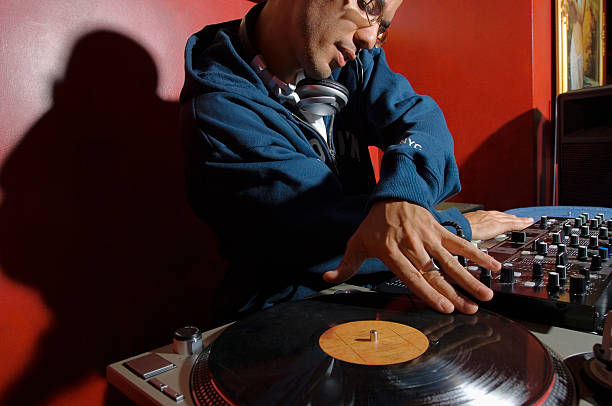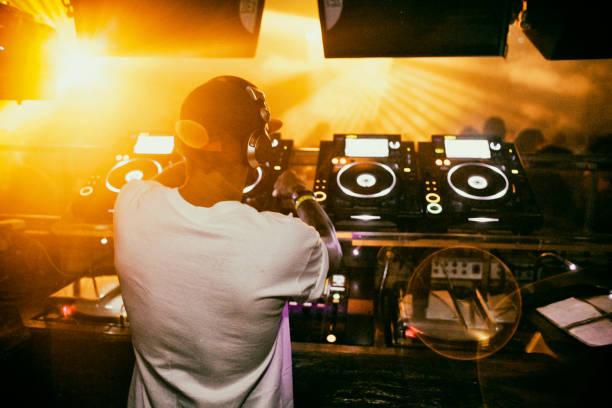
Picture this: you’re in the booth at 2 AM, the floor is packed, and you just dropped a track that’s hitting exactly right. But something’s missing. You want to loop the vocals from the second verse, layer them over a completely different beat, and bring in a bassline from a house track you found on SoundCloud last week. In the old days, you’d need a laptop with a cracked version of Ableton, a week of prep, and a prayer that the crowd doesn’t notice when you fumble the cue point. That’s dead now. Real-time stem separation is here, and it’s not just a feature—it’s the most disruptive piece of DJ tech since sync buttons. This is the magic moment where DJing stops being about playing other people’s songs and starts being about building your own live remix in real time.
If you’ve been in the game for a minute, you remember when isolation was a pipe dream. You’d try to EQ out the vocals by turning down the mids, and suddenly the whole track sounded like it was playing through a pillow. Then came DJ software that let you split tracks into stems—drums, bass, vocals, and instruments—but you had to process them offline. That meant downloading, waiting, and hoping the algorithm didn’t turn the hi-hats into static. That workflow is for dinosaurs. The new wave, powered by machine learning models trained on thousands of tracks, lets you separate stems instantly while the track is playing. No pre-analysis. No buffering. Just a button press, and suddenly the vocals are floating alone, ready to be chopped, looped, or pitched. It feels like cheating until you realize it’s just the next logical step in a craft that’s always been about taking risks.
What does this mean for your actual set? Think about the phrase “mixing in key” versus “mixing in chaos.” With real-time stem separation, you can drop an acapella over a drum loop from a completely different genre. Put a soulful R&B vocal over a hard techno kick. Take the bassline from a classic Frankie Knuckles track and let it roll under a modern pop verse. The boundaries that used to keep genres in separate rooms are gone. You’re not a DJ anymore—you’re a live producer with a controller. And the crowd feels it. They don’t know why the transition feels so clean or why that Madonna chorus suddenly hits over a 909 snare, but they know it’s not supposed to work. That’s the electricity. That’s the reason people still show up to clubs instead of just staying home with their playlist.
Of course, this tech comes with a learning curve. You can’t just hit “separate vocals” and expect magic. The software isn’t perfect. Sometimes the bass bleeds into the drums, or the AI thinks a ride cymbal is a vocal sample. You have to train your ear to hear the artifacts and decide what’s usable. That’s where the art still lives. The best DJs using this right now—the ones playing at places like Berghain, Fabric, and Smartbar—treat stem separation like a scalpel, not a sledgehammer. They use it to highlight one element, not to gut the entire track. A subtle vocal layer underneath a drop can change the emotional weight of a moment without overwhelming the mix. If you’re throwing every stem into a blender, you’re not innovating—you’re just making noise.
This shift also changes how we think about gear. The latest controllers and software from companies like Pioneer DJ and Denon are building stem separation directly into the hardware. You don’t need a beastly laptop anymore. Some standalone units can now split four stems in real time with a dedicated pad or knob. That means you can walk into a booth with just a USB stick and a pair of headphones, and within seconds you’re producing a live edit of a track that’s never been heard before. For the traveling DJ—the one bouncing between bucket-list clubs in Tokyo, Barcelona, and New York—this is a game-changer. Less gear, more flexibility, and a set that evolves every night.
But let’s talk about the elephant in the room: does this kill the “art of the DJ”? No. It just redefines it. Larry Levan didn’t have stems, but he had a reel-to-reel and a willingness to cut tape mid-track. Frankie Knuckles built entire sets by layering drum machines and records on the fly. Wendy Hunt, who was locking into extended loops at Paradise Garage before most of us were born, knew that the DJ’s real skill is reading a room and making choices that serve the dance floor. Stem separation doesn’t replace that instinct. It amplifies it. Now you have more tools to execute a vision that you’re pulling from the energy of the crowd in real time. That’s not lazy. That’s evolution.
The future of DJing is not about pressing play. It’s about dismantling what already exists and building something new while the audience watches. Real-time stem separation is the door to that world. Whether you’re a bedroom DJ trying to impress your friends or a touring act at Tomorrowland, this tech is going to become as standard as a crossfader. Learn it now, or get left behind. The best part? You don’t have to wait. Grab a track, hit that button, and see what happens when the rules disappear. The booth is yours. The magic is real time.