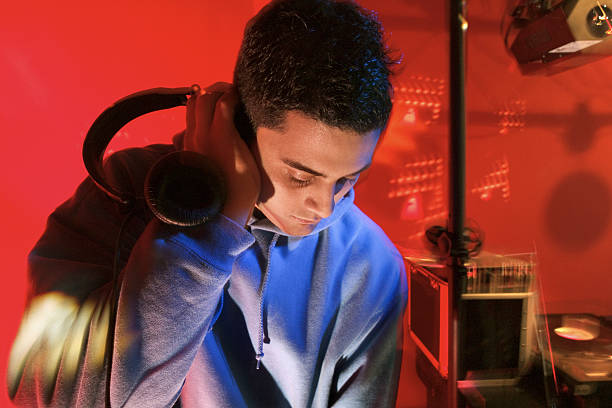
Let’s be real for a second. You’ve just finished a four-hour set, your ears are ringing with the ghost of that 909 kick, and your neck is sore from bobbing over the mixer. You love the chaos—the dopamine hit of a perfectly timed drop, the crowd’s roar when you flip a classic. But here’s the thing no one tells you when you’re starting out: the loudest threat to your career isn’t a blown speaker or a bad booking. It’s the silence you’re not taking.
Welcome to the DJ Wellness section of the ultimate DJ life guide. Today, we’re talking about a habit that sounds almost too simple to be real, but it’s backed by audiologists and veteran touring artists alike: taking silent breaks every hour. If you’re serious about protecting your hearing longevity—the literal engine of your craft—you need to start scheduling moments of total auditory rest into your day.
Why Your Ears Are Begging for a Timeout
Think of your ears like a muscle. Not literally—they’re actually a complex system of hair cells in your cochlea that do not regenerate. Once those tiny cilia get flattened by sustained noise exposure, they’re gone. That’s hearing loss, permanent tinnitus, and the subtle distortion that makes you think your monitors are broken when they’re not.
The average DJ environment—whether a club at 100 dB or a home studio with headphones cranked—puts you at risk after just 15 minutes of continuous exposure, according to OSHA standards. But here’s the hopeful part: your ears have a natural recovery mechanism. A period of silence allows the ear’s metabolic processes to reset, reducing inflammation and giving those hair cells a chance to bounce back before the next wave of bass hits. That’s where the silent break comes in.
How to Actually Do It (Without Killing Your Flow)
You don’t need to sit in a sensory deprivation tank. A silent break means five to ten minutes of zero intentional noise. No headphones, no open-back monitors, no background TV, no scrolling through Instagram Reels (which are often loud and compressed). Find a quiet spot—a backstage area, a bedroom with the door closed, even your car parked away from traffic—and just sit. Let your auditory system decompress.
If you’re at a gig, time your break between transitions. Most clubs have a 60-minute slot structure anyway. After your hour, step away from the booth for exactly six minutes. That’s not random—research from the National Institute for Occupational Safety and Health suggests even short quiet intervals can reduce temporary threshold shift, that muffled feeling you get after a loud night.
If you’re practicing at home, treat your silent break like a non-negotiable. Set a timer. No, really. Your phone has a timer. Hit start, put your cans down, and walk away from your deck. Your creative brain also benefits from this—many producers and beat mixers report that after a silent break, they hear their mixes with fresh perspective, catching EQ problems they’d missed.
The Mental Side of Silence
This isn’t just about your ears. The DJ life—especially for traveling artists—is a constant assault on the nervous system. The lights, the pressure, the social battery drain. A silent break is a meditation microdose. You’re giving your brain a chance to flush cortisol, the stress hormone that builds up during long sets. It helps you sleep better, reduces anxiety, and actually improves your ability to focus during your next hour behind the decks.
Think of the legends: Larry Levan, Frankie Knuckles, Wendy Hunt. They didn’t have modern hearing protection like custom-molded earplugs or in-ear monitors. But many of the long-career icons—the ones who played for decades without winding up with hearing aids in their forties—had rituals. Some took smoke breaks outside where it was quiet. Others would have someone cover for ten minutes. They instinctually knew what science now proves: your ears need rest to survive a long career.
Make It a Habit, Not a Chore
You don’t have to be militant. You don’t have to sit in a closet and stare at a wall. Just turn down the volume of your life for a few minutes every sixty minutes. Listen to your own breath, the hum of the fridge, or literally nothing. Put your phone on airplane mode. Let your auditory cortex go into its default mode network—the brain state where creativity and problem-solving actually surface.
In a world that rewards constant grind and loudness, taking a silent break is a radical act of self-preservation. It’s the difference between being a DJ who burns out at thirty and one who still brings the heat at sixty. Your future self—and your future ears—will thank you.
So next time you’re about to reach for that volume knob, pause. Remember: the quiet moments are what keep the loud ones possible. Stay healthy, stay silent, and stay in the mix.