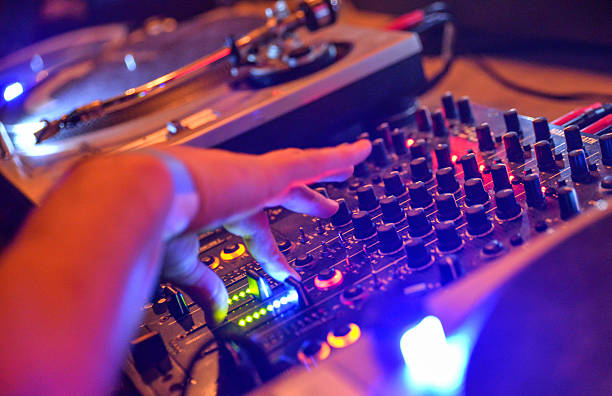
If you’ve ever stepped into a booth or scrolled through a DJ forum, you’ve probably heard the phrase “the wheels of steel.” It sounds like something out of a 70s biker movie, but in the DJ world, it’s pure reverence. The Technics 1200s aren’t just turntables—they’re the foundation of an entire culture, the beating heart of beatmatching, and the reason your favorite tracks sound like butter in the mix. But to really vibe with the scene, you’ve got to speak the language. Welcome to Gear Nicknames Decoded, where we break down the slang that keeps DJs connected across decades.
First off, why “wheels of steel”? The nickname goes back to the early days of hip-hop and disco, when DJs like Kool Herc and Grandmaster Flash realized that vinyl didn’t have to just play—it could be manipulated. The Technics SL-1200, first released in 1972, was built like a tank. Its direct-drive motor meant you could touch the platter, stop it, spin it backward, and it wouldn’t lose torque. That metal platter? That’s the wheel. And the steel? Well, they’re heavy, rugged, and they don’t quit. So, when someone says “I’m rocking the wheels of steel,” they’re not just talking about gear—they’re claiming a legacy of precision and grit.
But the lingo goes deeper. Ever heard a DJ call the 1200s “the SLs”? That’s shorthand for the model number, but it also carries a nod to the original 1200 M3D or the later MK2, MK5, and the legendary 1210 (the silver export model). If a DJ says they’re “on the 12s,” they’re talking about 12-inch vinyl singles, not the turntables themselves. Don’t mix that up. And if you hear “direct-drive” in a conversation, they’re praising the Technics’ motor system—no belts, no slipping, just instant torque. That’s why the 1200s became the gold standard for scratching and beatmatching. Belt-driven turntables? Those are for your dad’s hi-fi setup. Direct-drive is for the booth.
Then there’s the phrase “cueing up.” When a DJ says they’re “cueing a track on the 1200s,” they mean they’re using the pitch control (that slider on the side) to align the BPMs of two records. The pitch fader is often called “the vari-speed” because it lets you adjust the speed by a tiny percentage—anything from +-8% to +-20% on later models. A pro DJ will say “I’m riding the pitch” when they’re making micro-adjustments to keep the mix locked. If you hear someone yell “speed it up” or “slow it down,” they’re talking about that fader, not the EQ.
Let’s talk about “slipmats.” These are the felt or rubber mats that sit between the vinyl and the platter. Some DJs call them “slip sheets” because they reduce friction, allowing you to hold the record still while the platter spins underneath. This is essential for backspinning and scratching. Without a good slipmat, you’re just dragging the vinyl. Old-school heads might call them “butter rugs” because they make the movement smooth like butter. Speaking of butter, “butter” in DJ slang means a perfect mix—no train wrecks, just seamless blending.
Now, if you’re new to the booth, you’ll hear folks talk about “the break” or “the breakdown.” That’s the part of a track where the drums drop out, leaving just the melody or vocals. On the 1200s, a skilled DJ can “loop” a break by manually lifting the needle and dropping it back—or, with modern digital interfaces like DVS (Digital Vinyl Systems), they can trigger a loop with a flick of a switch. But purists still love the feel of a real needle in a groove. That needle, by the way, is called a “stylus,” but in the street, it’s often just “the needle” or, if you’re being specific, “the cartridge.” A worn needle can destroy your vinyl, so DJs say “check your needle” as a warning to up your maintenance game.
Ever heard someone say “I’m going in on the wax”? That’s DJ-speak for playing records—vinyl. Vinyl is “wax” because records were originally made of shellac and later vinyl, but the term stuck as a nod to the physical medium. If a DJ says they’re “digging in the crates,” they’re searching through boxes of old records for hidden gems. The crate is literally a milk crate, but figuratively, it’s the archive of sound.
Finally, don’t forget the “monitor” or “cue.” The Technics 1200s have a cue lever (the little red switch that lifts the tonearm) and a cue button (on mixers) that lets you preview a track in headphones before the crowd hears it. If a DJ says “give me a cue mix,” they’re asking for the headphones to be set to a blend of the master and the incoming track. It’s how you get that perfect timing.
So, next time you’re in a club or watching a set online, listen for the lingo. When someone drops “wheels of steel,” you’ll know they’re not just talking about hardware—they’re invoking a culture that runs on torque, vinyl, and respect for the craft. Whether you’re rocking an original 1200 or a modern Pioneer PLX, the language is the same. Get your sliplmats right, ride that pitch, and remember: the wheels don’t stop.