If you’ve ever found yourself crammed into a tiny basement in Berlin, sweating through your favorite vintage tee while a Funktion-One rig rattles your ribs, you know the magic of a micro club. These are the spaces where the DJ isn’t a distant god on a stage—they’re right there with you, riding the filter knob, and you can literally see the waveform of the kick drum shake the foam panels. Now, take that energy, add a Soviet-era staircase, a drink that tastes like pickles and adrenaline, and a crowd that dances like the city’s future depends on it. Welcome to The Block’s Second Room in Tbilisi, Georgia. This isn’t just a night out; it’s a pilgrimage for anyone serious about sound, clubbing, and the raw electricity of a room that feels like it was built for your sound system alone.
Tbilisi has become a global phenomenon in the last decade, mostly thanks to the legendary Bassiani and its cavernous, politically charged techno nights. But the city’s underground pulse is far more intricate than just one big room. The Block, a smaller, more intimate venue opened in 2023, carved out a niche that instantly became the talk of traveling DJs and heads. Its Second Room—yes, the name is literal—is the smaller sibling, a micro club in the truest sense. We’re talking a capacity that barely hits triple digits. No VIP sections. No bottle service. Just a dark, womb-like space where the only luxury is clarity. And that clarity is insane.
What makes The Block’s Second Room a bucket-list staple is its approach to sound design and architecture. The venue was designed by local acousticians who understood that a tiny room doesn’t have to sound tiny. The ceiling is low, the walls are textured with raw concrete and reclaimed wood, and the speaker placement is surgical—every seat, every corner, every sweaty spot on the floor gets the same balanced, chest-caving sub-bass. This is a micro club that treats audio like a serious instrument, not a background hum. Walking in is like stepping inside a kick drum. The sound hits you first in your sternum, then your spine, and by the time the second drop rolls in, you’re not sure if it’s the bass or your heartbeat.
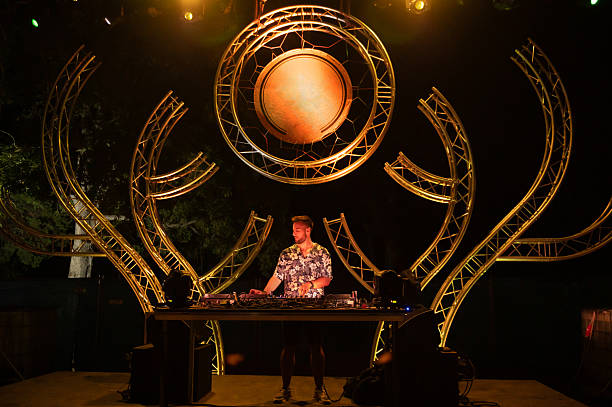
For DJs, this is a dream and a test. A tiny room with a massive system exposes every mistake. That high-pass filter off-center? Everyone hears it. A slightly off-beat blend? The crowd of 80 people will feel it like a sudden jolt. But when you lock in—when the mix is tight and the energy builds—the feedback loop between DJ and dancer is immediate. You can read faces in the dark, see hands shoot up, feel the room lean into a breakdown. It’s the opposite of a festival stage where you’re a pixel in a sea of phones. Here, you’re a conductor, and the orchestra is a group of locals and travelers who came to get lost in techno, house, or left-field electronica.
The vibe is unapologetically raw. The crowd is a mix of Tbilisi’s art students, queer party kids, and international DJ nerds who flew in just for the sound. There’s no dress code beyond “wear black if you want, but don’t wear anything that glows.” Drinks are cheap—think homemade chacha (Georgia’s potent brandy) and local beer. The door policy is strict but fair: no phones on the dance floor, no groups of bros looking for bottle service, and no one who’s just here for Instagram. This is a club for people who understand that a night out is about connection—to the music, the room, and the strangers you’ll high-five during a breakdown.
The Block’s Second Room sits on a street that feels like a secret, tucked behind a unmarked door. You might walk past it twice before you find the entrance. That’s part of the charm. In an era where every club posts its set times on social media and sells out weeks in advance, this room thrives on whispers. Word of mouth is the only marketing. If you know, you know. And if you don’t, you’ll find out from a friend who just came back from Tbilisi and can’t stop talking about “that tiny room where the bass made my ears feel clean.”
This is essential global clubbing bucket-list material. Not because it’s famous, but because it’s a masterclass in how small spaces can deliver big experiences. It honors the roots of club culture—the warehouse parties, the basement gatherings, the after-hours where the only rule is respect the system. Whether you’re a DJ looking to test your mettle on a pinpoint-accurate rig or just a music lover who wants to feel a drop in your gut, The Block’s Second Room delivers exactly one thing: pure, undiluted clubbing. And in a world of mega clubs and algorithmic playlists, that’s the most rare and precious luxury of all.